Guildford Cathedral Photos


Recommended Reviews - Guildford Cathedral
Start your review...



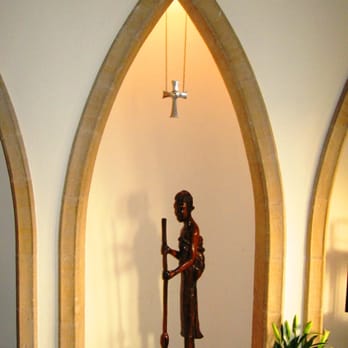
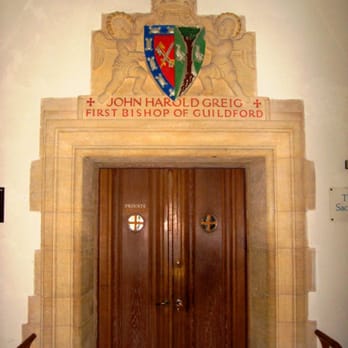
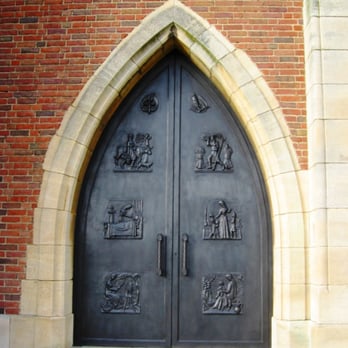
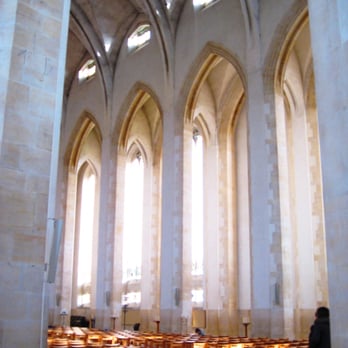
Guildford is an ancient town, but its Cathedral is modern - to be precise, the only cathedral to be built on a new site in the southern province of England since the Reformation (Liverpool having been built in the north, and Coventry rebuilt). Whatever its status, there is no doubt that the Cathedral, set high on Stag Hill, completely dominates the town below. The need for a new cathedral came about when the diocese of Guildford was carved from part of Winchester diocese, in 1927, reflecting the population growth of the Surrey commuter belt in the 19th and early 20th centuries. The competition for its design was won by Sir Edward Maufe, who was appointed architect in 1933. The site was donated by Earl of Onslow - the name Stag Hill recalling the time when it was a Royal hunting ground. After the foundation stone was laid in 1936 by Cosmo Lang, the Archbishop of Canterbury, the first major task was to insert hundreds of concrete piles into the clay of the hill to provide a solid foundation. This was completed in 1937, in the presence of Queen Mary. Work continued at a quick pace, but halted with the outbreak of War in 1939, with the chancel and crossing only partially completed. Because of the post-war shortage of building material, work did not recommence until 1952. It was consecrated in 1961 in the presence of Queen Elizabeth. Maufe's design is essentially a modern take on Early English Gothic, with clean lines and scale replacing ornament and detail, and a traditional plan of nave, transepts and chancel, with a robust 160ft (50m) crossing tower. The exterior has, however, often been criticised as being dull: built of red brick made from the clay taken from the hill itself, it has been unkindly likened to a large civic crematorium. Pevsner, the architectural critic and historian, was a little kinder, calling it "sweet-tempered, undramatic Curvilinear Gothic". I tend to share his view (just as well - who am I to dare to disagree with Pesvner..?): it's not my favourite modern building, but the scale and setting is dramatic and there is actually quite a lot of detailing, in the form of statues and decoration once you get close. And the views around are superb. I don't like the main road approach - it's a bit featureless and windswept - but the pedestrian approach via Cathedral Close is rather nicer. The interior is more widely admired, and is something of a shock after the exterior: the walls are faced with creamy, pale Somerset limestone with a floor of white Italian marble. Flooded with light through the tall lancet windows, the interior is awe-inspiring, the relative sparsity of decoration adding to the effect. The poet John Betjeman said "Its red brick exterior belies the really splendidly proportioned nave and aisles within". Quite. The interior has a number of chapels, some with modern carvings and sculpture, and there are memorials to previous Bishops. In the Ursula Porch are bricks signed by members of the Royal family (bricks were 'sold' to help pay for the cathedral), and the Treasury contains an impressive collection of gold and silver belonging to the Cathedral and various churches in the diocese. Guildford is famous for its choir school, and maintains a strong tradition of music: on my last visit, there was a choir and orchestra practising an impressive selection of Haydn, Bruckner, Mahler and Mozart. The Cathedral has step-free access via the West Door, a hearing loop for the deaf and is able to provide large print hymn books, orders of service and news sheets on request. There is a refectory providing refreshments, lunch and afternoon tea, a bookshop and gift-shop. The Cathedral contains a library of some 5000 theological texts, available to members only - details of access are on the web-site. read more






16 years ago

18 years ago
17 years ago
More info about Guildford Cathedral








Why does Yelp recommend reviews?
1 review that is not currently recommended
The reviews below are not factored into the business's overall star rating.
17 years ago


