Queen's House Photos

Recommended Reviews - Queen's House
Start your review...


Reviews With Photos

A symmetrical display of grandeur fit for royalty, with over-the-top huge rooms giving a nice view into the splendor of yesteryear. Enjoy lots of art from bygone years, and learn a little about history along the way. The paintings of city and river landscapes give a glimpse into the area in simpler times, and it's a nice reminder of how good it is to have indoor plumbing. Sometimes you'll have to skip certain areas for weddings since it's a popular venue, but tarry longer in a place formerly only habited by the upper crust. Plus you can visit for free.


Beautiful small museum with an excellent audio guide on Smartify app. Bonus: it has places to sit to admire the art and hear the history.


This beautiful museum is a hidden gem in Greenwich! Our group visited on a whim after exploring Greenwich Market and we were able to walk right in without booking our free tickets in advance. The art is mostly maritime art, from 17th century portraits all the way to sketches of D-Day. I was pleasantly surprised to also discover the Armada Portrait of Elizabeth I was on display here! The building itself was commissioned by Queen Anne in 1616 and is a beautiful example of Tudor architecture. The house has even been used as a filming location of several movies. Our group spent about an hour in the museum, and we were able to see everything. If you find yourself in Greenwich, make sure to stop here, and don't miss the painted ceiling in the Queen's Chamber!


09/12/17 Located in Greenwich not far from London is this historic landmark. Near the Maritime Museum and the Royal Observatory Considered to be architect Inigo Jones masterpiece. Built for Queen Anne of Denmark wife of James the I. Construction began in 1616 but stopped in 1618 when Queen Anne became ill and died the following year. King Charles the I gave orders for construction to resume as he had given the house to Queen consort Henrietta Maria in 1629. In 1635 the structure was completed. Inside you will find paintings of prominent Tudor and Stuart kings and queens as well as the Queen Elizabeth the I Armada portrait.

A lovely place to stop and enjoy some art on your trip to Greenwich. It's not a very big place, but it has a really nice art collection. The famous Tulip Staircase is here and makes a great photo. It was very quiet when I went, so I had most of the galleries to myself. The atmosphere was quite peaceful and it was a nice break from the hustle of central London that I am used to. Located near the Old Royal Naval College, the Royal Observatory, and the National Maritime Museum, this is a convenient stop that complements the rest of the attractions in Greenwich.


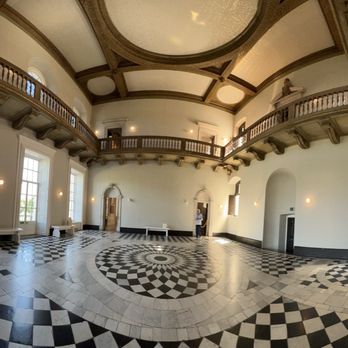
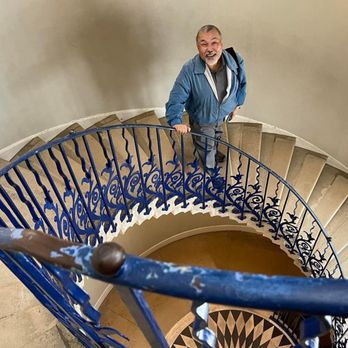
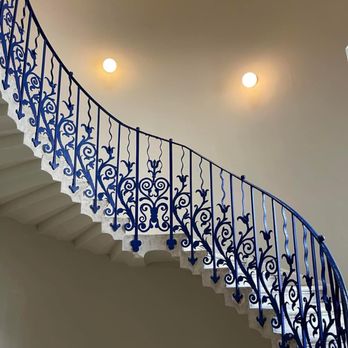
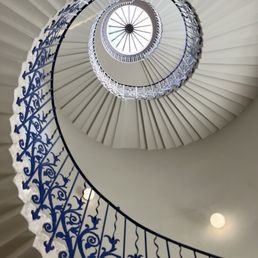
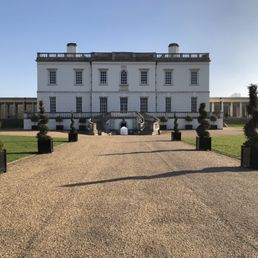
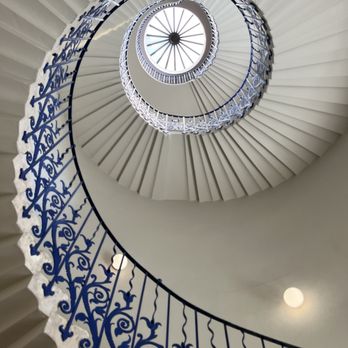
The Queen's House is the oldest of the buildings which form the magnificent set-piece of Maritime Greenwich. It is also a landmark in architectural history as the first purely classical building in England, and thus the antecedent of two centuries of the classical tradition, in the subsequent Georgian and Regency periods. The house was commissioned by James I for his wife, Anne of Denmark, supposedly as an apology for swearing at her after she accidentally killed a hound during a hunt. The design was entrusted to Inigo Jones, who had just returned from Italy, where he had been inspired by the purity of the classical Palladian architecture there. Work started in 1616, but stopped on Anne's death in 1618. Work recommenced in 1629 for Charles I's wife Henrietta Maria, and it was completed in 1635. The couple did not enjoy it for long, thanks to the advent of the English Civil War. Thereafter, it never regained its prominence as a royal residence. Mary II ensured, however, that the view from house to the Thames was uninterrupted when Wren designed the Royal Naval College. In the 18th and 19th centuries, the building was used as a naval school and hospital and was finally incorporated into the National Maritime Museum. It now houses the Museum's extensive collection of maritime art. Little of the interior decoration has survived, so many of the rooms are quite plain, although the architectural set-pieces, such as the magnificent Cube Room (the main hall) and the beautiful (and photogenic) Tulip Staircase, still impress. The extensive art collection comprises mostly nautical themes, plus portraits of the Royalty associated with Greenwich, and naval commanders. It's a major collection: the artists' works include those by Hogarth, Sir Joshua Reynolds, Turner, Lowry, with an exquisite Canaletto. A highlight is one of the famous "Armada Portraits" of Elizabeth I. The house is free to enter: expect to spend a couple of hours if you choose to browse the art collection. The gift shop is contained in the main building of the Maritime Museum next door.


The famous instagrammable Tulip Stairs are housed here, in Queens House! Tulip stairs are the first spiral stairs in UK that didn't have any support structure. Apart from that, there is a huge art collection, beautiful ceilings and marble floors, to spend 2-3 hours while being in Greenwich area. The entrance is through a small door in the floor of the building, not easily to notice - free entrance.


2 days ago
There is a lot of history at the Queens house. I got there at 10 AM with my friend on a weekday, and there was no line or anyone inside. We walked through the house with no interruptions. There are multiple floors, with lots of portraits ranging from Tudors to Stuart England. The tulip staircase is viral on social media and it happens to be the prettiest part of the Queens House. You can also see the royal observatory from this site, which is quite spectacular. read more

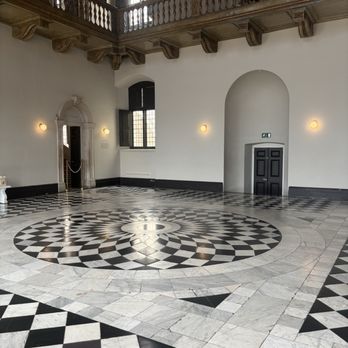


This isn't the name of a gay nightclub just in case you were wondering. This museum is in Greenwich between the ferry pier and the Royal Observatory, and it would be a damn shame if you bypass this gorgeous 17th-century Palladian-style manor. Admission is free, so you really have no excuse. It was originally built as a present from King James I to Danish-born Queen Anne. Apparently the king uttered profanities in front of her when he accidentally shot one of his favorite hunting dogs. Wow, she sounds like a real Meghan Markle. Royal guilt must be in the bloodlines. The resulting house has been refurbished many times over, and it's quite nice with each room featuring a dizzying array of art from traditional portraits of Elizabeth I to an arresting Kehinde Wiley painting called "Ship of Fools" (photo: https://yelp.to/u5cl20xBM2). All the furnishings were impressive, but the architecture is what resonates the most starting with the Great Hall with its geometric black-and-white marble flooring. However, the Tulip Staircase was definitely the main attraction. It was the first geometric self-supporting spiral staircase in Britain and quite the architectural statement...don't you agree? (video: https://yelp.to/wjykuYT3IU) RELATED - Exploring London? Here's my collection of places I've visited and reviewed: https://bit.ly/3zFACrx read more


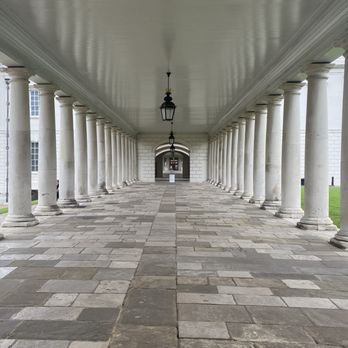


A symmetrical display of grandeur fit for royalty, with over-the-top huge rooms giving a nice view into the splendor of yesteryear. Enjoy lots of art from bygone years, and learn a little about history along the way. The paintings of city and river landscapes give a glimpse into the area in simpler times, and it's a nice reminder of how good it is to have indoor plumbing. Sometimes you'll have to skip certain areas for weddings since it's a popular venue, but tarry longer in a place formerly only habited by the upper crust. Plus you can visit for free. read more


This beautiful museum is a hidden gem in Greenwich! Our group visited on a whim after exploring Greenwich Market and we were able to walk right in without booking our free tickets in advance. The art is mostly maritime art, from 17th century portraits all the way to sketches of D-Day. I was pleasantly surprised to also discover the Armada Portrait of Elizabeth I was on display here! The building itself was commissioned by Queen Anne in 1616 and is a beautiful example of Tudor architecture. The house has even been used as a filming location of several movies. Our group spent about an hour in the museum, and we were able to see everything. If you find yourself in Greenwich, make sure to stop here, and don't miss the painted ceiling in the Queen's Chamber! read more

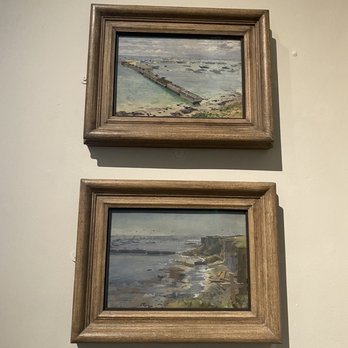

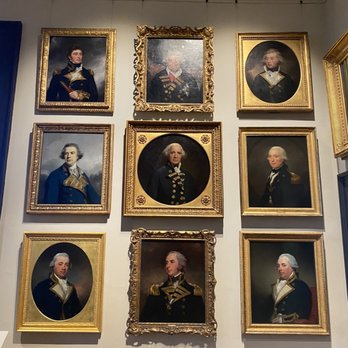

09/12/17 Located in Greenwich not far from London is this historic landmark. Near the Maritime Museum and the Royal Observatory Considered to be architect Inigo Jones masterpiece. Built for Queen Anne of Denmark wife of James the I. Construction began in 1616 but stopped in 1618 when Queen Anne became ill and died the following year. King Charles the I gave orders for construction to resume as he had given the house to Queen consort Henrietta Maria in 1629. In 1635 the structure was completed. Inside you will find paintings of prominent Tudor and Stuart kings and queens as well as the Queen Elizabeth the I Armada portrait. read more


A lovely place to stop and enjoy some art on your trip to Greenwich. It's not a very big place, but it has a really nice art collection. The famous Tulip Staircase is here and makes a great photo. It was very quiet when I went, so I had most of the galleries to myself. The atmosphere was quite peaceful and it was a nice break from the hustle of central London that I am used to. Located near the Old Royal Naval College, the Royal Observatory, and the National Maritime Museum, this is a convenient stop that complements the rest of the attractions in Greenwich. read more
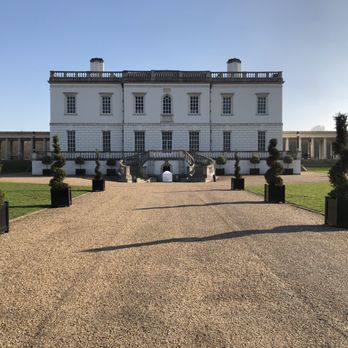


The Queen's House is the oldest of the buildings which form the magnificent set-piece of Maritime Greenwich. It is also a landmark in architectural history as the first purely classical building in England, and thus the antecedent of two centuries of the classical tradition, in the subsequent Georgian and Regency periods. The house was commissioned by James I for his wife, Anne of Denmark, supposedly as an apology for swearing at her after she accidentally killed a hound during a hunt. The design was entrusted to Inigo Jones, who had just returned from Italy, where he had been inspired by the purity of the classical Palladian architecture there. Work started in 1616, but stopped on Anne's death in 1618. Work recommenced in 1629 for Charles I's wife Henrietta Maria, and it was completed in 1635. The couple did not enjoy it for long, thanks to the advent of the English Civil War. Thereafter, it never regained its prominence as a royal residence. Mary II ensured, however, that the view from house to the Thames was uninterrupted when Wren designed the Royal Naval College. In the 18th and 19th centuries, the building was used as a naval school and hospital and was finally incorporated into the National Maritime Museum. It now houses the Museum's extensive collection of maritime art. Little of the interior decoration has survived, so many of the rooms are quite plain, although the architectural set-pieces, such as the magnificent Cube Room (the main hall) and the beautiful (and photogenic) Tulip Staircase, still impress. The extensive art collection comprises mostly nautical themes, plus portraits of the Royalty associated with Greenwich, and naval commanders. It's a major collection: the artists' works include those by Hogarth, Sir Joshua Reynolds, Turner, Lowry, with an exquisite Canaletto. A highlight is one of the famous "Armada Portraits" of Elizabeth I. The house is free to enter: expect to spend a couple of hours if you choose to browse the art collection. The gift shop is contained in the main building of the Maritime Museum next door. read more


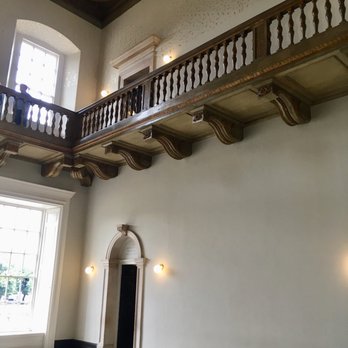


The famous instagrammable Tulip Stairs are housed here, in Queens House! Tulip stairs are the first spiral stairs in UK that didn't have any support structure. Apart from that, there is a huge art collection, beautiful ceilings and marble floors, to spend 2-3 hours while being in Greenwich area. The entrance is through a small door in the floor of the building, not easily to notice - free entrance. read more


18 years ago
The Queen's House, the odd white box building at the centre of the National Maritime Museum in Greenwich, was built for Queen Anne of Denmark, wife of James I, by the renowned architect Inigo Jones. On one wall in the 1st floor there is a contemporary quote referring to a strange 'devise' being built by Jones at Greenwich, and after a jaunt through this peculiar, mazelike building the image of a kind of device is definitely apt. What a bizarre place. And beautiful. It is most definitely worth a pleasure jaunt but also regularly houses special exhibits for the Museum of the highest quality. Unqualified endorsement. read more




More info about Queen's House
Queen's House Reviews in Other Languages
Review Highlights - Queen's House
















Why does Yelp recommend reviews?
1 review that is not currently recommended
The reviews below are not factored into the business's overall star rating.

7 years ago


