Cancel

    Open app

    Search

    Gosford Glyphs Photos

    Recommended Reviews - Gosford Glyphs

    Your trust is our priority, so businesses can't pay to alter or remove their reviews. Learn more about reviews.
    Yelp app icon
    Browse more easily on the app
    Review Feed Illustration

    10 years ago

    Helpful 3
    Thanks 0
    Love this 1
    Oh no 0

    Verify this business for free

    Get access to customer & competitor insights.

    Verify this business

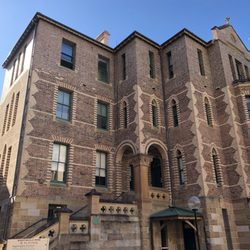
    Lucy Osburn-Nightingale Museum - Outside of the old nurses' house, museum is currently on the first level

    Lucy Osburn-Nightingale Museum

    5.0(1 review)
    46.6 kmSydney

    I literally passed by this museum on my way to the botanical gardens several days ago. Noting the…read morelimited hours I slightly rearranged my schedule to make the Tuesday hours work. I was expecting a small museum that would take 30 minutes max to go through. Thankfully I was so wrong. Before even opening the door of the museum I was greeted by one of the docents who was lovely throughout the tour. The entire tour lasted about 70 minutes and was fascinating. She explained the origins of the hospital and detailed history of the nursing staff who truly started the practice of nursing, as directed and sent by Florence Nightingale. While I was vaguely aware of the Nightingale connection I was surprised to find so many items that were either owned by Nightingale or given to the nurses from Florence Nightingale. With all the objects of the museum donated I think they have a truly remarkable collection, including old medical objects, photos of nursing staff, training uniforms, chemist set, to go bag of pharmaceuticals (for visiting rural areas), and medals received for service in the Crimea War. In general, I think it helps to have a medical background in order to understand how great this collection is and to be able to easily compare the collection to current medical practice. That being said, the docents ask prior to the tour if you have any medical knowledge. The only area of the museum that I didn't enjoy was part of the new wing and was two rooms of medical specimens, including the preserved fetus from an abortion. There were many different cancers (breast, ovarian, colorectal) also on display. I think generally people should be warned prior to going into those rooms. $5 Admission per person, cash only Photos are ok, no flash Will be asked to leave larger items (camera bags, backpacks) in the office Very limited hours! Martin Place metro stop

    Photos
    Lucy Osburn-Nightingale Museum - Outside museum

    Outside museum

    Lucy Osburn-Nightingale Museum - Photos of the women who started nursing practice in Sydney

    Photos of the women who started nursing practice in Sydney

    Lucy Osburn-Nightingale Museum - The to-go box for a chemist

    See all

    The to-go box for a chemist

    Lennox Bridge - Lennox Bridge photograph is used by permission of Steve Dorman (http://Flickr.com).

    Lennox Bridge

    4.0(1 review)
    72.2 km

    Lennox Bridge in Glenbrook is the oldest bridge on the Australian mainland (predated by the…read moreRichmond Bridge in Tasmania, completed 1825). This single-arch sandstone bridge was designed by David Lennox, a bridge builder and stonemason who emigrated to Australia in 1832 after the death of his wife. Before his arrival in August 1832, the new colony of New South Wales had no skilled stonemasons, and Lennox was a Master Stonemason with 20 years experience. After a chance meeting with the Surveyor-General, Major Thomas Mitchell, David Lennox was appointed Sub-Inspector of Bridges and later Superintendent of Bridges for the colony. Lennox Bridge was completed in July 1833 by David Lennox and a party of 20 convicts. It is constructed with large sandstone blocks from a local quarry with a single arch of 6m (20-feet) span and 9m (30 feet) above water level, with a road width of 9m (30 feet). Due to its design, it is also known as Horseshoe Bridge. The significance of Lennox Bridge is that it allowed the Great Western Highway through Mitchell's Pass over Lapstone Creek and opened up the development of the Blue Mountains and western NSW. The bridge served the main route to the Blue Mountains for 93 years until 1926 when the Great Western Highway was re-routed along the old railway line over Knapsack Viaduct. In 1967 Lennox Bridge was closed for restoration work and strengthened with concrete, reopening to traffic in 1982. David Lennox also designed Lennox Bridge over Parramatta River in nearby Parramatta, as many other bridges also including 53 bridges in the Port Phillip (Melbourne) area. The bridge photograph is used by permission of the very talented Australian photographer Steve Dorman (http://Flickr.com).

    Elizabeth Farm

    Elizabeth Farm

    4.7(3 reviews)
    48.9 km

    Picture it. I'm on a tour of an historical home - Australia's OLDEST surviving homestead no less -…read moreand there's a kid putting his little sticky fingers all over every object he sees. It brings a tear to my history-lovin' eye. Because, for me, history has never just been words printed in a dusty old book by an equally dusty member of the academic elite. History SHOULD BE a multisensory experience for everyone of all ages. At good ol' Lizzie Farm...that's possible. For this, comrades, is a "museum without barriers." The house itself is, of course, the real Mccoy but everything in it is replica whilst remaining true to the period. So there is no stern lady pulling a cat's bum expression when you have a tinkle of the ol' ivories in the living room, throw on a lady's bonnet in the foyer, scale one of those insanely high beds they used to sleep on, pick up the chamber pot beneath, sit in the living room and read a newspaper from back in the day, or examine Elizabeth Macarthur's personal letters in her darling little letter-writing room. It is so well done, a few times I forgot everything was replica and stopped myself mid-touch only to remember that this action was both acceptable and actively encouraged by the guides! From the main area of the house you move into the sandstone courtyard area and look upon the female convicts' quarters. To the right is a beautiful big tree in the main courtyard area (could it be more serene here???? ) and to the left you can head off to the colonial kitchen with its entrance step worn down by countless shoes over the centuries and where you'll find a peep hole into the cellar beneath! (They think it was possibly for spying on the cons in case they were slacking off but also was good for ventilation). I want this kitchen. Heck! I want this house. They don't make 'em like they used' t' could! In that charming kitchen, the guide informed us, the wee'uns can make scones as part of the "Colonial Kids" program they also offer at the site. For the same program, the cellar below is closed off and darkened and is thereby transformed into the hull of a prison ship. The guide demonstrated this for us briefly and you could really appreciate how it would help children to imagine what it was like to be a convict being transported across the seas for the difficult months-long voyage. Even if you have been here before, go again! Not only is it a beautiful place to wile away a few hours,* it is also a place that changes over time as new historical research uncovers more information about the ways the original inhabitants used these rooms. Chances are, then, that the room you viewed once may now tell a different story to the one you heard previously. Our guide informed us that tours for large groups can also be tailored; e.g. if a girls' school visits they might like a feminist history angle so the tour will focus on Elizabeth Macarthur. You also have multiple options regarding how you interact with the site. There are guided tours, which are extremely engaging and informative and you are free to spend as much time as you like roaming around the site inspecting the rooms and objects at the conclusion of the guided tour. Or, if you've taken the tour before, you can opt for a self-guided tour from the get-go. The interactivity of the site is heightened by the optional iPad experience. Borrow one from the visitors' centre and click on a room in the house as you stand or sit in it and watch a short video clip with supplementary information about the room's history. They've thought of everything! The guided tour of Lizzie Farm is only 1 hour long approximately, but I bet you'll find it hard to pry yourself away from here after just one hour! I recommend you do this tour then walk (or drive) around the corner to John Macarthur's "Hambledon Cottage." Just don't think you can put your sticky fingers on the stuff at Hambledon Cottage...(it ain't replica) or there shall be cat's bum expressions aplenty. * Review originally written and posted 2 March 2013.

    As I came up the hill through the little reserve, I started thinking strategically. If I was a…read morecolonial capitalist I'd pick that spot to make visible my wealth too. Defensible. Elizabeth Farm is the Macarthur's (wool industry guru) bungalow built in 1793, a stop on the Harris Farm Heritage Walk. Already stymied by calendrical difficulties at Hambledon Cottage, I found the situation worse here. Cue self-induced thwack to the head mark two. Ouch. It's only open Friday to Sunday, except January and school holidays when it's open all day. Still, got a good peek round the outside, including what must be one of the first long veradahs in Australian architecture (borrowed from India, I know). The grounds and green and lush and there were quite a few gardeners around keeping everything so. Had a giggle at the 'Eliz Farm' wheelie bin out the front too. Maybe it was the repeated blows to the head. Will update anon.

    Photos
    Elizabeth Farm
    Elizabeth Farm

    See all

    Camden Park House and Garden

    Camden Park House and Garden

    5.0(1 review)
    89.6 km

    This is actually a private residence. Have I gone balmy? Why am I reviewing a private residence on…read moreyelp? Well... it's like this, see? It ain't just any private residence like a fibro shack or a McMansion. OK, it might be a bit of a McMansion. A Georgian version of a McMansion anyway...because it's Australia's oldest private residence occupied by the descendants of its founders: the historically significant John and Elizabeth Macarthur. And for just one weekend a year, (the third weekend in September) it is open to the public. We set out for Camden Park House and Garden early on a Springy, sun-drenched Sunday morn. In less than an hour our suburban world lay behind us. O'er the one-lane bridge, past Belgenny Farm - where a number of the sheep today are descendants of the original and famous Macarthur Merino sheep - and at the end of a rather rough, dirt road was Camden House in all her circular driveway-ed, pillary glory. Vintage cars were on display and, tho' 'twas still early, a long line of people trailed from the impressive cedar doorway across the driveway and beyond. The owners' dogs trotted by us with indifference, as tho' there was nothing at all abnormal about so many strangers congregating on their doorstep thus. The line moved quickly enough, but it was also ever-present with more and more members of the public arriving throughout the day for a sticky beak. Therefore, I recommend you do arrive for a tour of Camden House as close to the opening time as possible to avoid standing in that line when the sun is at its peak. It was all very well organised, especially considering the sheer amount of human traffic that consistently moved through the property for hours on end. Visitors enjoyed a tour of the house by following the roped off areas and stopping in rooms and passageways where owners of the house and other relatives / volunteers were stationed to dispense relevant historical facts about their ancestors, the architecture, portraits and artefacts on display. Think mudstone and black marble flooring, mahogany tables and chairs, neo-rococo cabinetry and a whimsical book passage - an extension of the main library. Historical homes always have a quirky item or two and the standout one for me on this occasion was the breakfast table designed to double as a viewing table for the dearly departed! The numerous bedrooms and bathrooms upstairs were spacious and decorated in a manner authentic to the era. The wine cellar below the house was vast with many little alcoves we could walk through and inspect with more agricultural and domestic artefacts on display. Some of the wine bottles tucked away there were as old as the house itself! There was even a billiard table down there. Outside, Spring was busting out all over with wisteria draping itself like some sort of saucy nymph o'er ostentatious strengthy Georgian pillars and such. A history talk beneath a shady tree and tours of the sprawling gardens, which featured a fantastic garden sculpture exhibition, were also available on the day. I didn't get to the garden tour myself, but I did sit in and admire the beautiful, relaxing garden whilst enjoying a nice BBQ Sausage Roll with mustard and the obligatory onions as well as some jam and cream scones for dessert. With the very friendly extended Macarthur-Stanham family and their dogs amongst the attendees, I felt like I had gatecrashed a random family BBQ, but I didn't feel the slightest bit awkward about it! The big winner of the day was the wee Macarthur-Stanham dog that looked like a sausage with eyes and had the Oliver Twist act down pat. Methinks her name was "Poppy." I saw her score BBQ morsels from around 12 different people...and that is probably a conservative estimate! Who knows how long she'd been at that caper before I got out there. Overall, a delightful way to spend a few hours and a rare opportunity to tour a grand (private) home that is a part of our nation's history. * Review originally written and posted 20 October 2013.

    Gosford Glyphs - landmarks - Updated May 2026

    Loading...
    Loading...
    Loading...