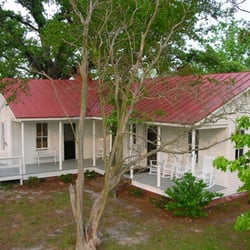
Lake Waccamaw Depot Museum is a history museum located in Columbus County. The museum is inside a…read more1904 Atlantic Coast Line Train Station. The Lake Waccamaw Women's Club stepped up to save and preserve the train station. It was relocated, restored and opened up as a museum in 1977. The museum is a combination of history, railroad and ecology as they were all tied together.
Parking is available on the street, and admission to the museum is free, though donations or purchases from the gift store are appreciated. The museum is staffed by friendly, informative volunteers, and someone will be there during open hours.
Carolina Bays are massive, shallow, oval-shaped depressions in the Earth's surface. Lake Waccamaw has a highly pronounced, elevated sandy ridge running along its southeastern shoreline. Lake Waccamaw is the largest water-filled Carolina Bay in North Carolina, measuring roughly 5.2 miles by 3.5 miles. It has not dried up like other bays. Lake Waccamaw is also unique with the limestone bluff. The limestone neutralizes the acid as the water flows, and the resulting, calcium-rich environment is why the area is home to many organisms. It became an evolutionary hotspot that created an environment for dozens of endemic species of fish, snails, and mussels to evolve here and nowhere else on earth. The museum has some interesting artifacts, including fossils from when Mosasaurs roamed the local oceans 68 million years ago.
The railroad depot played an integral role in supporting local industries such as lumber, turpentine and toolmaking. The Cypress roof shingle industry started in 1869, and there is a logging display. The museum was fun to explore, as you get to explore the historical building as well, with the ticket office, vintage train equipment and other artifacts. I liked that the museum included Native Americans. The Waccamaw Siouan tribe was located in the area, and there is an actual dug-out Indian canoe. How did they dig it out without tools?
The railroad also brought tourists to the area. It was a booming summer resort with lakeside hotels, boating excursions and dancing in the pavilion. Summer camps were also popular, and there are exhibits about the tourist boom.
At the time, the lake was segregated. During the Jim Crow era, Black and Native American residents were strictly banned from swimming or using the public beaches. Instead of celebrating on July 4th, they decided to delay the holiday to July 6th, and thousands from across the region came to celebrate. The train station itself was segregated with separate ticket windows to comply with these laws, and the museum preserves these critical oral histories through video panels featuring local African American elders.
You will learn about some notable folks as well. Samuel Potts was a 19th-century local builder, inventor, and master craftsman. He designed and built the famous Bohemian Girl steamboat. He was also a pioneer in photography, famously inventing a way to take a selfie with a mechanical shutter-string mechanism.
Dr. Jean Gerome Prosper Formy-Duval was a French physician who immigrated to North Carolina. The museum exhibit showcases his original medical tools, diaries, and historical items.
The "Free Lady" Hotelier was a historical free woman of color who defied systemic odds by owning and operating her own successful resort hotel along the lakefront during the segregated tourism boom.
Outside is a preserved 1940s Atlantic Coast Line caboose. It is sometimes open to explore. As it was raining when I visited, I didn't try to get inside.
I highly recommend checking out this historic gem.