My experience as a Frontier Makerspace member can be summarized as an immersive experiment in environmental stress testing rather than productive making.
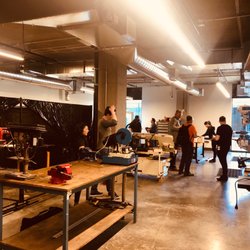
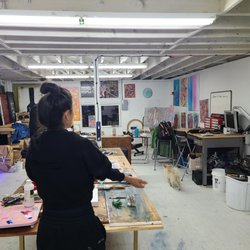
First, the ceiling has been thoughtfully removed, which means there is no functional overhead lighting at night. Illumination is provided instead by flickering LED strip lights that simulate a malfunctioning arcade machine. The visual instability is impressive if the goal is to study sensory overload. For individuals with epilepsy or cardiac conditions, this space doubles as a highly efficient hazard generator.
Second, on several evenings each week, the makerspace is transformed into a full-scale electronic music venue. A DJ performs at volumes that render verbal communication, cognitive focus, and most higher brain functions obsolete. Noise-canceling headphones are not an accessory here but a survival mechanism.
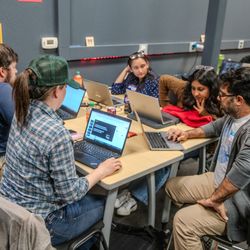
Third, the space hosts a continuous stream of visitors from around the world. As a member, you are effectively part of a live exhibition. You work, they watch. The experience closely resembles being an animal in a zoo, except the audience does not provide food, funding, or even useful questions. You perform innovation theater for free.
Fourth, climate control is nonexistent. In winter, the space functions as a cold exposure training facility. In summer, it becomes a heat endurance trial. Productivity fluctuates directly with your tolerance for physical discomfort.
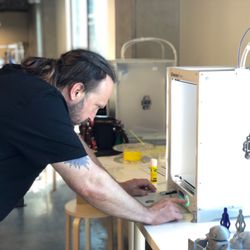
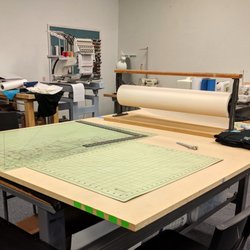
Finally, while the term "makerspace" suggests abundant tools and components, most parts are missing, and many tools are rusted, obsolete, or decorative. The primary operational equipment is a set of 3D printers, which appear to serve as proof of concept rather than as part of a functional ecosystem.
In conclusion, Frontier Makerspace is less a workshop and more a sociotechnical experiment. It tests how much noise, cold, heat, visual disturbance, and infrastructural decay a person can tolerate while still calling themselves a "maker." read more