Dred & Harriet Scott Statue Photos


More like Dred & Harriet Scott Statue
Recommended Reviews - Dred & Harriet Scott Statue
Start your review...



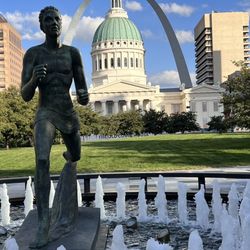
In 2012, the Dred Scott Heritage Foundation, the National Parks Service & Harry Weber the sculptor were incredibly proud to unveil a statue of Dred & Harriet Scott on the south lawn of the Old Courthouse. The Scotts are depicted standing close, holding their heads high, their eyes directed not only Archward & across the Mississippi River, but toward a horizon of freedom in which they believed enough to one day finally see. Dred & Harriet Scott were American-born slaves of African descent, filed suit against Irene Emerson for their freedom. After several appeals & new lawsuits, the Dred Scott case reached the Supreme Court. The final verdict stated that Scott was still a slave, still the property of his masters & that he was neither a free man nor a US citizen. The decision outraged many & was integral in leading the United States to the brink of civil war. read more

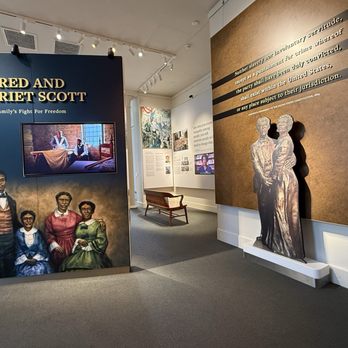

One of the more famous landmark Supreme Court rulings is known as the Dred Scott Decision. In 1857, it was decided that neither Dred Scott nor any other person of African ancestry could claim citizenship in the United States, and therefore Scott could not bring suit in federal court under diversity of citizenship rules. Moreover, Scott's temporary residence outside Missouri did not bring about his emancipation under the Missouri Compromise, as the court ruled this to have been unconstitutional, as it would "improperly deprive Scott's owner of his legal property." Yeah, that happened and it was one of the contributing factors that led to the United States Civil War. President Abraham Lincoln's Emancipation Proclamation in 1863, and the post-Civil War Reconstruction Amendments - the Thirteenth, Fourteenth and Fifteenth amendments - nullified the decision. This statue was installed in front of the Old Courthouse and dedicated on June 8, 2012. The location of the Old Courthouse serves as a reminder of the place where Dred and Harriet Scott began their legal fight for freedom. The plaque at the base reads, "Dred and Harriet Scott filed suit for their freedom at this courthouse in 1846. Their case reached the United States Supreme Court and was decided in 1857. The court ruled that the Scotts and all African Americans were not citizens of the United States. Opposition to the decision was one of the causes of the Civil War and led to the Thirteenth, Fourteenth, and Fifteenth Amendments to the Constitution. The Scotts' struggle for freedom stands as a defining moment in the history of the Civil Rights Movement. Dedicated June 8, 2012. Gift of the Dred Scott Heritage Foundation. Harry Weber, sculptor. [Review 17226 overall - 134 in Missouri - 743 of 2022.] read more