Cancel

    Open app

    Search

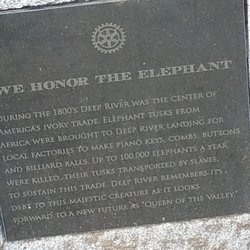
    Deep River Historical Marker

    3.0 (1 review)

    Deep River Historical Marker Photos

    More like Deep River Historical Marker

    Recommended Reviews - Deep River Historical Marker

    Your trust is our priority, so businesses can't pay to alter or remove their reviews. Learn more about reviews.
    Yelp app icon
    Browse more easily on the app
    Review Feed Illustration

    7 years ago

    Helpful 6
    Thanks 0
    Love this 7
    Oh no 0

    Verify this business for free

    Get access to customer & competitor insights.

    Verify this business

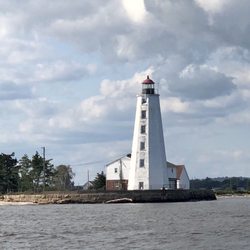
    Lynde Point Lighthouse - Low tide, Photo by Anna K

    Lynde Point Lighthouse

    (3 reviews)

    The light house and the place may be half decent but not if you have no access to it. For you to…read moreget to the light house you need to trespass through a private property. Not sure why this is listed as one of the places to see in Old Saybrook. It's misleading and would avoid the hassle. However the walk was fun, the so called private beach that you need to walk through is horrible.

    Lights hurricanes and…read moreKatharine The Connecticut River is a huge and impressive river but the towns on the mouth never really developed into the large trading communities that you would expect. The main reason for this is because of the treacherous and ever shifting sandbars that guard the mouth of the river. The problem was recognized as soon as the first ships started sailing the area and in 1773 a public lottery was held to get funds to place some buoys out there. Lotteries were a common way of collecting money for building projects back then. The buoys were better than nothing but it was soon realized that better solution had to be found. So in 1803 a 35 foot tower was constructed. It was better than nothing but not by much. So in 1838 a 65 foot tower made from brownstone blocks was built. It received a 4th order Fresnel lens in 1852 that could be seen for 13 miles out to sea. The light finally became animated in 1975 and is still an active aid to navigation. The lighthouse was put to the test in Sept of 1938 when a massive hurricane tore into this area. The light was damaged but stayed together. Unfortunately much of the Connecticut shoreline wasn't so lucky. The famous actress Katharine Hepburn had her house right down the street from the lighthouse and was almost washed allowed but just managed to get out. The lighthouse is located in a very exclusive part of town and is very off limits to the pubic. It can be seen from the water and remains a very important part of the state's nautical history.

    Florence Griswold Museum - Mushroom installation

    Florence Griswold Museum

    (51 reviews)

    The Florence Griswold Museum is more than just a beautiful museum. To show even more support this…read moreyear, I decided to buy a family membership. For years my family has been visiting the museum in the fall for the Wee Faerie Village, an extraordinary outdoor display of faerie villages that are created by local businesses and individuals. There isn't enough room for me to gush about this event. The beauty, creativity, and the scavenger hunt keep us coming back. The museum offers a glimpse into history, beautiful art, extraordinary gardens, breathtaking views of the river. and more.

    We ventured to Old Lyme, Connecticut on Sunday for the final day of Mystical Murmurs: An Enchanted…read moreEnvironment by Adrien Broom. The exhibit features a fairy ring of gigantic mushrooms. The artist was born and raised in Old Lyme. The installation is meant to encourages us ponder the magical mysteries of the forest. We also really enjoyed the Amanita sculptures outside the main building housing the museum's permanent collection. We were able to photograph these just before one of the museum staff sold them off to a local mushroom enthusiast (since Sunday was the last day of the mushroom exhibit). While we came specifically for the mushroom installation, we also really enjoyed our visit to the other galleries. The museum showcases the work of the artists of the Old Lyme Artist Colony, a nexus of American Impressionism and has some beautiful impressionist landscape painting, including many by female artists of the 19th and early 20th century. The grounds here are also beautiful with gorgeous views of the Lieutenant River. There was also an exhibit of small fairy houses when we visited. Beautiful spot with nice staff and docents. Would definitely return here!

    Essex Historical Marker - Very relaxing

    Essex Historical Marker

    (2 reviews)

    This is a nice little park by Main Street. You can read about the history. There are picnic benches…read moreand tables. It's the perfect place for a picnic. You can see the sailboats. You'll see some nice people there.

    I've seen about 80 of these town markers now. Seen them in all kinds of settings, downtown big city…read more(Bridgeport and Hartford), suburbs (Simsbury and Avon), and rural (Salisbury and Canaan). But it's hard to recall seeing one in as pretty a setting as the one I saw today in the gorgeous little shore town of Essex. The plaque is just off of Main Street, set in a picture perfect landscaped and flowered Village Green. If you walk into the green, you'll pass a nice gazebo as you approach the water- actually Middle Cove, an inlet of the Connecticut River. Just look for the boats. Its proximity to the water played a big part in the long history (settled in 1648) of Essex. Trading, shipbuilding, maritime service are all mentioned on the marker. One interesting fact I learned- Essex was attacked and burned by the British during the War of 1812. Dedicated in 1983, this is a two-sided marker from the CT Historical Commission in the familiar white lettering on a blue background. There is text on both sides and they are both in excellent condition. The full inscription reads: Originally called Potopaug by local Indians, Essex was named after England's Essex County, whence some of the earthly settlers had come. As a part of Saybrook colony, the Essex area was first settled in 1648 by John Lay, William Pratt, and William Hide. Essex was incorporated in 1852, having been long a part of Saybrook township. The village became involved in West Indies trade in the later 1800's. The first wharf for this trade was built in 1656 on the site of the present Steamboat Dock building; south of the dock a warehouse was erected in 1773. Essex thus became the main port of Saybrook and remained so until 1871. Shipbuilding began in 1733; the Hayden shipyard, among others, became one of the most important in New England. This yard built Connecticut's first warship, the Oliver Cromwell, in 1775. Many other yards made Essex a major ship-building enter where packet ships, the first American transatlantic liners, were launched. Men from the Essex area became captains and seamen in large numbers and sailed all over the world on voyages lasting many months. During the War of 1812 the British raided Essex in 1814, burning twenty-eight vessels at anchor and under construction before retiring. Since the total loss amounted to $160,000 the newspapers of the time called this raid the worst disaster to befall the new country since the war began, nearly two years earlier. The steamboat era opened in 1823 with small boats running between Hartford and Saybrook, later with larger vessels between Hartford and New York. The Steamboat Dock building, the third landing place since 1656 that has been in use at the site, was built in 1878. Centerbrook and Ivoryton became part of Essex in 1859. The meetinghouse of the Second Ecclesiastical Society (1722) still stands in Centerbrook, and ivory piano keys, a long-time product of Ivoryton, continue to be made today. Erected by the Town of Essex The Essex Historical Society and the Connecticut Historical Committee 1983

    Old Saybrook Breakwater Lighthouse

    Old Saybrook Breakwater Lighthouse

    (2 reviews)

    Can confirm the first review's report that you can't see either this lighthouse or the one that's…read moreon land in Fenwick unless you own property in the immediate vicinity or are the guest of someone who does. We thought we would drive up to visit the nearer lighthouse like we did with the lighthouses in the Outer Banks of North Carolina, but there are signs telling you that access is restricted. We decided not to flout that but can verify that the golf course looks very nice. Stars awarded for the history of the lighthouses.

    A light that's hard…read moreto see The Old Saybrook Breakwater Lighthouse was completed in 1888 and was built to replace the much older lighthouse at Lynde Point. It's a very typical lighthouse for this period and stands 48 feet tall and is constructed of brick and cast iron. These lights are frequently called bug lights, coffee pots of most commonly spark plugs. Strong and cheap to build they can survive just about anything, including massive hurricanes and ice and freezing cold. The one was automated in 1958 and recently went up for sale in 2013. It finally sold for 340,000 dollars but the price is somewhat misleading. The owners are responsible for maintenance and the Coast Guard still owns the land that the light sits on. This lighthouse isn't a particularly easy one to get close to. It's in the very expensive and exclusive area called Fenwick and they aren't very fond of people walking around there. The best way to view it is by the water or by kind of landing a yak on a beach in the off season and they walking down the breakwater up to the light. Just hope nobody sees you. This is a classic Connecticut lighthouse and is even featured on the CT license plate. The money for the special plate goes to hope preserve Long Island Sound. A cool little light that everyone sees while crossing over the Connecticut River on I-95 but one that very few people get to see up close.

    Deep River Historical Marker - landmarks - Updated May 2026

    Loading...
    Loading...
    Loading...