Cancel

    Open app

    Search

    Bethany Historical Marker

    3.0 (1 review)

    Bethany Historical Marker Photos

    Recommended Reviews - Bethany Historical Marker

    Your trust is our priority, so businesses can't pay to alter or remove their reviews. Learn more about reviews.
    Yelp app icon
    Browse more easily on the app
    Review Feed Illustration

    8 years ago

    Helpful 7
    Thanks 0
    Love this 5
    Oh no 0

    Verify this business for free

    Get access to customer & competitor insights.

    Verify this business

    Easter Island Statue

    Easter Island Statue

    5.0(2 reviews)
    9.1 mi

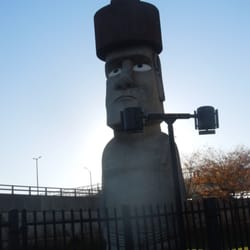
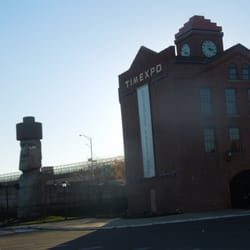
    Bizarre with a capital "B"…read more There is a Timexpo Museum in Waterbury that tells the story of the Timex company, and the history of watches and time. But as important as that might be, they are nothing when compared to the totally cool 40' tall Easter Island Moai statue that graces a strip of grass in front of the museum. What exactly this statue has to do with the history of time, I don't know. What I do know is this- I pity the poor drunken fool who might be unfortunate enough to be stumbling down Union Street when he glances up and sees this 40 foot tall beast blocking his path. I think that would sober up our poor guy pretty fast.

    Discover the Easter Island Moai…read more Forget your bucket list. Don't wait till you can't climb the hill at the quarry to one of the world's most amazing places, Rano Raraku on isolated Easter Island. A giant Moai is waiting to be freed from a thousand years of captivity. What was the last carver's thoughts as he walked away from his final creation? Take a flight or a cruise to French Polynesia and visit Easter Island. Sign up with Tiare Edmunds of Easter Island Guides for a one or two or day tour and see what time left behind. Tiare is the only Rapanui native guide with direct descendents to the original natives. She leads you on an adventure back in time in her air conditioned vehicle. Easter Island is situated on a triangle of volcanic rock in the South Pacific over 2,000 miles from Tahiti and Chile. It's a living outdoor museum and Tiare has the E ticket pass. We were picked up at the pier and spent two incredible days exploring and learning about what might of happened to a thriving culture that almost lead to extinction. While historically no one knows exactly what happened to leave behind over 900 massive Moai, Tiare will help you understand the culture and the people. She also brought along a picnic lunch on both days of arugula from her garden on fresh sandwiches and olives and Rapa Nui locally brewed beer. What a treat. Looking out over the ocean, drinking a cold beer, having a great lunch and talking with a real local historian about her family's history. A truly memorable time. Don't wait.
    Photos
    Easter Island Statue - Suzanne Piper, Becky Parks and unnamed Moai

    Suzanne Piper, Becky Parks and unnamed Moai

    Easter Island Statue - Tiare Edmunds and Becky Parks

    Tiare Edmunds and Becky Parks

    Easter Island Statue

    See all

    Beacon Falls Historical Marker

    Beacon Falls Historical Marker

    4.0(2 reviews)
    3.5 mi

    Very informative! Amazing history in this area. Beacon Falls has quite the past. I have lived here…read morefor just over a year and find its history enthralling

    Things I learned from the Beacon Falls marker:…read more 1) A freed Indian Slave named Toby named a local mountain after himself. 2) They made sulphur matches here in 1835 3) The town was named after a 'small but beautiful waterfall' 4) Ever see the word ''Nyumps '' in your life? I did here. This is a two-sided marker from the CT Historical Commission with the familiar white lettering on a blue background. There are different inscriptions on each side. It's located on a strip of grass near the Beacon Falls Town Hall. The sign dates to 1971 and is in pretty good condition with some minor fading of the white lettering. Sadly, although the sign is in good shape, the support posts are not. The concrete cores are rotting and the metal wrap around them are in states of accelerated failure and splitting. What a disgrace, I'm sure that would make Toby sad. The full inscription reads: The lands of Beacon Falls first appear in history when Milford was settled in 1639. Northern boundary of Milford was Beacon Hill Brook, separating the hunting grounds of the Paugasuck and Tunxis Indians. In 1675 the land became part of Derby. First landowner, Captain Ebenezer Johnson, purchased three parcels in the vicinity of Pinesbridge in 1678. Ensign Riggs and Jeremiah Johnson bought land in 1680. Toby's Mountain (High Rock) was purchased in 1693 by an Indian named Toby, for twelve years a slave of Captain Johnson, freed by him in 1688.The main part of town (called Nyumps) was purchased in 1709. About 1835, some of the earliest American made sulphur matches were manufactured here by Thomas Sanford. Beacon Falls is first mentioned in the Acts of the General Assembly in 1864, when a joint school district was formed and a two room schoolhouse was built on this site. The Town of Beacon Falls was incorporated June 30, 1871, from portions of the Towns of Naugatuck, Bethany, Seymour and Oxford. The name derived from Beacon Hill, where a small but beautiful waterfall descended. Erected 1971 by Town of Beacon Falls, Connecticut Historical Commission.

    Photos
    Beacon Falls Historical Marker
    Beacon Falls Historical Marker - What a disgrace

    What a disgrace

    Beacon Falls Historical Marker - What a disgrace

    See all

    What a disgrace

    Heroes' Tunnel

    Heroes' Tunnel

    4.7(6 reviews)
    5.6 mi

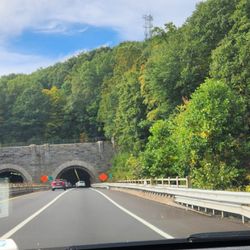
    "Well, cuddle up, angel, cuddle up, my little dove And we'll…read moreride down, baby, into this tunnel of love" (Bruce Springsteen) You'll find it on the Wilbur Cross Parkway near New Haven, CT. Driving on the Parkway, it's become a Connecticut landmark - a welcome and familiar sight. It was blasted through a 1,200-foot-long hole through the West Ridge Mountain in 1949. It carries approximately 77,300 vehicles daily. It was originally named the West Rock Tunnel. It was renamed the Heroes Tunnel in 2003 to honor "heroes of all kinds" in the post-September 11 era. The Tunnel and Wilbur Cross Parkway are vital connectors between New York and Hartford.

    The Heroes Tunnel (formerly known as the West Rock Tunnel)…read more "the former name of this tunnel was provided by fellow YELPER Jim C. from Wallingford, CT and represents "historical" information that can not be confirmed or denied by this reviewer but much appreciated" The tunnels are located along the Wilbur Cross Parkway (Route 15) in the Town of Woodbridge and the City of New Haven, near the Town of Hamden border. The Heroes Tunnel is a 1,200-foot long tunnel, which passes through West Rock Ridge in New Haven and Woodbridge. The existing tunnels were constructed between spring 1948 and fall 1949 and consists of two 28-foot wide by 19-foot high barrels with horseshoe cross-sections. The northbound and southbound barrels of the tunnel consist of two 11-foot wide travel lanes with 6-inch shoulders and a 2-foot 6-inch wide raised maintenance walk on each side. The centerlines of the barrels are approximately 63 feet apart. It is debatable that this is the only tunnel to pass beneath a natural land feature in the State of Connecticut and is eligible for listing on both the National and State Registers of Historic Places. It seems the renaming of these tunnels weren't well received - this challenge to leave the tunnels name in tack was not in anyway meant to take away from the many heroic efforts by any of the participants the name "Heroes Tunnel" may reference whom have sacrificed it all helping humanity, it's more about renaming history and the cancel culture that continues to identify and change historical significance landmarks that aren't offensive and was in no way meant to be prejudice against any culture, creed or the oppressed. These tunnels were engineering marvels through the time of their inception and construction and are monumental feats that reflect the pride of those that worked and sweated to make travel in the area convenient and safe for those that transverse America's highways...

    Photos
    Heroes' Tunnel
    Heroes' Tunnel
    Heroes' Tunnel

    See all

    Amistad Memorial

    Amistad Memorial

    5.0(3 reviews)
    8.9 mi

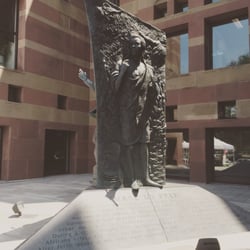
    "Make Us Free" I…read morelearned about the Amistad story from Steven Spielberg's 1997 movie. In 1839, a Spanish slave ship called La Amistad was carrying African slaves to Cuba. Under the leadership of Joseph Cinque (the central figure of the Amistad story), there was a prison break on the ship and two of the Spanish crew were killed. The ship ended up in New Haven, CT where a Supreme Court trial took place to decide the destiny of the slaves. Were they Spanish property? Were they free men? Were they criminals? What exactly were they? You will find this powerful memorial in front of the New Haven City Hall. It's a striking three sided sculpture with a trio of sculpted panels depicting Sengbe Pieh, also known as Joseph Cinque. Each panel shows him at different stages in his life -as a free African, as a defendant in the Supreme Court trial, and as a free man ready to return to Africa. The gorgeous sculptures of Cinque are 9 feet tall, resting on a 2 foot granite base. The three-sided base contains a large inscription that tells the story. The full inscription reads: Make Us Free This monument is a memorial to the 1839 Amistad Revolt and its leader, Sengbe Pieh, also known as Joseph Cinque. Sengbe Pieh was one of the millions of Africans kidnapped from their homes and transported in bondage to the Americas. Sold into slavery in Cuba, he and forty-eight other men, and four children were bound aboard the schooner La Amistad. During a storm, Sengbe Pieh successfully freed himself and his fellows. The Africans seized the ship, but their offers to steer La Amistad homeward were thwarted. After futile weeks at sea, they were captured off Long Island by the U.S.S. Washington. On this site, the Amistad Africans were jailed awaiting trial for piracy and murder. To aid their struggle for freedom, the Amistad Committee formed, counting in its number ministers Simeon Jocelyn, Joshua Leavitt, and James Pennington; merchant Lewis Tappan; professor Josiah Gibbs; and lawyer Roger Baldwin. The Africans were tried twice prior to their ultimate triumph before the United States Supreme Court, where former President John Quincy Adams courageously defended them. Sengbe Pieh and his fellows were declared Free Persons. The Africans sought to return home. To raise funds for their voyage and to further the anti-slavery cause, they engaged in a series of speaking tours. In 1841, after a sojourn that profoundly influenced the abolitionist movement, they set sail, free at last. To commemorate the heroism of the Amistad Africans and those who shared in their quest for freedom, the 1989 Amistad Committee commissioned his sculpture by Ed Hamilton and dedicated it on September 26, 1992. Erected 1992 by the 1989 Amistad Committee One of the best movie courtroom scenes I have ever seen has the great Anthony Hopkins as an elderly John Quincy Adams arguing for the freedom of the slaves before the US Supreme Court. If this doesn't give you goose bumps, go check to see if you are breathing. Check this out.. https://www.youtube.com/watch?v=EZFr4VLPW9Q

    The Amistad memorial has been on my list for some time. It commemorates the fight to establish the…read morefreedom of those slaves who took control of the slave ship The Amistad. After two trials, it was announced that they were in fact Freemen and allowed to return to their homes in Africa. It is a cornerstone in the abolitionist movement, and crucial case to abolishment of slavery in the USA.

    Photos
    Amistad Memorial
    Amistad Memorial
    Amistad Memorial

    See all

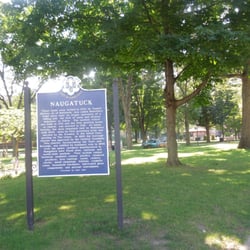
    Naugatuck Historical Marker

    Naugatuck Historical Marker

    3.0(1 review)
    5.5 mi

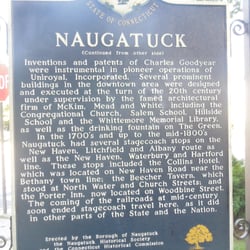
    Ever hear of Charles Goodyear? He founded the United States Rubber Company in Naugatuck in…read more1892.That company became Uniroyal in 1961, and was bought by Michelin in 1990. Naugatuck's heritage also includes chemicals, castings, candy (for a while, it was the only place in the US that made Almond Joy and Mounds), cutlery, and clocks. This is a two-sided marker from the CT Historical Commission in the familiar white lettering on a blue background. It's located on a town green near the intersection of Division Street and Church Street. Dedicated in 1980, the marker is in pretty good condition, with no signs of peeling or fading. The full inscription reads: These lands were settled in 1702 by Samuel Hickox, Jr. of Mattatuck, now called Waterbury. Eight years later he began operation of a fulling mill, the first of many and diverse industries to follow. The earliest school was built in 1731 and the first meeting house, or church was erected in 1781. As Salem Society, the area remained tied to Waterbury until 1844, then its first governing body was elected by the freemen at the initial town meeting on The Green. In 1893 the borough charter was approved by the General Assembly. This charter, incorporating the Town and Borough, was ratified by freemen's vote in 1895. Over the years, products manufactured in Naugatuck have found area, national, and world-wide markets, They include rubber footwear, synthetic rubber, plastics, chemical projects, iron castings, candy, cutlery, clocks, metal stampings, buttons, cosmetic cases, household hardware, fabricated glass components, and aircraft instruments. Inventions and patents of Charles Goodyear were instrumental in pioneer operations of Uniroyal, Incorporated. Several prominent buildings in the downtown area were designed and executed at the turn of the 20th century under the supervision by famed architectural firm of McKim, Mead and White, including the Congregational Church, Salem School, Hillside School and the Whittemore Memorial Library, as well as the drinking fountain on The Green. In the 1700's and up to the mid-1800's Naugatuck has several stagecoach stops on the New Haven, Litchfield and Albany route as well as the New Havel, Waterbury and Hartford line. These stops included the Collins Hotel, which was located on New Haven Road near the Bethany town line; the Beecher Tavern, which stood at North Water and Church Streets; and the Porter Inn, now located on Woodbine Street. The coming of the railroads at mid-century soon ended stagecoach travel here, as it did in other parts of the State and the Nation. Erected by the Borough of Naugatuck the Naugatuck Historical Society and the Connecticut Historical Commission 1980

    Photos
    Naugatuck Historical Marker
    Naugatuck Historical Marker

    See all

    Chetstone - Chetstone dining room.

    Chetstone

    5.0(2 reviews)
    10.1 mi

    What a beautiful 19th century home--the architectural detail inside and out is rare and…read morefascinating. I attended a benefit brunch on the first floor, so cannot speak about the rest of the home, but I was enchanted the entire two hours I was there by the intricate design in the molding as well as the decor. The nice young owners are personable.

    Chetstone is a Gothic Victorian mansion built on the highest ridge of Fairhaven Heights in the mid…read more19th century. After an almost 2 decades long effort to restore this historic home, it is now in fantastic condition. My family rented this beauty for a 4 day stay in New Haven on Air BnB. The Chetstone is also currently listed on the CT Film Commission, and is used for photography and videography, as well as a workshop and performance space. As a bed and breakfast, it would be hard to imagine a more amazing home to stay in. The Chetstone has 4 stories: the kitchen and living rooms on the first floor are warm (ambient heat in the kitchen and bathroom floors is awesome) and cozy. Three of the four bedrooms on the second floor come with working sinks! I felt like I was sleeping in a restored, totally livable adjunct to the Mark Twain house (didn't hurt that I had just recently watched Ken Burns' fantastic documentary on Twain.) The magic comes in from all angles with ancient glass refracting the sunlight in beautiful directions. The third floor is unfinished with whimsical rabbit art dating to 1919 exposed on the walls. The fourth floor is a beautiful lookout over Fairhaven Heights. This neighborhood used to be called "Dragon" because the harbor seals that hung out at the mouth of the Quinnipiac River resembled dragons: on a clear day, you can almost still seem them from the fourth floor. Thank you to all involved in the restoration of this Connecticut architectural gem!

    Photos
    Chetstone - Chetstone parlour.

    Chetstone parlour.

    Chetstone - Chetstone bedroom.

    Chetstone bedroom.

    Chetstone - Chetstone living room.

    See all

    Chetstone living room.

    Bethany Historical Marker - landmarks - Updated May 2026

    Loading...
    Loading...
    Loading...