
Berkeley Repertory Theatre Photos


You might also consider


More like Berkeley Repertory Theatre
Recommended Reviews - Berkeley Repertory Theatre
Start your review...


Reviews With Photos


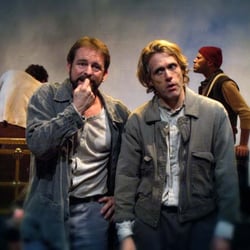
I'd never been to a Berkeley Repertory show until this year. I'm surprised because I'm such a big theatre nerd. I was served an ad on Instagram for Arthur Miller's All My Sons in March 2026. It stars Jimmy Smits (of Star Wars and the West Wing fame! That's my President Santos and Bail Organa!) and his wife Wanda DeJesus. Such big names! I took my mom to a weekday matinee. It was a packed house and skewed older (hey, it was a weekday.) The theatre was clean and intimate. There was no bad seat in there! They did have a young person's discount if you're under 35 which was nice (if you're under 35.) Maybe if Berkeley built more housing, the city would be more welcoming and inclusive to young people and there wouldn't be that discount. Bathrooms were clean. After the show (which was a tearjerker), there was a Postshow Discussion with a docent (a UC Berkeley grad student.) It was fun discussing the show with other attendees who stayed. It was like a book club! Intimate and inclusive, and then there was a surprise--Jimmy Smits and Wanda DeJesus came to listen and contribute to the conversation! (And then do autographs and photographs.) Berkeley Repertory is a community hub. I appreciate their shows and the discussions they evoke (and the space they provide to have said discussions.) The SF Chronicle raved about All My Sons and I could not rave about it more either! Time to reread Arthur Miller and also support local theatre!


REVIEW: "Galileo: A Rock Musical" at the Roda Theatre on June 8, 2024. Until this past weekend, I didn't realize I had not been to Berkeley Rep in nearly twenty years when I saw Rita Moreno's stirring turn as Amanda Wingfield in "The Glass Menagerie". It's still a really well constructed facility, especially the 600-seat Roda Theatre. This time I was motivated to see the brand new musical about Galileo because it stars one of my favorite Broadway performers, Raul Esparza. In my opinion, he was the definitive Bobby in the 2006 Broadway revival of Sondheim's "Company" (review: https://yelp.to/ks7d5rzNC3), so I was thrilled to read that he was playing the title role. I convinced Jamie W. to come with me this past Saturday, and happily, Esparza was in top form playing Galileo as an obstreperous visionary. His powerful voice has not diminished over the years, and he inhabited the character with passionate brio. Although visually arresting, the Broadway-bound musical itself still needs a bit of work. The book by Danny Strong worked well in tracing the challenges Galileo faced in presenting his scientific findings against the omnipotence of the Catholic Church in the early 17th century. The "rock" music, however, often felt asynchronous with the setting as it sounded like a mash-up of "Rent" and a rap-free "Hamilton". The power ballad-heavy score by Michael Weiner and Zoe Sarna presented a few genuine highs like "Heaven's Changing" when Galileo discovered the telescope, but there were songs that should be jettisoned like the showy rocker "Two Sides". The repetitive chorus "Louder and Louder" really got on my nerves. There wasn't really a standout number in the entire show because it felt more like an opera than a musical. Beyond Esparza, there were a couple of vocal standouts. Jeremy Kushnier carried the show's biggest character arc as Galileo's initial ally, Bishop Barbarini, who becomes Pope in record time. The other was Madalynn Mathews as Galileo's feisty daughter Virginia who becomes a nun. Both deliver powerful numbers. Less impressive was the often clunky choreography and the uncertain ending with no big finish. I should mention this was the first time we took advantage of the seating in the bar lounge before the show. Cocktails were not overly pricy though most of the choices came prepackaged in cans. By the way, similar to most theatres, there were never enough restrooms, especially during intermission. Jamie discovered the second restroom beyond the terrace but a little too late. Second row orchestra seats cost $93. RELATED - Exploring Berkeley? Here's my collection of places I've patronized and reviewed: https://bit.ly/2CbVh8u


We just saw Galileo there and it was as good as any Broadway production! Don't miss this one!
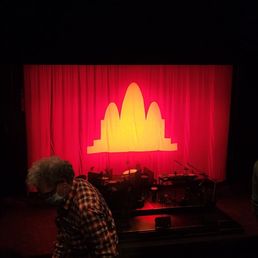

This is mainly a review of the Cambodian Rock Band. My cousin told me about his friend seeing this show a week prior and how they recommended it to us. We impromptu bought the tickets ($30 under 30 years old and $60 for those over) a couple of days before the show for ourselves and my dad, a Khmer Rouge survivor, and it was well worth it. Initially, I was under the impression this was only a concert. Instead, it was a heartfelt, entertaining play that puts you on a roller-coaster of emotions. The story is set in 2008 Cambodia as you follow a 26-year-old Cambodian American's journey and her relation to Comrade Duch. You are immersed in energetic music, tragic history, and outstanding storytelling. Masks- They do require masks and provide any if you didn't bring them. I saw that they required vaccination proof but didn't check when we arrived. Parking- The parking structure is conveniently located across the street. You can pay at the pay station or on your way out. It was $9 for a weekday night.


I saw Octet (Friends of Saul) here Friday and it exceeded every expectation. The Peets theatre is midsized and comfortable with top notch audio and visuals. The production was so good with such a powerful message that I was saddened that it wasn't a full house. The cast of eight (obviously) were all phenomenal. I almost never feel that. They complemented each other's voices and characters perfectly. As we were entering the theatre there was an optional "secret" entrance which of course I was all over. I'm really glad I did! If you get the chance, take the risk. I'm actually considering going back to take others. If it works, you'll come away reconsidering your relationship with screens and other people in this modern world. We're all in there to some extent... I highly recommend this play and theater!


15 years ago

21 years ago

15 years ago

19 years ago


14 years ago

15 years ago

15 years ago


18 years ago

19 years ago


19 years ago


17 years ago

17 years ago

18 years ago

16 years ago


8 years ago


15 years ago


17 years ago


16 years ago


8 years ago


18 years ago


16 years ago
More info about Berkeley Repertory Theatre
2025 Addison St
Berkeley, CA 94704
Downtown Berkeley
Directions
(510) 647-2949
Call Now
Visit Website
http://www.berkeleyrep.org
Hours
Other Amenities
From the Business

Ask the Community - Berkeley Repertory Theatre
Where could a group of 20 people go for an early dinner after a play?
Comal or Gather. I suggest making a reservation.
Review Highlights - Berkeley Repertory Theatre
You might also consider


















Why does Yelp recommend reviews?
24 reviews that are not currently recommended
The reviews below are not factored into the business's overall star rating.

17 years ago

19 years ago

12 years ago

19 years ago

19 years ago
18 years ago

8 years ago

6 years ago

4 years ago

17 years ago

17 years ago

18 years ago

17 years ago

17 years ago

16 years ago

11 years ago

16 years ago

7 months ago

20 years ago


