Cancel

    Open app

    Search

    Basing House Ruins Photos

    Recommended Reviews - Basing House Ruins

    Your trust is our priority, so businesses can't pay to alter or remove their reviews. Learn more about reviews.
    Yelp app icon
    Browse more easily on the app
    Review Feed Illustration
    Photo of David J.
    96
    2344
    11912

    8 years ago

    Helpful 1
    Thanks 0
    Love this 2
    Oh no 0

    Verify this business for free

    Get access to customer & competitor insights.

    Verify this business

    Titchfield Abbey

    Titchfield Abbey

    (3 reviews)

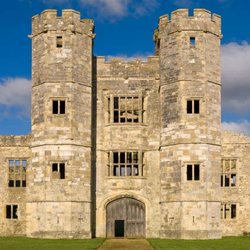
    On our Road Trip through England, Wales and Scotland we focused on Castles, Abbeys and walks…read more The Titchfield Abbey we've visited on our first full day here in England. It was a hot summer day. A monday. And only really a handful people on site. Which is surprising, because these are beautiful remains of a former abbey and mansion. It's almost still fully complete even. There's no entrance fee. And even parking is free if you're a member of the EH. If not it's 2£ only. The building is very impressive. Built in the 13th Century it was first in the hand of monks. Then it changed hands under Henry VIII. And was turned into a Tudor mansion. It's quite a sight to behold. And you can walk around the whole site. But as usual: Be respectful, don't climb around and pick up your litter and after your dog (which are allowed here on the site). A very good start for this year's Road Trip. A great place to visit. And there are even one or two lunch options around, if you feel hungry after your visit.

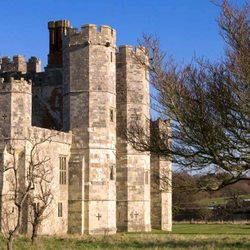
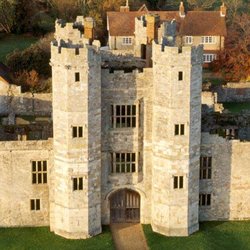
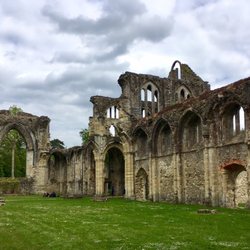
    Titchfield Abbey is a ruined former country home, which was itself adapted from an Abbey during the…read moreDissolution. The Abbey was founded in 1222 by the Premonstratensian Order of canons. It was founded as a daughter house of Halesowen Abbey, and endowed both by its founder Bishop Peter of Winchester and Henry III. Never especially wealthy, the Abbey was nevertheless noted for its scholarship and held a substantial library. The Abbey buildings followed a standard plan, albeit on a relatively modest scale. The Abbey seems to have had a quiet and ordered existence, although it's location near the south coast on one of the main routes to France meant it hosted both Richard II and Henry V, and was the location of Henry VI to Margaret of Anjou in 1445. The Abbey was dissolved in 1537, at the behest of Thomas Wriothesely, Chancellor to Henry VIII. Unlike many dissolutions, the Abbott John Salisbury secured a peaceful handover, with pensions provided for the canons and the position of Dean of Norwich for himself in 1539. Wriothesely adapted the buildings to form a n impressive country home for himself, called Place House. The Abbey church itself was converted to a grand gatehouse and accommodation wing, with a long gallery and hall formed around the former cloister. This involved taking down the church tower and chancel. The house hosted Elizabeth I, Edward VI, Charles I and Charles II. It continued in use as a home until the 1780s, when the decision was taken to abandon and deliberately demolish much of the complex to form a romantic ruin. Today it is in the care of English Heritage. The impressive turreted gatehouse forms the larger part of what is visible today, the bare structure enabling much of the former church to be traced. There are also remains of the cloister walls, with the foundations of the demolished buildings traced out on the ground. The site is also known for its collection of decorative mediaeval floor tiles. The adjacent fish ponds have survived but are no longer part of the site. Practicalities: the gravel drive is quite narrow and leads to a gravel car park. Although there is level access the rough surfaces make for challenging wheelchair access. There are no toilets on site.

    Bramber Castle - Bramber castle - dry moat

    Bramber Castle

    (6 reviews)

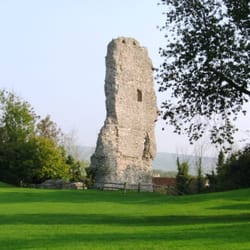
    Built to defend an important port on the River Adur, Bramber Castle was constructed as a motte and…read morebailey castle around 1073 by William De Braose, who fought alongside William the Conqueror at the battle of Hastings in 1066. Apart from a period of confiscation during the reign of King John, it remained in the ownership of the De Braose family until themale line died out in 1324. Thereafter, it passed via the Mowbray and Howard families into the estate of the Dukes of Norfolk, who held it until it until 1926. It was given to the National Trust in 1946. Very little survives of the original castle, thanks to a gradual decline over the years, damage during the Civil War in 1642 and looting of the stones as a quarry for building by the locals. The most prominent feature is the tall and unsteady-looking fragment of the Gatehouse tower, still standing to almost its full original height. In the centre of the grounds is the impressive original motte, its earthen mound rising some 30ft (10m). A short distance away is a section of the curtain wall which survives up to 10ft (3m) in places. Around the perimeter are also the remains of the castle's impressive moat. (NB be careful with small children, as there are some sheer drops in places). Although the ruins are rather fragmentary, the grounds are beautifully kept by the National Trust, and make a wonderful place for a picnic, as well as affording excellent views of the surrounding countryside.

    This place is a bit of a let down. There seems to be no effort to make it obvious where/what parts…read moreof the ruins were. They have a lame sign at the entrance but little else. It just seems like an enclosed play field.

    Silchester Roman City Walls & Amphitheatre - Silchester Roman City Walls and Amphitheatre

    Silchester Roman City Walls & Amphitheatre

    (2 reviews)

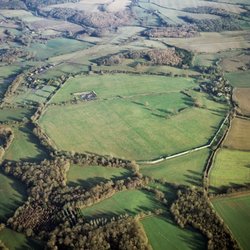
    This idyllic rural spot was, for over four hundred years, a bustling Roman town at a crossroads on…read morethe road from London to the West Country. The location was the earlier tribal capital of the Atrebates, a Celtic tribe whose territory covered much of present day Berkshire, and parts of Hampshire and Wiltshire. Soon after the Roman conquest in 43AD, a Roman town was established on the same site, called Calleva Atrebates. The town was established within the current walls. These were originally made just of earth with a wooden palisade, but were faced with stone around 280 AD, enclosing around 100 acres. The town had a forum, baths, an inn, several temples and latterly a Christian Church. Evidence is that the town declined gradually after the withdrawal of the Roman Legions in 410AD, but unlike many other locations, it was eventually abandoned. Excavations have identified the street plan and the details described above, but most of the remains have since been covered over. The principal sight is therefore the impressive walls, which form an almost complete circuit. You can walk along the top of the bank above the walls around the site, a distance of around three miles. Close to the modern hamlet near the medieval Church but outside the walls, is the amphitheatre, which is well preserved. This has earthen banks on which wooden seating would have been erected. There is a car park on the north western corner. The walls are not suitable for wheelchairs (the access paths have stiles) , although a section is clearly visible from the road on its eastern side. The path to the amphitheatre is relatively level but the surface is uneven.

    Originally a tribal centre of the Iron Age Atrebates, Silchester became the large and important…read moreRoman town of Calleva Atrebatum. Unfortunately there is not a great deal left of the original Roman Silchester as it was never re-occupied or built over after its abandonment in the 5th century. As a result of this it is apparently an archaeoligical haven as it gives an unusually complete picture of its development. It is however a very nice day out (in better weather), as there is a lovely 8 mile walk around the old city walls which remain in some form or another. There is also the remains of an impressive amphitheatre which is a must to view during the walk. The amphitheatre is just outside the old city walls, but its location is made apparrent when viewing the information boards. There is parking available by the city walls. Sign posts are not great, but if you keep driving around the wall you will come accross it eventually. Plenty of areas for pickniking in nice weather and plenty of lovely pubs to stop in and get a drink and bite to eat in the local area.

    Church of St Michael and All Angels, Southwick

    Church of St Michael and All Angels, Southwick

    (1 review)

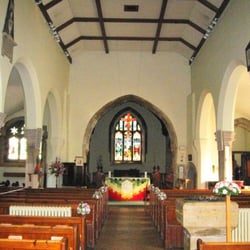
    Southwick is now firmly part of the suburban sprawl running from Brighton and Shoreham, and is…read moreknown to most people for the power station that dominates the far side of Shoreham Harbour. But there was a community here in Saxon times, and its church is surprisingly ancient. In fact, the walk from the station crosses the Green, an attractive and villagey stretch of tree-lined common which splits Southwick into two halves. There are some handsome cottages surrounded by well appointed semi-detached suburban homes, and a rather less appealing row of post-war shops. St Michael and All Angels was, until the 18th century, dedicated to St Margaret, and sits among a very pretty churchyard, thickly studded with trees. Although there was probably a church here in Saxon times, it first recorded in 1086, and in 1206 the right to appoint the rector was granted to the Templars, and then to the Hospitallers, although much of the early mediaeval period was taken up with disputes over these rights with the monks of Sele Priory. The ownership passed from Sele Priory to Magdelene College at the Dissolution, and patronage thereafter passed to the Crown until the 20th century. Fire in the 19th Century damaged the nave and an unexploded bomb (and the subsequent excavation to remove it) damaged the tower in 1941. The church itself is built of flint, and is essentially in three parts: the tower, nave and chancel. The tower is by far the most impressive part: its foundations and lower walls are said to be Saxon, although it mostly dates from the late 12th and 13th centuries. It is an attractive composition, with paired round-headed arches with narrow openings surmounted by paired gothic lancets and, above that, a shingle broach spire. The west door is also attractive, but a modern addition: the tower was carefully taken down and faithfully rebuilt in 1950 after the bomb damage, with vestries built either side. The chancel is mostly 13th century, with two original lancets, framed by a 14th century chancel arch. There are two round headed arches to the south, although the central column probably dates from the Victorian rebuilding. A 14th wooden screen with narrow lancets also survives in the south aisle. The nave burned down in the 1830s and was rebuilt with narrow lean-to aisles in 1834, with round-headed arcades and lancet windows. Pevsner's Buildings of England described the nave as a 'loveless cover for pew-space', which I think is a bit harsh, although there's no doubt it doesn't match the quality of the tower. The furnishings other than the south aisle screen - are limited in interest to what appears to be a mediaeval aumbry, some 18th and 19th century tombs and memorials, and a sturdy, square font, probably from the 13th century. The church is today the centre of large and busy parish, and has a vibrant church life, with services daily through the week.

    Farnham Castle Keep

    Farnham Castle Keep

    (3 reviews)

    I had the most amazing experience at Farnham Castle, it is certainly in my top 5 highlights of…read morebetween the 5 trips I've made to England. I was staying in Farnham for a friend's wedding (not at the castle, though you can book it for your special day). I was on my way up the hill when it started raining - the only time it rained during the day in my 15-day journey! I saw online the venue was open to tour until 4pm and it was approximately 2:30pm by the time I made it up the hill. I went to where the sign said tours begin and there were many ladies huddled inside. They were very sad to inform me the tours were done for the day and they were headed home. Completely understandable, I said I could come back another day..... Apparently I could not return another day. The castle is only open on Wednesdays for visitors during very specific hours. And not every Wednesday. I think the look of disappointment prompted one lady, Mavis, to offer to do a "quick" little tour. Mavis isn't your ordinary tour guide - she grew up on the property and is a wealth of knowledge. My super intimate (and not "quick" tour) was full of first-hand knoweledge, her descriptions were so articulate and captivating - I felt like I was transported back in time and reliving her youth alongside her while exploring the different parts of this historic site during the warm summer rain. I feel the photo I attached to this review is exactly the same as what she saw many decades before I was born. As the tower is under necessary repairs, we were unable to venture inside. Mavis is, hands down, the best tour guide of all time. Between her knowledge, love of history, animals, and the natural world, she is one of the most amazing people I have ever met. Beautiful inside and out, I could have chatted with her for hours! I told her she should host a tv show, especially considering she has travel across the world. I feel incredibly blessed to have had this experience and highly recommend the tour - just make sure you are there on a Wednesday when they are open ;)

    As far as English Heritage castles go, Farnham castle is relatively small, (although this should be…read moreexpected as it is actually only a keep and not really a castle). However what is there is extremely well presented with lots of visual and aural aids. You enter the site through a small corridor which has visual time board displays of the history of the keep and under a picture of the castle a button to start a sound recording detailing the Keeps history throughout the ages. Unfortunately this was another one of the many English fortifications that suffered at the hands of Cromwell at the end of the civil war, which resulted in the removal of all of its towers and main defensive positions. As a result it looks nothing like it would have done in its glory days, however the visaul aids provide a great insight into how the castle would have looked. First built in 1138 by Henri de Blois, grandson of William the Conqueror, Bishop of Winchester, the castle was to become the home of the Bishops of Winchester for over 800 years. The original building was demolished by Henry II in 1155 after the Anarchy and then rebuilt in the late 12th and early 13th centuries. The castle was slighted again after the Civil War in 1648. Since then more buildings have been constructed in the castle's grounds, the most impressive being those built by Bishop George Morley in the 17th century. The castle is free to enter with free parking and although there is no shop or anywhere to purchase refreshments, they have at least seen to providing a very clean WC.
    Bibury

    Bibury

    (2 reviews)

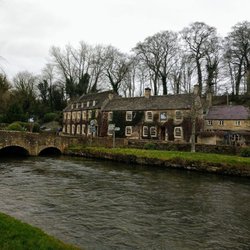
    Bibury is a charming, typically Cotswold. It's easy to see why William Morris called Bibury 'The…read moremost beautiful village in England' - wonderful stone buildings strung out along the banks of the River Coln. Arlington Row, owned by the National Trust, is one of England's most iconic and photographed sites - it even appears on the inside cover of UK passports! Originally built in the 14th century as a monastic wool store, it was converted in the 17th century into a row of weavers' cottages. The River Coln flows through Bibury sandwiched between the main village street and an expanse of boggy water meadow known as Rack Isle, so called because wool was once hung out to dry there on racks after it had been washed in Arlington Row. You can even see some trout in the river, which the trout farm owners told us they are the escape artists! With Arlington Row as a backdrop, it makes one of the most picturesque scenes you will find in the Cotswolds. Other attractions in Bibury include: Bibury Trout Farm, (see my other review) one of the oldest and most attractive trout farms in the country covering almost 15 acres, where you can learn about trout or event catch your own dinner. This village is stunning, perfect photographers dream. Do come you will not be disappointed.

    If traveling past Oxford don't miss out on this picturesque little town, offering a prime example…read moreof the Cotswold way of living. Houses are maintained in much the old fashion, offering not just wonderful photo opportunities but also a glimpse into housing of the past . You will find several small tea houses and shops here, as well as a trout farm and hotel. Well worth a visit or even a relaxing weekend.

    Basing House Ruins - landmarks - Updated May 2026

    Loading...
    Loading...
    Loading...