Cancel

    Open app

    Search

    Bramber Castle Photos

    Recommended Reviews - Bramber Castle

    Your trust is our priority, so businesses can't pay to alter or remove their reviews. Learn more about reviews.
    Yelp app icon
    Browse more easily on the app
    Review Feed Illustration
    Photo of David J.
    96
    2344
    11912

    19 years ago

    Helpful 0
    Thanks 0
    Love this 1
    Oh no 0

    18 years ago

    Helpful 0
    Thanks 0
    Love this 0
    Oh no 0
    Photo of Josh H.
    2
    292
    332

    16 years ago

    Helpful 0
    Thanks 0
    Love this 0
    Oh no 0

    16 years ago

    Helpful 0
    Thanks 0
    Love this 0
    Oh no 0

    17 years ago

    Helpful 0
    Thanks 0
    Love this 0
    Oh no 0

    16 years ago

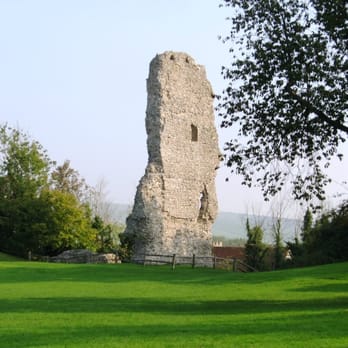
    a good walk with kids and dog

    Helpful 0
    Thanks 0
    Love this 0
    Oh no 0

    Verify this business for free

    Get access to customer & competitor insights.

    Verify this business

    Church of St Michael and All Angels, Southwick

    Church of St Michael and All Angels, Southwick

    (1 review)

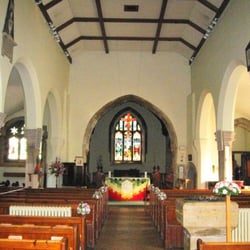
    Southwick is now firmly part of the suburban sprawl running from Brighton and Shoreham, and is…read moreknown to most people for the power station that dominates the far side of Shoreham Harbour. But there was a community here in Saxon times, and its church is surprisingly ancient. In fact, the walk from the station crosses the Green, an attractive and villagey stretch of tree-lined common which splits Southwick into two halves. There are some handsome cottages surrounded by well appointed semi-detached suburban homes, and a rather less appealing row of post-war shops. St Michael and All Angels was, until the 18th century, dedicated to St Margaret, and sits among a very pretty churchyard, thickly studded with trees. Although there was probably a church here in Saxon times, it first recorded in 1086, and in 1206 the right to appoint the rector was granted to the Templars, and then to the Hospitallers, although much of the early mediaeval period was taken up with disputes over these rights with the monks of Sele Priory. The ownership passed from Sele Priory to Magdelene College at the Dissolution, and patronage thereafter passed to the Crown until the 20th century. Fire in the 19th Century damaged the nave and an unexploded bomb (and the subsequent excavation to remove it) damaged the tower in 1941. The church itself is built of flint, and is essentially in three parts: the tower, nave and chancel. The tower is by far the most impressive part: its foundations and lower walls are said to be Saxon, although it mostly dates from the late 12th and 13th centuries. It is an attractive composition, with paired round-headed arches with narrow openings surmounted by paired gothic lancets and, above that, a shingle broach spire. The west door is also attractive, but a modern addition: the tower was carefully taken down and faithfully rebuilt in 1950 after the bomb damage, with vestries built either side. The chancel is mostly 13th century, with two original lancets, framed by a 14th century chancel arch. There are two round headed arches to the south, although the central column probably dates from the Victorian rebuilding. A 14th wooden screen with narrow lancets also survives in the south aisle. The nave burned down in the 1830s and was rebuilt with narrow lean-to aisles in 1834, with round-headed arcades and lancet windows. Pevsner's Buildings of England described the nave as a 'loveless cover for pew-space', which I think is a bit harsh, although there's no doubt it doesn't match the quality of the tower. The furnishings other than the south aisle screen - are limited in interest to what appears to be a mediaeval aumbry, some 18th and 19th century tombs and memorials, and a sturdy, square font, probably from the 13th century. The church is today the centre of large and busy parish, and has a vibrant church life, with services daily through the week.

    Titchfield Abbey

    Titchfield Abbey

    (3 reviews)

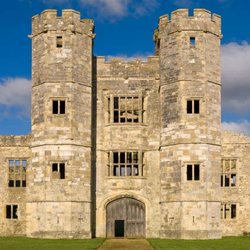
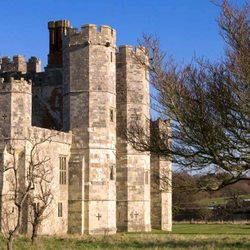
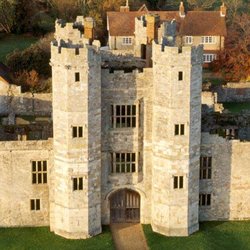
    On our Road Trip through England, Wales and Scotland we focused on Castles, Abbeys and walks…read more The Titchfield Abbey we've visited on our first full day here in England. It was a hot summer day. A monday. And only really a handful people on site. Which is surprising, because these are beautiful remains of a former abbey and mansion. It's almost still fully complete even. There's no entrance fee. And even parking is free if you're a member of the EH. If not it's 2£ only. The building is very impressive. Built in the 13th Century it was first in the hand of monks. Then it changed hands under Henry VIII. And was turned into a Tudor mansion. It's quite a sight to behold. And you can walk around the whole site. But as usual: Be respectful, don't climb around and pick up your litter and after your dog (which are allowed here on the site). A very good start for this year's Road Trip. A great place to visit. And there are even one or two lunch options around, if you feel hungry after your visit.

    Titchfield Abbey is a ruined former country home, which was itself adapted from an Abbey during the…read moreDissolution. The Abbey was founded in 1222 by the Premonstratensian Order of canons. It was founded as a daughter house of Halesowen Abbey, and endowed both by its founder Bishop Peter of Winchester and Henry III. Never especially wealthy, the Abbey was nevertheless noted for its scholarship and held a substantial library. The Abbey buildings followed a standard plan, albeit on a relatively modest scale. The Abbey seems to have had a quiet and ordered existence, although it's location near the south coast on one of the main routes to France meant it hosted both Richard II and Henry V, and was the location of Henry VI to Margaret of Anjou in 1445. The Abbey was dissolved in 1537, at the behest of Thomas Wriothesely, Chancellor to Henry VIII. Unlike many dissolutions, the Abbott John Salisbury secured a peaceful handover, with pensions provided for the canons and the position of Dean of Norwich for himself in 1539. Wriothesely adapted the buildings to form a n impressive country home for himself, called Place House. The Abbey church itself was converted to a grand gatehouse and accommodation wing, with a long gallery and hall formed around the former cloister. This involved taking down the church tower and chancel. The house hosted Elizabeth I, Edward VI, Charles I and Charles II. It continued in use as a home until the 1780s, when the decision was taken to abandon and deliberately demolish much of the complex to form a romantic ruin. Today it is in the care of English Heritage. The impressive turreted gatehouse forms the larger part of what is visible today, the bare structure enabling much of the former church to be traced. There are also remains of the cloister walls, with the foundations of the demolished buildings traced out on the ground. The site is also known for its collection of decorative mediaeval floor tiles. The adjacent fish ponds have survived but are no longer part of the site. Practicalities: the gravel drive is quite narrow and leads to a gravel car park. Although there is level access the rough surfaces make for challenging wheelchair access. There are no toilets on site.

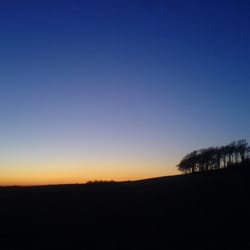
    Chanctonbury Ring - Chanctonbury at dusk.

    Chanctonbury Ring

    (2 reviews)

    Many Brightonians tend to find themselves in need of a retreat from the busy streets and beaches of…read moreBrighton and Hove of a summer's weekend. Displaced from the city they by incomers from London and the summer tourists they splash like droplets of water from a dewpond whose surface has been shattered by the stone throwing misadventures of small boys. But where do they go? Well one place I find myself visiting on a July eve is Chanctonbury ring. A pleasant spot on the South Downs, Chanctonbury Ring was a hill fort in the Iron Age, hence its superb panoramic views. Chanctonbury is an important archaeological site, with caches of Roman coins and pottery having been discovered there from its time as a temple. Human remains have also been found. Reports were made in the 1970s of paranormal activity and evidence of occult ceremonies having taken place, but when questioned, local occult groups claimed that the site had a bad atmosphere and they wouldn't risk going there. This may stem from the legend that Chanctonbury Ring is one of the clods of earth the devil threw from Devil's Dyke, when he was carving out a channel inland to drown humankind before being foiled by a cockerel and an old lady's sieve. However, the sheep nibble away in blissful ignorance, and the grassy knolls seem unlikely to conceal Satan in any of his myriad forms. The ring of trees from which the place takes its name came comparatively late, planted by Charles Goring, the then owner of Wiston Estate. The locals at first objected to the idea, but later when the trees were destroyed by the 1987 hurricane, they planted replacements in his memory. The hill is also an ordnance survey trig point, and beacons are lit there on New Year's Eve in sequence with the rest of the Downs. All in despite its slightly sinister past this spot offers an earthy and un-crowded spot to have that Sunday afternoon BBQ with a little shade and plenty of space to ruminate on the weekend behind you or the week ahead.

    This has to be one of my favorite places in Sussex! Although its a bit of a trek to get to, so I…read moresuggest you have some snacks with you, it's really worth the effort! The views from the top are amazing and on a clear day, you can see for miles! If you want to go somewhere that you can feel completely away from the world, this is the place to go! You can't hear any traffic from the top, all that can be heard are the sheep during the warmer weather! It can get pretty windy as there is no shelter up the top but its worth braving it. Once you emerge from the forest walk, take the path along the South Downs Way, heading west (turn right) and you'll come to a cattle grid and then you can't miss the trees! :-)

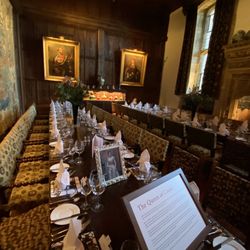
    Hever Castle - Hever Castle's dining hall, laid up for a private event

    Hever Castle

    (20 reviews)

    Thatcher would be proud…read more Looking around Hever, many would be left with the impression that the owners are enormous fans of Anne Boleyn. The unfortunate wife of Henry VIII is, after all, the main focus of the exhibition and makes an appearance on much of the marketing material. But look a bit closer, and the more astute visitor may notice a different, more 'true blue', streak permeating the house. Yes, Labour voters clutch your pearls, but the proprietors appear to be worshippers of none other than Margaret Thatcher. (More so than Ms Boleyn, I would wager.) In the castle, visitors are treated to a near life-size oil painting of the union basher. And for those lucky enough to stay in the guest house for the price of £300 per night, they will find a letter written by the Iron Lady to thank the castle for her stay that has been framed and hung in one of the hallways. Among the owners personal possessions, I note Ms Boleyn has not received a similar dose of affection. Of interest is also the fact that this castle, its stunning gardens and water maze, owe their amazing condition to our friends across the Atlantic. Most stately homes in Britain are now virtually on their knees, with years of decline and underinvestment in the country reflected in their faded carpets, moth-eaten curtains and peeling paintwork. Hever, however, has avoided this fate for the good reason that it was bought by... gasp... an AMERICAN. Horrifying as it may sound, Mr Astor - who owes his astounding wealth to the rise of New York City - purchased the castle and injected nothing short of a fortune into it in order to create the attraction that we see today. Demonstrating an entrepreneurial spirit so often absent in Britain, he then had the vision to order the construction of a second moat, a lake, a walled Italian garden complete with artefacts from Pompeii, a 'wall waterfall' and to direct the gardeners to shape some bushes like a chess set. I don't think he was involved in the water maze, so loved locally, but its presence reflects Hever's enduring ambitious spirit. Perhaps it was this spirit that so inspired Margaret Thatcher to write of Hever: 'I have seen several castles and large country houses but none as perfect as Hever.'

    If you are visiting London, Hever Castle is a must do. Only a 90 minute drive from London hotels,…read morethe trip is well worth the wait upon arrival. From its sprawling vistas to the castle itself this place is a real treat. There is a large lake on site that offers rowing, an area that allows you to try your hand at archery and even a place to see falconry. There are jousting exhibitions and plenty of food from the cafe or restaurant on site. The REAL gem is the castle. Home for Queen Anne Boleyn from 5 years old to 12 one can only imagine the wonder this place brought her. The castle provides an audio tour in several languages so there is no issue there. (The staff are marvelously kind and helpful in the castle and in the dining areas and gift shop.) It's small but chock full of informative history about Anne Boleyn as well as those who lived in the castle after her death. If you are looking for a respite from the concrete jungle and noisy planet that is London, Hever provides you with lots of peace and quiet Tour the rose garden or just sit and enjoy the views and shade from the trees. It's an idyllic setting and a trip that will make your visit to the UK complete.

    Woods Mill Nature Reserve - from website

    Woods Mill Nature Reserve

    (4 reviews)

    Woods Mill is a lovely nature reserve located in the picturesque village of Henfield. Its the…read moreheadquarters for the Sussex Wildlife Trust and is also an Environmental Education Center so is an ideal place to take the kids for an afternoon out. I'd be inclined to wait for the summer months as you can spend longer looking around at the Nightingales, woodpeckers, warblers, turtle doves and dragonflies that are all on offer to see without developing early stage pneumonia. They have a beautiful lake here as well and there's plenty more wildlife to hunt around for. Its free admission all year round except for two weeks over Christmas. No dogs allowed obviously but it is a must for anyone interested in wildlife.

    I visited Woods Mill today and was in a very short space of time enraptured with the same sense of…read moreexcitement that I used to feel as a small boy on school trips. This might in part have been brought about by the fact that, for the larger proportion, that's what Woods Mill Nature Reserve is all about. Aside from the preservation of large quantities of birds, fish and amphibians the nature reserve succeeds at every turn to bring you small and interesting amounts of information on each habitat and creature therein. As you enter from the car park there's a notice board with details of events and leaflets for you to pick up. I recommend grabbing the one on the nature reserve itself first as it has a map outlining the route of the winding, sometimes tree covered, path and all the exciting features along the way. In some ways I did get the feeling that the whole place was a little over engineered with so many habitats, which would normally have so much more space, all so close in together. But once you start to see the results of this arrangement such as the lake literally heaving with fish, you soon lose that feeling to fascination. There is also a bird hide, a small wood and perhaps most exciting of all a "Dipping Pond" where in the right months of the year you can head down with your jam jar on a bit of string and catch sticklebacks and newts. All very Gussie Fink-Nottle, but then this is one of the few remaining places where you might still be able to train boys to be the kind more commonly found in a P. G. Wodehouse novel.

    Bramber Castle - landmarks - Updated May 2026

    Loading...
    Loading...
    Loading...