Angono Petroglyphs Museum Photos


Recommended Reviews - Angono Petroglyphs Museum
Start your review...



6 years ago

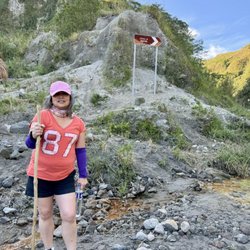
One of my best friends grew up in Angono, Rizal, and she has always told me about this archaeological site that was discovered several years back in the nearby Binangonan town, which shares Angono's border. During one of their town fiestas, she took me up there to see it. Only roughly an hour away from Manila (and several minutes away from Antipolo) is the Binangonan Petroglyph site, which is a protected historical and cultural site. Apparently, the national authority for arts and culture have been testing the veracity and the authenticity of the site, but the marker from the National Museum must suggest that there has to be a certain level of credibility to the discovery Just a few minutes away from Angono's town proper, one would have to take a very steep mountain road to get to the developed uphill town near Thunderbird Resort and Casinos. Though the trail to the site itself is well-established, it is still recommended to wear your good hiking shoes because the dirt could be a little loose and rocky, especially during hot weather. There is a vast quarry that has a manmade, roughly hewn tunnel cutting through it which connects the highway to the other face of the mountain, where the Petroglyhs are located. With a minimal entrance fee, you will be able to see the Petroglyphs (stone drawings) which were apparently done by our cavemen ancestors hundreds of years ago, possibly even during the Neolithic age (broken vessels, remains and other artifacts were found in the site as well).The petroglyphs are known as the oldest form of folk art in the country. The said stone drawings featured tribal motifs for animals, humans and other natural objects, and they are etched to the faces of the rocks that jut out of the mountain. Some of the areas have been vandalized by people before the National Museum stepped in and built a barrier, restricting close access to the rocks. It is said that the cavemen who etched the designs onto the rocks are the ancestors of the people of Angono, who later on spurred an artistic Renaissance in the town, smaking it the Art Capital of the Philippines. Thankfully, preservation efforts have been done to keep the petroglyphs from being damaged by human activity and the elements. The site is also being petitioned to be included in the UNESCO World Heritage Site list. read more


11 years ago
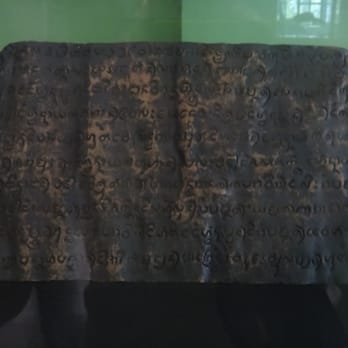
What do you think would be the oldest artwork in the Philippines? Definitely not the oil paintings on canvas or stone sculptures, but paintings too, or rather etchings on rocks, of our indigenous ancestors, long before civilization as we we know it was created. The Binangonan-Angono Petroglyphs are rock drawings of what looks like human and animal figures. There are about 127 still-visible drawings on a huge rock shelter on the hills bordering Angono and Binangonan. To get there, my travel companions and I rode up a hill before coming to an entrance of what seems like a cave. The guards told us to pass by the tunnel to get to the petroglyphs on the other side. We just walked straight and when we emerged out of the tunnel, we saw a structure that seemed like a house but which actually holds replicas of artifacts like stones and plates of baybayin, the ancient Filipino writing system. And then we went up a stone then wooded walkway to get to the rock shelter with the cave drawings. They do look like the real thing, though I read in some accounts that it is not yet proven without a doubt that the artworks are indeed authentic. But in any case, they indeed look beautiful and ancient, with some etchings deeper and more visible than others. read more
More info about Angono Petroglyphs Museum
Col. Guido Road,
Binangonan, 1940 Rizal
Philippines
Directions
Hours
Outdoor Amenities
Other Amenities