I highly recommend this system for anyone with a heat pump and oil/gas furnace as well as those with only an oil furnace. Those with an oil furnace only could install such a system and immediately benefit from the reduced DT rate from Hydro Quebec as I will explain below.
I have an older home with an oil furnace and a heat pump using the Hydro Quebec bi-energy or "DT" rate. This gives a discounted rate at temperatures above -12C, and increases at temperatures below -12C. The idea is to encourage those with non-electric alternative heating to get off the grid during peak demand. My sister has exactly the same system and one year ran out of oil in December! The temperatures well above -12 and the tank filled in November. In researching the reasons, I discovered that in heat pump systems which are retrofitted to oil or gas furnaces, the heat exchange coils are normally placed in the plenum (the area where the air is normally warmed by the oil furnace). This is the cause of several issues.
First of all, if your house is older and there are air leaks (there normally are in older houses), there will be times when your heat pump is unable to generate enough heat to maintain the desired temperature. When the thermostat recognises this, it will call for back up - in my case oil. I was shocked to learn that I was still burning oil even though the temperature has not dropped below -12C. I calculated the cost of energy. Electricity at the DT rate was about $0,04 per kWh, oil was about $0,18 - $0,20 per kWh, and the DT rate at peak(below -12C) was about $0,24 per kWh. Therefore every kWh of oil that I was using was costing me about $0,14 more per kWh, which is just huge.
I thought I could save money turning turn the thermostat down at night. Wrong. What I found was that when the thermostat calls for a warm up in the morning the heat pump cannot generate heat quickly enough and the system immediately calls for backup heat, again oil. This effect makes dropping the temperature at night actually more expensive than keeping a constant temperature and running the heat pump all night.
The second issue is that when the heat pump cannot maintain the temperature and the thermostat calls for backup heat (oil or gas), it must shut down the heat pump completely. This is because the furnace would heat the coils and damage the compressor. This is a pity, as heat pumps provide very efficient heating. My oil furnace might be lucky to get 60% efficiency, meaning that 40% of the heat produced goes up the chimney. Electricity, such as baseboards are arguably 100% efficient. Heat pumps are more than 100%, meaning that for every joule of energy used by the heat pump, more than one joule is extracted. That number decreases with ambient temperature - the colder it is, the less heat you can extract from the air, but it is still greater than one for most heat pumps. Therefore anyone with a heat pump should want to have it running basically 100% of the time.
The last issue is, depending on your setup and the capability of your thermostat, sometimes that furnace will not even run when the Heat Pump is in defrost mode. Defrost mode turns the Heat Pump back into an air conditioner. If you ever notices a blast of cold air coming from the vents, welcome to defrost mode.
In my research I happily stumbled on Martin and ABC Energy.
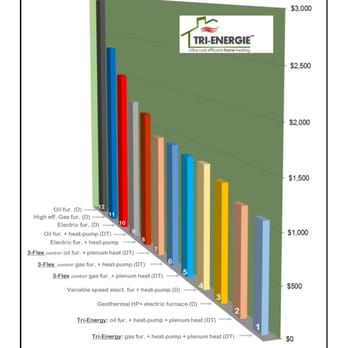
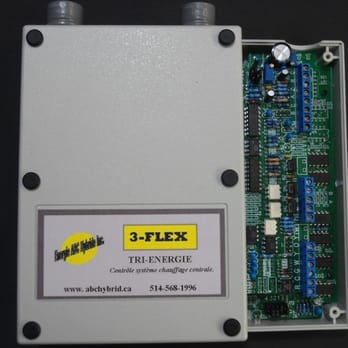
Martin's system is really ingenious, as it solves all issues above. Instead of expensive oil it uses heat strips mounted in the plenum or the ducts to boost the heat pump when it cannot keep up. The savings here is phenomenal. Depending on the efficiency of your furnace, it is about ¼ of the cost as compared using oil as backup. Secondly, the heat strips are installed after (i.e. downwind from) the heat pump coils. This means that they can operate concurrently. Again, this is big savings and just makes sense to keep the heat pump going all the time. If you are getting cold blasts during defrost cycles, those will also be a thing of the past. In fact we find the temperature is maintained much better than with a heat-pump / furnace alone. We no longer get the fluctuations in temperature we did before.
Martin did the work quickly and efficiently. I have had the system installed for two years now, and it works fine. Any questions I have had have been answered quickly by Martin - he is not one of those guys which sells you a system and is later nowhere to be found. He stands behind his product and his work.
He will tell you that the system will pay for itself in a few years. I believe that is a conservative estimate. In our case I believe that the system paid for itself within a year, or a winter and a half. I actually feel bad for the oil company now. They still come every month in the winter. This December my oil bill was under $7.00. I am just not using any oil until the temperature drops below -12C and the entire system switches to oil. read more