Cancel

Open app

Search

Westgate Chapel

5.0 (1 review)
Closed • 10:30 am - 12:30 pm

Westgate Chapel Photos

Recommended Reviews - Westgate Chapel

Your trust is our priority, so businesses can't pay to alter or remove their reviews. Learn more about reviews.
Yelp app icon
Browse more easily on the app
Review Feed Illustration
Photo of Jack M.
24
326
134

16 years ago

Helpful 1
Thanks 0
Love this 1
Oh no 0

Verify this business for free

Get access to customer & competitor insights.

Verify this business

St. Michaels

St. Michaels

5.0(5 reviews)
0.1 mi

Located right on the High Street in Lewes, yet strangely hidden, St Michael's is a fascinating…read moreamalgam from different periods, with a distinctive and rare round tower, with a tall shingled spire. History The church dates from the late 12th or early 13th century, the actual date a puzzle as the pointed arches indicate a 13th century, but the round tower is more typical of the 11th or 12th centuries. There are two others of similar design in Sussex. The list of rectors goes back to 1283. The church was rebuilt in the 14th century with the addition of a south aisle, the arcade of which survives. However, the church suffered badly after the Reformation (Lewes being a fiercely Protestant town) and was semi-derelict by the 18th century. This necessitated a significant rebuilding in 1748, in which a north arcade was added, and the south arcade extended - unusually in wood - but in a vaguely matching style. A further rebuilding in 1884 extended the chancel, remodelled the interior and replaced three Georgian windows in the south wall with Gothic versions. The church The most distinctive external feature is the tower, now rendered, with a single pointed lancet window, and a later trefoil window above. The tower is adorned with a prominent sculpture of St Michael by Harry Phillips, erected in 1976. The 18th century frontage to High Street is an attractive example of square and knapped flintwork, with two doors, each surmounted by rounded windows, and the three Gothic windows inserted in 1884. Inside, despite the dark and atmospheric interior, one can clearly identify the distinction between the original 14th century arcade of slender Gothic arches, and the 18th century wooden versions - painted a slightly odd chocolate colour. At the west end of the south aisle is an original lancet window, an equivalent on the north side now blocked and infilled with a Victorian wall painting of St Pancras. The fittings are of extensive interest. Behind the attractive Victorian font are two brasses, relocated from the floor. The older brass, dated around 1430, is of a knight in full armour, now sadly headless, a lion at his feet. One heraldic shield survives. He may be a member of the extended de Warenne family (who built Lewes castle), possibly John Waryne, a member of the household of Henry IV. Adjacent is a half brass to John Braydforde, (d. 1457) a former rector of St Michael's. His brass has a wonderfully touching expression. On the north wall, a 16th century classical style memorial to Sir Nicholas Pelham shows him and wife facing in prayer, their ten children as mourners below. He is famous for his defence of Seaford against a French force which had previously sacked Brighthelmstone (modern Brighton). A wonderful inscription on the monument has a play on his name: His valr's proofe, his manlie virtues prayse; Cannot be marshall'd in this narrow roome; His brave exploit in great King Henry's dayes, Among the worthye hath a worthier tombe. What time the French sought to have sack't Seafoord, This Pelham did repel them back aboord. Opposite are the remains of the monument to George Goring, MP for Lewes, (d. 1601) and on the north wall a brass memorial records the life of Dr Gideon Mantell, (1790-1852), a local doctor, geologist and paleontologist. He discovered first the teeth and then a skeleton of an Iguanadon, now on show in the Natural History Museum, and is credited with helping inaugurate the scientific study of dinosaurs. There are two paintings, one large 17th century canvas of the Descent from the Cross, possibly by Balucchi, and one of the Madonna and child, thought to be Spanish of 17th century. Finally, the reredos is by celebrated Victorian Gothic architect J L Pearson. Through a door in the north wall, steep steps (formed from tomb slabs) lead up to the small but tranquil graveyard. A surprising space for the town centre, from the rear there are fine views of Lewes Castle's keep. Practicalities The church is normally open during weekdays until 5pm. The graveyard may be closed if the steps are wet. The church is part of the united benefice that includes St Anne's and St Thomas a Beckett in Cliffe. There is a Sunday Mass at St Michael's at 10.30am.


Walking along the treachorously Icy High Street of Lewes on a bitingly cold, snowy day, I came…read moreacross St Michael-In-Lewes, a 12th century church, welcome to all for prayer and contemplation. With the pure white snow clinging to the nearly sheer face of the church spire, and the surrounding areas all blotted out by the whiteness, the place looked like something out of a German fairy tale, set in a quaint little village somewhere in the Alps. Needless to say it was pretty darned beautiful, and I would recommend coming here, because architecturally the building is very interesting and quite rare. The clock that hangs of the side, gives the whole place that slightly disney-esque fairy tale, village feeling, which I guess in many ways Lewes is!

Photos
St. Michaels
St. Michaels
St. Michaels

See all

Church of St Thomas a Becket - Church of St Thomas a Becket at Cliffe

Church of St Thomas a Becket

3.0(1 review)
0.5 mi

This small church is located in Cliffe, down the hill and across the river Ouse from the main part…read moreof Lewes. Although unremarkable architecturally, it has some interesting furnishings, and its gloomy interior provides a haven of peace and quiet from busy Cliffe High Street beyond. The foundation is slightly obscure, but a chapel of ease appears to have been built here by the monks of the Benedictine foundation at Malling some time during the 12th century. It later became a church in its own right, and the first vicar was appointed in 1320. Although some fabric survives from the 12th century, (particularly in the chancel, which was probably the original chapel) most of what we see today dates from the 14th century, with a robust west tower built in the 15th century. The tower still dominates the exterior. The interior is dark and gloomy, with a nave of three bays of simple gothic arches resting on octagonal piers, with north and south aisles. Most of the interest resides in the furnishings and fittings: in the north aisle, in a blocked window, is a painting of uncertain date of St Thomas a Becket, and another, larger oil painting of the ascension by an unkown artist, possibly Dutch, dated 1645. Between the south aisle and chancel is a rare double squint, designed to allow those in the aisle - and possibly from outside, before the aisle was built - to witness the Mass. There was a leper's hospital outside the town's west gate in mediaeval times, and it may have been for their benefit that the squint was put in place. The chancel also has a fine 13th piscina in the north wall. At the other end of the south aisle are two coats of arms: the upper one dates from 1598 with Elizabeth I's arms, and the lower one is Hanoverian, possibly from the reign George I. Under the tower is a copy and translation of the 'Cliffe Charter', dated 1410, in which Henry IV grants permission for a market and two fairs to be held in Cliffe. The River Ouse regularly floods, and in 2000 the water rose over the font - the highest recorded level ever. The church has been thankfully restored, but remains at risk while the various Government agencies decide how best to prevent a recurrence. Outside the church is a public water pump dated 1820, and opposite are some attractive old buildings, winding their way up Chapel Hill. The church is a short walk from two decent pubs, the Snowdrop and the Gardener's Arms, both of which serve real ale. The church has regular services using the Book of Common Prayer.

Photos
Church of St Thomas a Becket - Font - this was covered by water in the 2000 floods.

Font - this was covered by water in the 2000 floods.

Church of St Thomas a Becket - Chapel Hill I

Chapel Hill I

Church of St Thomas a Becket - 12th century Chancel - the oldest part of the church.

See all

12th century Chancel - the oldest part of the church.

St Michael and All Angels Church

St Michael and All Angels Church

4.0(5 reviews)
7.5 mi

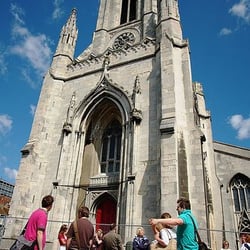
St Michael's is a surprise: tucked away amongst the terraces in the fashionable Clifton area of…read moreBrighton, this large church seems almost out of place, its gothic red-brick contrasting with its white-stuccoed neighbours. It is only by looking up that you begin to realise just how big a building this is. That's partly because it is actually two churches in one, both built by renowned Victorian architects. The first was built by G F Bodley in 1861-62, and now forms the south aisle of the church. The interior features painted ceilings, tiled floors and polychromatic brick decoration. But the real joy of this part of the church is its pre-raphaelite stained glass windows, by Burne-Jones, Webb, Maddox-Brown, Gabriel Rossetti and William Morris. A stronger artistic pedigree from the 19th century would be hard to find. In 1893, work began on an extension by William Burges, with sculpture by Thomas Nicholls, which dwarfed the earlier building and became the main body of the church. This is in the French gothic style, on a cathedral-like scale, with an interior in stone rather than brick. The windows here are by Kemp, and there are other furnishings by Burges and Nicholls. But it is the sheer scale that makes this part special. The church is well worth a detour from the bustle of Brighton, in the streets below. As well as for services, the church can accommodate small groups for tours (arranged in advance). The church has recently become accessible for wheel-chair users.

Dubbed the "Cathedral of the Backstreets", St Michael's is a grand Victorian church perched on the…read morehill. Intended to provide moral succour to a godless city of decadence and excess it has been called the finest church in Sussex. It's an architectural gem. The first phase was completed in 1862 to a design by famous architect, George Frederick Bodley. It was subsequently extended in the 1890s. Followers of the arts and crafts movement should pay a call. There are fixtures, windows and other interior features by Edward Burne-Jones, William Morris, Philip Webb and Charles Faulkner. The church is open for visitors on Saturdays and there's usually someone on hand to guide you round. Proper guided tours are also held during the Brighton Festival. By Church of England standards its tradition is high, it draws a big congregation and the choir is very good too. The candlelit midnight mass at Christmas is particularly evocative and well worth attending. But do wrap up, it's cold in there. The church also serves as a cultural and community hub. The church hosts regular musical concerts and recitals as well as a host of lectures and talks through the year. The community hall is used by lots of groups and they also do important work for homeless people. Little known St Michael's fact. They do breakfast on a Saturday morning. It's a hearty breakfast and coffee for a few pounds and it's open to all. Check it out.

Photos
St Michael and All Angels Church

See all

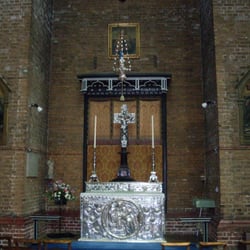
St Bartholomew's Church - Lady Altar - also known as the 'Silver Altar', for obvious reasons...

St Bartholomew's Church

4.2(11 reviews)
6.9 mi

Pevsner's 'The Buildings of England' describes St Bartholomew's as 'an unforgettable experience',…read moreand it's hard to better that description. This Victorian gothic edifice, just outside the centre of Brighton, is one of the most dramatic parish churches in the UK, with one of the highest naves in Europe. At 135ft (41m), it is just 7 feet lower than that of Cologne Cathedral. For many years, it dominated the view to the east as you arrived by train into Brighton station. (Alas, a sight no longer available thanks to the erection of some appallingly dull blocks of offices and flats). The building was the brainchild of Father Arthur Douglas Wagner, (1824-1902) himself son of the Vicar of Brighton, and a colourful local character: a wealthy young man, he was ordained in 1849, and became priest of St Paul's, Brighton (see separate Qype entry), which his father had essentially built for him. A leading Catholic Revivalist, and determined to develop a ministry to the poor, A D Wagner was to build several churches in Brighton, all out of his own pocket. Of these, St Bartholomew's is the best known. Built in 1872-74 to designs by a local architect, Edmund Scott, St Bartholomew's is in a plain Gothic style, and of brick throughout. The church is aligned north-south, with the main (ritual West) entrance on Ann Street. Standing in front of this gives a good foretaste of what is to come: a towering brick facade, containing a truly huge Rose Window, it completely dominates its surroundings. Once inside, the eye is immediately drawn upwards and forwards: the wooden wagon roof simply disappears in darkness, and nine bays of huge pointed arches lead the eye to a sanctuary containing an enormous baldachino, 45ft (15m) high, covered entirely in marble. The arches each contain a shallow chapel with a single lancet, with another lancet in the clerestory above. Polychromatic bricks are all that relieve the scale, for there is virtually no other ornament in the architecture. The accumulated grime on the walls gives the interior a dark and mysterious feel. The intended chancel was never built, and instead a sanctuary was created at the east end of the nave. This accommodates the baldachino and a huge pulpit also of marble both by the noted arts and crafts designer, Henry Wilson (1864-1924). He also designed the Lady Altar also known as the silver altar with a repoussé frontal of silver plate on copper and the pair of pillar-sized candlesticks either side of the altar. The whole effect is breathtakingly dramatic, and perfectly suited to the high Anglo-Catholic ritual and superb liturgical music, for which the church is renowned. The church has an active and busy parish life, and a weekly mass for the attached junior school. A constant stream of visitors from around the world walks through its doors daily, to see this astonishing building for themselves.

I walk past this sky scraper like church on my way to Sainsbury's, recently I ventured in to have a…read morepeak. I'm not religious, and I don't think that helps really. I found all the bronze and silver statues of Jesus and various friends dying to be a bit glum, and also a bit anthithetical given that the church asks for donations. In terms of the building though, it's unbelievably tall. From what I read, it's the tallest church in Europe, for that along, definitely visit if you're nearby. I found it massively interesting, the architecture is unlike much else, as is the slightly scared feeling you get walking around inside.

Photos
St Bartholomew's Church - St Bartholomew's totally dominates its surroundings...although the view from the railway is, now, alas destroyed.

St Bartholomew's totally dominates its surroundings...although the view from the railway is, now, alas destroyed.

St Bartholomew's Church - Altar with tabernacle for the Reserved Sacrement

Altar with tabernacle for the Reserved Sacrement

St Bartholomew's Church

See all

St Peter's Church - From website

St Peter's Church

3.0(5 reviews)
6.9 mi

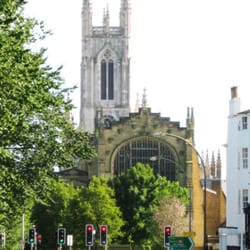
St Peter's Church is one of Brighton's most distinctive landmarks. Slightly out of the city centre…read moreon the main A23 to and from London, it sits in the middle of the gardens which run down to the sea, in splendid isolation. For many, it is the first memorable sight on entering the city. It is a grade II* listed building. The church was built originally as a 'Chapel of Ease' of the then parish church of St Nicholas, to accommodate the growing population of the city in the first quarter of the 19th century. A competition was held to design it, won by the young Charles Barry, later to find fame as the architect of the Houses of Parliament. The church was begun in 1824 and consecrated in 1828. Orientated north-south, the church had large aisle galleries and a simple hexagonal apse, making the interior typical of the 'preaching boxes' of the time. The exterior, however, with its confident Perpendicular Gothic forms - rows of buttresses and pinnacles and an innovative tower design - was a major departure for the time; the classical style was still in vogue for church building, alongside the more stylised 'Gothick' used in many country houses: many regard St Peter's as the most important neo-Gothic church of the pre-Victorian period. The church was substantially altered between 1898 and 1907 when the east end was replaced with a more traditional chancel, to designs by Somers Clarke and Micklethwaite. Built in deep yellow local sandstone, and itself an impressive work of late Perpendicular Gothic, this has, however, always contrasted somewhat uncomfortably with the earlier work in colour (Barry built in and style. The interior galleries were removed at the same time. Whilst this undoubtedly opened up the nave, it also drained some of the character from what is otherwise an impressive space. The church has a number of impressive windows by Kempe, perhaps most notably the jaw-droppingly vast east window, and the east and south-east windows in the south chapel. Increasing maintenance costs (not aided by elements of the original design, not least the unsuitably of Barry's stonework to resists the effects of salt-laden seaside air) were becoming beyond the means of its congregation, and led to the decision to declare the church redundant. It was closed in July 2009 and is now being run as a 'church plant' by Holy Trinity, Brompton, founders of the Alpha Course.

I find it pretty hard rating a church out of five, what with all the balancing my own quite open…read morebut non believing tendencies, with respect for those who do believe, I find I'm in a bit of a conundrum. But...I'll go for 3 stars. It's big and imposing, but it's also quite worn and tattered from the outside. 19th Century churches always make me think of Dicken's and Oliver, and general scary Victorian strictness, so I don't warm to this church all that much. However some of the glass windows and the art work in the ceiling is magnificent, and I'm sure with a full on choir in here, it can become pretty special.

Photos
St Peter's Church - Sunday morning at St Peter's.

Sunday morning at St Peter's.

St Peter's Church - From website

From website

St Peter's Church

See all

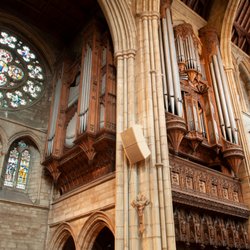
All Saints Hove - Double-fronted organ case, design by the church architect's son

All Saints Hove

5.0(1 review)
8.1 mi

The church's website describes All Saints as 'one of the finest churches of the nineteenth century…read moreGothic Revival'. Possessed of an extraordinary interior, it was much admired by the eminent architectural historians Pesvner and Sir John Summerson, and is well worth seeking out. The church was the vision of Thomas Peacey, the first Vicar of Hove when it was made a parish in its own right in 1879. He rebuilt the old church (St Andrew's) and erected another (St Barnabas), before turning his attention to providing a new and spacious Parish church. The architect chosen was John Loughborough Pearson, viewed by many as the greatest architect of the Victorian Gothic revival. Amonst other things, he was responsible for the new cathedrals of Truro and Brisbane, as well as many churches in London. All Saints was to become the largest and costliest of his parish churches. Work began in 1889 and was largely completed by 1901, although the base of the tower was not finished until 1922 (and the remainder of the tower has, unfortunately, never been completed). Pearson chose a French C13th Early Decorated Gothic style for the new church, which is built of Sussex sandstone, and roofed with Sussex oak. The outside is attractive enough, with strong pinnacles around the south transept and chancel, although the tower base looks forlorn with its humble pyramidal cap. But the interior is breathtaking. For a start, the scale and proportions are those of a cathedral: the nave is 40ft wide, and flanked by generous aisles. And the walls are entirely faced with ashlar stone - clear evidence of no expense having been spared. The plan is conventional, with an aisled nave, short transepts, south chapel and chancel. The nave is particularly impressive: five bays of clustered piers rise through large clerestoreys towards transverse roof arches. These provide a repetitive pattern against the dark wooden roof, emphasising the height and leading the eye towards the chancel. Only the south chapel and sanctuary have stone vaults. The windows are equally impressive, and the church carries an almost complete scheme of stained glass by the famous company of Clayton and Bell. The north transept has three twin-light windows with a rose window above, whereas the south transept has a magnificent five-light window. The furnishings are equally impressive and lavish: pride of place goes to a stunning high-Victorian stone reredos, of Pearson's design and carved by Nathanial Hitch. There is elaborate wooden carving everywhere, most notably the screens of the South Chapel, the choir stalls and the amazing organ case, the latter designed by Pearson's son, Frank Pearson. The marble font is a later addition, dating from 1928, and carries a large ornate wooden cover. Although the pews have been removed, the replacement chairs are reasonably sympathetic, and the interior is very well maintained. The church takes advantage of the splendid setting to stage a wonderful Sung Eucharist, every Sunday at 10h. During the summer, they also host classical music concerts every Thursday, May to September (free to enter but donations requested), and lay on tea, coffee and biscuits. The church also has an active programme of children's groups, as well as other outreach and support groups. Details of other services and events can be found on the website.

From the owner: All Saints Hove is an inclusive catholic parish in the Church of England. We believe that there is…read morea place for everyone to receive the unconditional welcome of God, and we are a member of the Inclusive Church network. We seek to give to give a voice to those on the margins in our society and use our facilities to support the homeless and vulnerable and champion the outcast and poor. Whether you are looking for a grand period event space or a casual, cost-effective location to run classes or meetings, we make various spaces available for hire, for the purpose of offering community services and strengthening community spirit and bringing residents together.

Photos
All Saints Hove - The chancel façade of the William Hill & Sons pipe organ

The chancel façade of the William Hill & Sons pipe organ

All Saints Hove - Nave, looking east

Nave, looking east

All Saints Hove - High altar, viewed from the choir stalls

See all

High altar, viewed from the choir stalls

St Wulfran's C Of E Church

St Wulfran's C Of E Church

5.0(2 reviews)
5.2 mi

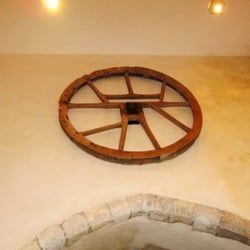
The charming village of Ovingdean, tucked away in its own little valley a mile inland from the sea,…read moreis now part of Brighton, but remains a world away in spirit. It is also famous as the birthplace of Charles Eamer Kempe, the renowned designer of stained glass: his work fills the church and he is buried in its churchyard. History There was a 'little church' and settlement here in Saxon times, recorded in the Domesday book, and it seems that it was rebuilt almost immediately after the Conquest, when the current Nave and Chancel were erected. This was followed by the short, robust tower early in the 13th century, followed by the south porch around 1300 (rebuilt around 1867). The south wall shows the unmistakeable signs of a south aisle of two bays also built around the 13th century, and which may have been destroyed during a French raid. A south chapel was added leading off the chancel in 1907 on the foundations of an earlier structure. The dedication to the 7th century French Bishop St Wulfran is unusual, shared only by the Parish Church of Grantham and the collegiate church in Abbeville, in France, where he is buried. The Church The church is set into a steep hillside, and the floor progressively descends from the tower to the chancel. Save for the corner stones, its walls are entirely of flint, with a red tiled roof and a typical Sussex pyramidal cap on the tower. The walls are pierced only by narrow Norman windows or simple lancets, save for the Decorated Gothic windows in the south wall of the nave. These, as well as others through the church, contain glass by Kempe, with his tell-tale wheat sheaf signature. Inside, the interior is something of a surprise: the walls of the nave are bright with whitewash, and the eye is immediately drawn to the unusual arrangement of three chancel arches, underneath a rood screen. The plain central arch is the Norman original, with the two flanking arches added in the 17th century and rebuilt in the 19th; the rood is Kempe's work from 1867. Opposite the south door are the remains of the original Norman north door, complete with water stoup. To the west, a generous pointed tower arch leads to a spacious tower room, which now contains additional pews and the font. High the east wall above the arch is the original mediaeval bell wheel. Turning east, the Chancel has yet more lancets and Norman round-headed windows; the tiles reredos and painted wooden panels either side of the East Window are late Victorian, while those in the gable above by Maude Bishop were painted 1957-63. Of greater interest to most visitors, however, is the painted ceiling: although the ceiling is a 19th century replacement, the paintings of birds and foliage was done was Kempe in 1867. Off the Chancel is the small south east chapel, built in 1907 on the foundations of an earlier chapel. Back outside, the old churchyard is worth a look; as well as the Kempe family tomb, is that of Magnus Volk (1851-1937), builder of the electric railway which still plies its trade along Brighton's seafront. Practicalities The church is most easily reached from the A259 main road Brighton to Newhaven: turn left at the roundabout just after passing Roedean School, next to St Dunstan's Care Home. The church is a mile up the valley, after a hairpin bend, on the left. You can also walk from this point if alighting from the frequent 12 or 14 buses, which takes about 10-15 minutes; the hourly 52 bus (57 on Sundays) will drop you off closer to the church at the junction of Greenways and Ainsworth Avenue. The church has limited opening hours: see website for details.

This is a beautiful and inviting little church with a fascinating history. I stopped here several…read moretimes during my week in Ovingdean to give thanks for my journey.

Photos
St Wulfran's C Of E Church

See all

Westgate Chapel - churches - Updated May 2026

Loading...
Loading...
Loading...