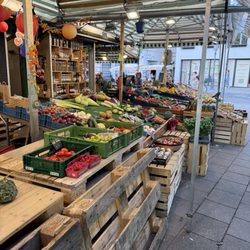
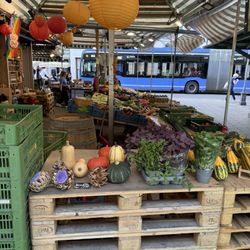
The Viktualienmarkt was a bustling outdoor food market with restaurants, coffee shops, wine shops,…read moresome crafts & a busy beer hall. Late afternoons it's very busy with lines of people trying to purchase & outdoor seating overflowing. Each stall beautifully presents its wares. Between stalls are magnificent fountains. I understand we can bring out gourmet picnic from the market to the beer hall, and enjoy my meal with a cold brew. However, by the end of the day after 20,000 + steps my feet hurt, I'm tired & just want to be served.
The Viktualienmarkt developed from an original farmers' market in 1807 to a popular market for gourmets. There are now 140 stalls and shops offering flowers, exotic fruit, game, poultry, spices, chocolates, wines & cider, pastries, cheese, fish, juices....