
Washington Monument Photos


More like Washington Monument
Recommended Reviews - Washington Monument
Start your review...


Reviews With Photos
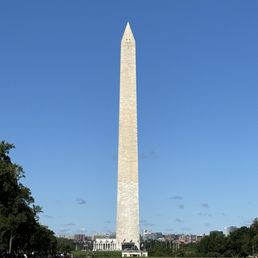

The Washington Monument stands at 555 feet along the National Mall in Washington, DC. Construction began in 1848 and was completed in 1884. The monument was built to honor our first President, George Washington. You can take tours of the monument for a fee.


Once you walk up to the Washington Monument you will notice that it's viewable from every area. It is huge. I didn't realize how big until I viewed it up close.


Go inside! It's free same day tickets or pay $1 online to reserve tickets for specific times. Worth the sights of DC. 500ft above and you can see all the National Mall.


This was the first monument I saw when I was in 6th grade and after many visits since then it never gets old. I always seem to start here first. My wife and I started here last weekend and walked 13 miles around downtown and the entire mall area. My favorite time for viewing is right before sundown. The view from the Lincoln Memorial is also stellar!


I've been to the Washington Monument several different times in my lifetime but, have only been to the top once when I was a teenager. There are several ways to get to the top - purchase a ticket in advance from the website, try to get one on site (I don't recommend that), or you can use a tour site like Viator or Get Your Guide. It's something I believe everyone should do at least once, but it's cramped and there are small windows at the top that aren't the cleanest, so, it was somewhat disappointing from what I remember. Walking around outside the monument and enjoying the lawn and surrounding area are 1000% a must and worth it.


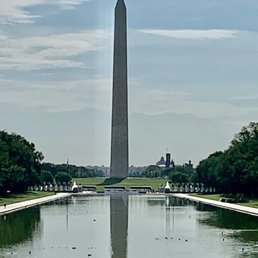
Five stars for the mighty Washington Monument. Rising 555 feet into the sky, this marble obelisk honoring George Washington isn't just a landmark it's a statement carved in stone. Construction began in 1848, stalled for years because of politics and lack of funding, and finally wrapped up in 1884. It cost about $1.2 million back then (a fortune at the time), and for a few glorious years it was the tallest structure on Earth. Built from marble, granite, and bluestone gneiss, the monument stands like a giant exclamation point in the heart of the National Mall simple, bold, and unapologetically American. But facts only tell part of the story. The real magic happens when you stop treating it like a postcard and actually step up to it. I watched a couple guys lying on their backs with their feet pressed against the base of the monument, staring straight up. Looked ridiculous... so naturally I had to try it. I dropped down, put my boots against the stone, leaned back, and looked up. Suddenly that monument doesn't just look tall it feels impossibly tall. The sides shoot up into the sky like they're trying to poke a hole in heaven. Then you turn your head. One direction, the long reflecting pool stretches toward the dignified silhouette of the Lincoln Memorial. The other way, the wide green sweep of the National Mall runs on forever. And somewhere in that moment you realize something about Washington, DC: a "block" out here feels like a mile. Your feet are barking from the walking, but somehow you don't care. So here's my recommendation: don't just drive by and snap a photo through the window. Walk up to the monument. Touch the stone. Lay down on your back. Put your feet against the wall and look straight up. Be a kid for a minute. That's when this place really hits you.
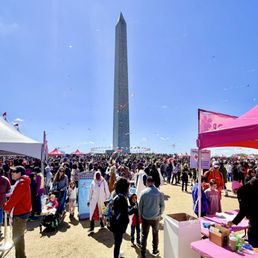

Awesome cherry blossom kite event during peak bloom weekend, 3/28-29. Tons of sun, with some great wind, making it ideal for kite flying all morning and afternoon. Free kite kits (sponsored by Amazon) Design / build your kite using crayons, tape, hole puncher, scissors, string, etc. Then, fly it as high and long as you can, with hundreds / thousands of others.
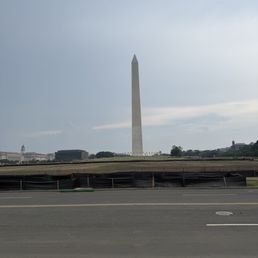

Great little stop for photos if your walking the area. Has a ton of grassy area to sit down, have a picnic, relax, have some drinks. Cute little tourist stop.
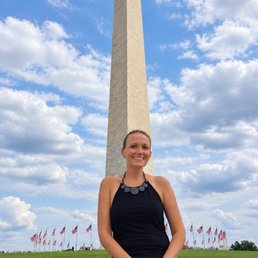

It was a great day and nice to visit. We spent a few days seeing the sights and this was one of the best photos I took.


Ensure to book your time to go up early. While I did not go on this day, I have been previous and it was a fun experience!


Posting this on my birthday feels intentional. Standing at the Washington Monument the day before; which also shares this birthday; felt symbolic in a way I can't fully explain. There's something powerful about looking up at a structure built to honor legacy while quietly thinking about your own. I felt grounded. Safe. Present. The energy around the monument wasn't loud; it was steady. Families walking. People reflecting. Strangers connecting. History and humanity intersecting in one open space. Looking up at the monument against that clear blue sky reminded me that growth takes time. Strength takes intention. Legacy takes commitment. This birthday, I'm grateful. Grateful for peace. Grateful for another year. Grateful to stand tall in my own story. If you're ever in DC, take a moment to witness it. Stand still. Look up. Reflect. Some places don't just mark history; they make you think about the history you're building.


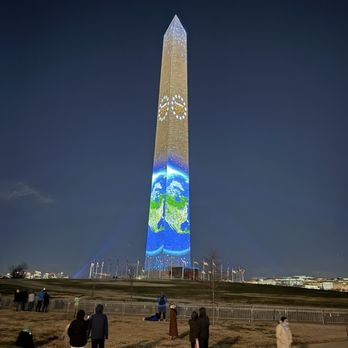
I work in DC, so the Washington Monument tis something I pass by all the time, but the recent visit was very special. Visited earlier this year during the 250-year celebration light show and went on the last day to catch both the illuminated display and the fireworks. Experiencing it with my husband made the night even more memorable. Finding street parking wasn't too difficult, which was a nice surprise, and the atmosphere felt relaxed, more locals than tourists. Seeing such a familiar landmark transformed with lights and celebration gave me a whole new appreciation for it and America. I hope they host events like this more often. It was a beautiful way to celebrate the monument and enjoy DC in a unique way.


The Washington Monument and surrounding War Memorials are nicely displayed to honor the Veterans. You cannot travel to DC without paying respect to the Memorials.
Reviews are largely positive. Visitors highlight the iconic and historic landmark, breathtaking observation deck views, and well-maintained grounds.
Read the full review summary in the app


4 years ago

Probably the most iconic monument in all of DC, especially since it is visible from most spots in the city. It is unbelievably large and impressive and is definitely worth the small hike to see it up close. If you want to make a trip to the top of the monument, you can do it, but they release the same-day tickets at 10 AM, so if you're not there right when it opens, chances are, you won't get in. There is a website where you can try to reserve tickets, but it rarely seems to work properly, so you end up having to be there in-person anyway. Check this one out. read more


15 years ago
I was a little disheartened when I found out that the monument has temporarily closed indefinitely, following its damage from the earthquake that happened on August 23, 2011. The gift shop is still open though, but no visitors are allowed inside the monument. Bummer. It is still a delightful place to take brilliant photographs especially at night. Ever wondered why they designed it as an obelisk? It was dedicated to the sun god "Ra". A significant number of our founding fathers were members of Freemasonry, and I have read several books on the subject including the Kybalion. One of the main reasons, why I am fascinated with visiting ancient structures. They used sacred geometry to create those magnificent obelisks. I was tempted to knock down one star because I could not go in, but I decided against it. The Washington Monument is among the world's most prominent structure, so it deserves 5 stars. read more


Lots of walking, parking is expensive, and expensive food trucks parked around. I've been here plenty of times. This time I went for the 50th anniversary of the Apollo moon landing. It was a fun experience but the humidity made it unbearable to stick around. read more


This was one of my stops when I went sightseeing in the D.C. metro area. Located not far from the white house, Lincoln memorial, reflecting pool, Vietnam Veteran memorial this is one of the best photo ops around. This monument is dedicated to the first president of the United states of America George Washington. It's befitting of a man that was the first elected leader of our nation. This splendid monument is hundreds of feet tall. It is absolutely huge! To be honest I really didn't think it would have been that big. But I guess I was wrong. They do charge you to go up in there, given the fact I had a lot of sight seeing to do I ended up skipping it. But the next time I'm in DC I will definitely make time in order to do it. Even though I didn't go in it I took plenty of photos that way I could brag to my friends and family about where I had been that day. So yeah check this place out when your in the District of Columbia. read more

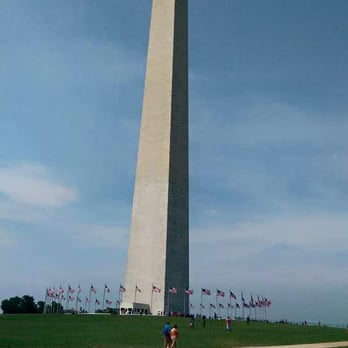


9 years ago
Wow. You don't understand how truly magnificent something is until you see it with your own eyes. Even though it is closed and you cannot enter it is still beautiful to visit the grounds and stand in the wake of this beautiful national monument. read more
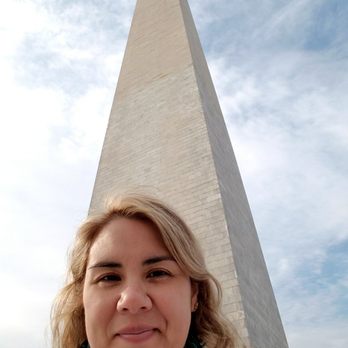

Props to our nation's very first president of the United States not just for being one of the founders, but for also being responsible for patrons in strip clubs all across America for being able to "make it rain". Im sure good ol George did not intend for that to happen but im sure he would of enjoyed it just the same if he were alive today. As for his monument, it is one of the most recognizable buildings in Washington DC. Unfortunately, tickets to go up inside are limited and ones you can get online are usually sold out months in advance. So we did what most people do that cant go up in it do. Take pictures with the monument in the background and move on. Just the fact that I was there physically to witness it was already an awesome feeling. Maybe next time we will plan on getting tickets so we can actually see how it is on the inside. Yelp 2014 365 Review Challenge #186 "Make it rain George!" read more


(This review is for the tower tour only) Located in the center of the National Mall, this tall stone obelisk was built to commemorate George Washington, who led the thirteen original colonies to victory in the American Revolution as the commander and shaped American presidency as the first President of the United States. The monument's tallness relative to surrounding structures parallels to Washington's greatness. Although Washington Monument is no longer the world's tallest structure, the law ensures that it remains the tallest in District of Columbia. This means you can theoretically get the best view of the National Mall and the rest of DC on top of Washington Monument. However, to get on top requires a reservation that may be more than a month in advance to secure your time slot. If you did not make a reservation, you can get daily tickets at the Washington Monument Lodge, but be warned: the tickets are always in high demand and the numbers are limited. Especially if you have time constraints on when to go on top and a large party to go with you, wait in line at least 1-2 hours before 8:30 AM to secure the tickets. Whether you got your tickets through reservation or through waiting in line, expect to wait another half hour during your time slot to go up the Monument. Because only a limited number of people can ride the elevators, you have to come at least 30 minutes before your tour time to be first to go in your time slot group or wait at least 30 minutes after your designated time for your turn. Once you reach up there, you will be in a small "observatory" with two narrow windows facing each cardinal direction. Most fellow tourists will take turns to see the beautiful DC views from the narrow windows, but it will take only a few inconsiderate people to block you since each window can be viewed only by two people at once. To exit, you have to take the elevator at the floor below the observatory floor. The exit floor has a small introductory exhibit with some artifacts of the structure history, and the descending elevator slows down at certain elevation to show you the marker stones donated by various states during the Monument's construction. --- The bottom line is that it is not worth the hassle to go up to the Washington Monument. I thought the only thing interesting on my trip up there was the marker stone part when the elevator slowed down and the doors turned opaque to transparent. Unless you have time to burn and got nothing to do, don't bother with the elevator tour especially if you don't have a reservation. Admire the engineering and aesthetic grandeur of the Washington Monument from the outside like what the architects have intended. read more


14 years ago

Great to visit and see, but the elevator is closed "indefinitely" for modernization repairs The Washington Monument is a granite obelisk rising high into the sky, in memory of George Washington, the founding father of America. It is massive, measuring probably 30 feet on each side in a square foundation. The top is shaded differently from the bottom half, suggesting that some work was done to refinish thr monument in the past. It's interesting to see it in person and look up at the towering spire. One of the things I really wanted to do was to ride up in the elevator inside the center and look out over Washington from the top. Unfortunately, to my surprise, there was a sign at the doors in front, stating that the elevator is closed "indefinitely" as the monument undergoes modernization repairs. This was a real letdown to find out once I was on site. You can see the monument from various sites around Washington, and one of the coolest things is that, because of its particular shade of color, as thr sun sets, thr monument changes color, and can seem to glow against the backdrop of the rest of the city. Overall, great place to visit, but the "indefinite" close time for the elevator inside of it is a disappointment that yields only 4 out of 5 stars. read more


9 years ago
Yes, it's temporarily closed but you can still see it from afar. Once it reopens, you can go inside again. This is a gorgeous and stunning monument. Please don't miss the chance to see this incredible landmark of our history. read more


After over two decades of trying to enter the monument with little success (earthquakes, renovations, etc.), I have finally joined the numerous national and international visitors to see Washington D.C.'s highest point. Since tickets are required for this monument, be sure to plan ahead and order tickets online or join the early risers at around 8/830am at the ticket booth to gain entry. Even with tickets to the monument you may experience an additional wait time of 10-20 minutes as the only way up to the top by elevator. There are security measures in place for this monument so you may want to check online before bringing your favorite pocket knife or other banned items from home. Once you entry this monument you'll see a few historical quotes on the bottom floor and plenty more once you enter floor 490. Although I love historical quotes, my two favorite parts of the monument were the view on the 500' and the historical bricks you view on your way down. Each side of the obelisk provides you with a view of other D.C.historical monuments or the White House. Not only will you have time to enjoy this view, but you'll have an opportunity to take pictures as the ticket process allows the park rangers to monitor crowd flow. The top of the obelisk is also architecturally pleasing. After enjoying the quotes and the view you'll really enjoy the ride down as well. The monument has tons of historical bricks that were donated in the 1800s by various cities, States and various well known officials from around the world. During the elevator ride down they will turn off the lights and allow you to get a glimpse of this hidden treasure. This monument took my friend and I an hour to finish so whether your a visiting tourist or a D.C. local it's a nice activity to fit into your day. read more


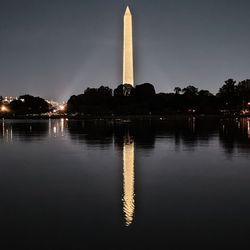
Simply a stunning view from the Lincoln Memorial to the Jefferson Memorial and all around the Tidal Basic, it's hard to miss this large monument that towards overhead and basically a recognizable point in the National Mall to let you identify and know where you're at right away. It really is a beautiful sight however, when you walk up close to it. There are American flags surrounding all around it and there's even a tour that you can take as well. Plenty of tourists around this area at all hours of the day. A large grassy area also surrounds the monuments where I saw tourists just walk all over instead of walking around the dedicated ramp area around it to head back down to the sidewalk area. The best part is seeing the reflection of this monument in the Reflecting Pool and that it helps provide shade shade relief for you from the sun at the exact right angle when you're walking down Constitution Street from the Smithsonian Museums during the peak sun hours! read more


Came here on a beautiful day, unfortunate they had it fenced off so you couldn't get close to the monument. Still a beautiful thing to see if you're in DC. I parked a few blocks away in a garage and walked around DC. There's plenty to see out here so be prepared to walk. read more
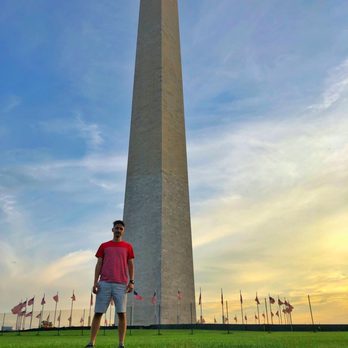


Impressive! I passed by the monument everyday by car and thought it was nice to look at, but once we got closer and actually saw it up-close, it was spectacular! Personally, I think it looks better during the day than at night. I did some longer exposure shots with my camera and the blinking red lights at the top made the memorial look like it had (evil) eyes. The view of the monument from the path between FDR and Jefferson is the best! read more


11 years ago
We only were able to walk up the hill and see the monument as we got there around 2 pm. If you want to go up and see the city, you have to get there early. Tickets are free, but they get snapped up quickly. Still the view is breathtaking and standing at the base of the obelisk is worth the trip alone. There is also a bathroom and bookstore at the base of the hill leading up to the monument. You can see the White House just peeking through the trees at the top of the hill. The view facing the reflecting pool is also an incredible sight. Overall, you shouldn't miss seeing the Washington monument but get there early if you want to go up in it. I can't speak of how long the wait to get tickets or go up is, but I'd allow extra time just in case. read more


Can't go to DC without making a visit to the Washington Monument. The best view of it is from the Lincoln Memorial end of the water where you can see the whole thing, but it's awesome to see up close to really see how big it is! We didn't go inside but we're content from the view outside. read more


It's the most famous monument in the city, probably even more so than the Lincoln. Currently closed for repairs following the earthquake a few years ago and covered in scaffolding. Did you know that they're planning on renaming it to the Clinton National Monument? ;-) read more


7 years ago
The center piece of Washington DC. Pretty much from all over the city you can see this marvel of its time. I have yet to see this at night time, looks amazing in photos but photos never give the true justice. read more


I probably have some of the best friends in the world. I had mentioned that I would love to go to the top of the Washington Monument since it reopened. We had brunch plans on Sunday and my friend woke up at a ridiculously early hour (and got there by 6:30) to get tickets that were good for our schedule that day. Order early if you can so that you don't have to wake up early to get to the top. There were some really great views from the top. I have a couple of pictures and it's just really amazing. I wish I could stay up there for a while. On the elevator down, they show some really cool stones that were donated inside the monument. Awesome! My friend was claustrophobic and afraid of the height and falling. There were no trash cans up in the two floors up top when she didn't feel good. It definitely was not great that it slowed down on the descent. I will say that if you are afraid of falling things, and heights, and are claustrophobic, this probably isn't the best place for you to go and visit. read more


DC insider tip: If you want to go to the top of the Monument, you can pick up a ticket day-of at 8:30 am - check the website. You should get there before 8:30, though, as a line forms during summer. Or, you can reserve online at the below link, but you need to plan well in advance. http://www.recreation.gov/tourParkDetail.do?contractCode=NRSO&parkId=77811 read more
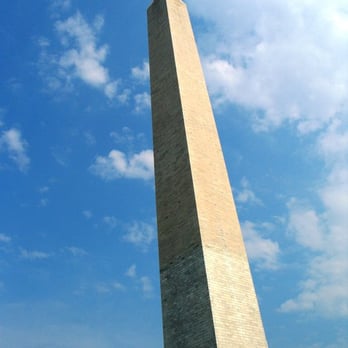


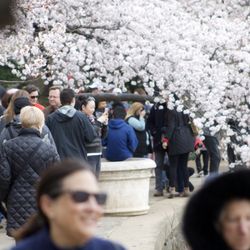
It's huge. Being a constant fixture in the DC skyline and a cultural icon, the Washington Monument can be easily forgotten as tribute to the Father of our country. George Washington was great, and a gigantic 555.5 foot high obelisk proves it. Early visitors can reserve a trip (800-967-2283) up the elevator for a grand view of the city. Btw, I don't know why people try to act like they've done the stairs in the monument, because the stairs have been closed since the '70s. Tips: Picturesque during cherry blossom season. read more

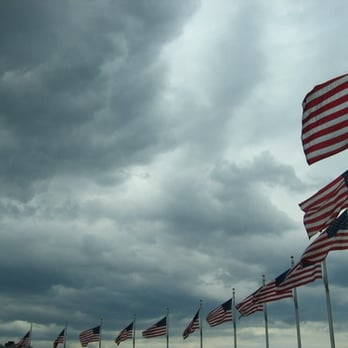


Lined up at 7:30AM on a Saturday to try and get same day tickets to the top of the monument. When I got there, the line had already wrapped around the visitors guide but wasn't too long. By 7:40 though, the line had already increased by at least 15 people! They started handing out tickets at 8:30AM and when we got to the ticket office we had all of the options available. I didn't know this but they have tours up until 9PM--if I ever go again I would definitely want to go at night! You can get 6 tickets at a time per person; my group of 3 got tickets for the 9AM tour. When you enter the monument it is actually a lot nicer than I thought. You go on an elevator which takes you up to the top where you can spend time looking through the multiple windows. The view is spectacular; I would recommend any visitor or person who hasn't been up the Washington monument to go. Afterward, you head down a flight of stairs where there is a small (and I mean small!) museum that details the history of the monument. Then you take an elevator to the bottom; during the ride down you get to see the stones donated by different states and countries inside the monument which is really cool. The view is amazing and I would definitely recommend going up the monument! read more


Thanks to height and zoning laws that prevent structures from being taller than the width of the street they are situated, the 555-feet high Washington Monument aka America's Phallus can be seen in all its grandeur from most vantage points throughout many parts of DC and VA. Very useful as a reference point for making your way around. Despite its somewhat diminutive height for a "skyscraper", the view from the top is not bad at all, another thanks to the aforementioned height restrictions. Book your ticket in advance, or be prepared to wait in line early in the AM to score your tickets to the top. read more


I knew the Washington Monument was temporary closed but I didn't care. I could at least take a picture and say I was there. We decided to come during sunrise...except we didn't know which way the sun rose lol. It was a cold Thursday morning but we saw others jogging in tanks and shorts!! What?? It is definitely beautiful and glad I got pictures to say, hey I was here! It was a lot bigger than I would have imagine. I have to come back when it opens up again. I really do love DC. 162/2017 read more


8 years ago
There was no fee coming here. The intended audience seems to be for tourists, and I went there on March 30, 2019. The site is made up of a monument often referred to 'the pencil', but it is named, 'the Washington monument'. The main reason for why this was Built was to honor George Washington, the commander-in-chief of the Continental Army and the first president of the United States. When I went there, the elevator was being changed (fixed), so I was unable to go inside. The site's mission was to allow tourists to learn and acknowledge George Washington, president of the united states. It did succeed in its mission because it is part of the national mall, so the Washington monument is right across the Lincoln Memorial. I know that there are tours that are offered, but I prefer to walk around and explore. But based on their website, there is one, "Tours of the U.S. Capitol also need to be arranged in advance. Free reservations can be made via the visitthecapitol.gov website. " The reason why I gave this rating was that I find it amazing how people from all over the world come here, to learn about America's history. And I like that it's not a boring building, but like a monument that has meaning and nature plays a nice role in the view. I'm sure, next time, I'll try to get to that elevator! read more

8 years ago


More info about Washington Monument
Washington Monument Reviews in Other Languages
Ask the Community - Washington Monument
Is there parking available in the area? Can you do meter parking or some deck parking?
Not much parking at all. Not worth getting a ticket. Most people find it best to take public transportation
Review Highlights - Washington Monument




















Why does Yelp recommend reviews?
76 reviews that are not currently recommended
The reviews below are not factored into the business's overall star rating.

10 years ago

11 years ago

8 years ago

7 years ago
10 years ago
10 years ago

11 years ago


8 years ago

8 years ago

11 years ago

11 years ago

10 years ago

10 years ago
5 years ago

3 years ago
10 years ago


