Cancel

    Open app

    Search

    warminster train Station

    5.0 (1 review)

    warminster train Station Photos

    Recommended Reviews - warminster train Station

    Your trust is our priority, so businesses can't pay to alter or remove their reviews. Learn more about reviews.
    Yelp app icon
    Browse more easily on the app
    Review Feed Illustration

    7 years ago

    Helpful 0
    Thanks 0
    Love this 0
    Oh no 0

    Verify this business for free

    Get access to customer & competitor insights.

    Verify this business

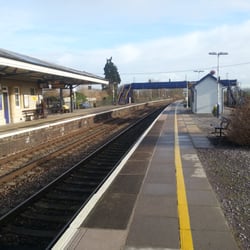
    Westbury Railway Station - General view of the station, from present platform 1, looking towards Bristol and London. The disused platform 1 is to the

    Westbury Railway Station

    (5 reviews)

    The East cremate their dead, whereas the Westbury…read more Westbury is kind of a haunting town on the Plains and I've always liked it here, and it's a perfect little English town which essentially is quintessential Southwestern rural England. It has its own little train station, yet it's a major hub for the whole nation, and I've only been here once but I definitely liked it. It is a major junction for Wiltshire though and has direct connections to Reading Taunton Penzance London-Paddington Cardiff Portsmouth Swindon Bristol (Temple Meads) Weymouth and London-Waterloo. It also has an amazing Station Cafe and could only score 5 stars.

    To-day, Westbury is a moderately important junction station, where the Bristol-Southampton and…read moreBristol-Weymouth services cross the West of England main line from Paddington to Plymouth. It's all a far cry from former times: the station was opened in 1848, on a line from Chippenham, with services being extended to Warminster in 1851, Weymouth and Bath in 1857 and Salisbury in 1856. It continued as a country junction until 1900, when it was rebuilt in its present form as the first part of the new through route from London to Plymouth via Castle Cary. Through services began in 1906, and so began Westbury's golden age as a major junction station. It didn't last long: in 1933, a bypass line was built around the station to the south, for non-stop London-Plymouth expresses. The introduction of High Speed Trains in 1980s brought more decline, as the London-Paignton trains were routed via Bristol, the engine depot closed, staffing at the station was reduced, and the old platform one was closed. To-day, Westbury is expanding rapidly as a dormitory town for Bath and Bristol, and commuter traffic is increasing as a result, to some 300,000 passengers a year. There is an intermittent main-line service to London and Taunton, but the main services are the half-hourly Bristol-Portsmouth trains, and the two-hourly Weymouth service. Additional local services to Bristol are laid on at rush hour, and there are three direct trains a day to London via Salisbury. It can all seem quite busy again at certain times of the day. Station facilities remain basic, however, even if the fine buildings from 1900 have survived: but a new buffet and new toilets are being built, and there is a small waiting room, though ticket office hours remain limited. Most trains use the island platform (2 and 3), although platform 1 remains open for some services. The station has recently been made accessible for wheelchair users and other passengers with disabilities.

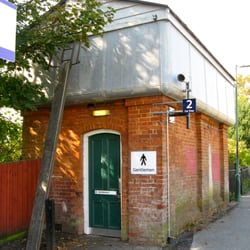
    Railway Station - The former water tank for steam trains is now home to the Gents' lavatory.

    Railway Station

    (2 reviews)

    Not to be confused with Mitt Romsey, who is not related to Mitt Romney. And even if he was, I…read morewouldn't give a mitt. So this is a little old station in Romsey, which is on the line from Waterloo into Southampton, and it's a listed beautiful old building with a very unique and very attractive design. It feels like a tiny little town station, but with a truly grand building and style, and is definitely one of the nicer stations you'll find in this part of the country.

    The historic town of Romsey has a well-preserved and well maintained traditional railway station on…read morethe line from Salisbury to Southampton. It is used by over 330,000 passengers a year. The station opened in 1847 on the line from Southampton to Salisbury (via Eastleigh). In 1865 the route from Andover to Southampton via Romsey and Redbridge opened, making Romsey a junction; also known as the Sprat and Winkle Line, it closed between Andover and Romsey in 1965, but the southern section from Romsey to Redbridge (on the Southampton-Bournemouth line) remained to form the main Salisbury to Southampton line. The Eastleigh to Romsey line closed to passengers in 1967 but reopened in 2003, making Romsey a junction station once more. It is served by the Cardiff/Bristol to Portsmouth service (roughly hourly, half-hourly at peak times) and the Salisbury-Romsey-Southampton-Chandler's Ford-Romsey service, which provides an hourly service in all directions (and thus provides two trains and hour to Southampton, one direct, and one via Chandler's Ford, Eastleigh and Southampton Airport). Facilities include a ticket office (open part time), ticket machines, toilets, waiting rooms, covered bicycle storage, a small cafe (open part-time) and a small car park.

    Bristol Parkway Station

    Bristol Parkway Station

    (6 reviews)

    Bristol Parkway station is located at the intersection of the lines from London (Paddington) to…read moreSouth Wales and the main line from Bristol to Birmingham, providing a major interchange between the two. It was one of the first 'Parkway' stations to be built, in 1972, to attract car users to trains by providing ample car parking at locations with good road links, close to urban areas. This site was chosen both because of the interchange it offered, and because of its proximity to the M4 and M32, just north of Bristol. When opened, shelter was fairly meagre, with 'bus stop' shelters on the platforms and a small waiting room and ticket office by the entrance to the car park. Because of its exposed and windy position, additional long platform shelters were erected, but it still had a reputation for being a cold place to wait for a train. Over the years, substantial suburbs have developed around Stoke Gifford, and in 2001, a new and much larger station building, with a dramatic curved roofline, was built in recognition of its growing importance. In 2007 an additional platform was constructed on the London-bound (north) side, to provide additional capacity. The station is now used by over 1.75 million passengers a year, with in excess of half a million passengers changing trains here. The station now has heated waiting shelters on the platforms, and the main building has a small shop, cafe and ticket office. Other facilities include a taxi rank, payphones, cash points and bus stops for local bus services (including to Frenchay hospital and Bristol city centre). The station has level access (via lifts to the platforms). The station is served by all long distance trains on the London-South Wales main line and the cross-Country main line from the South-West to Birmingham and the North. It is also served by local services from Gloucester, Westbury and Weston-super-Mare.

    This is a great, modern, functional station on the North side of Bristol. It's close to the M4/M5…read moreintersection, so it's a far better place to collect someone from than Bristol Temple Meads (in the centre of the city) if you're located to the north of the city. However, there are a few things to be aware of: 1. Parking is £5 a day. The payment meters are awkward to operate, and if you don't pay you will get clamped & fined. 2. The car park gets full by 9:30am most days, and if you park outside an official space, you will get clamped (even if you've paid for a ticket). 3. Traffic in the area is hellish at peak hours. Journeys from the motorway to the station can take in excess of 45 mins between 7:30 - 9:00 and 16:00 - 18:00 for the 2 mile journey. The station is fairly new with good facilities: clean toilets, a small newsagent, a coffee shop and a sandwich shop. There are also lifts to all platforms for the disabled.

    Swindon Station

    Swindon Station

    (11 reviews)

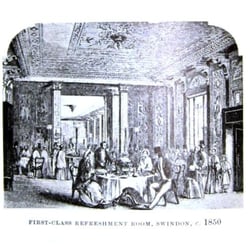
    Swindon is one of the traditional railway enthusiasts' meccas, as the 'Railway Town' of the Great…read moreWestern Railway (GWR), and its station has a complex but interesting history. It is still an important and busy station to-day. The line - built by the famous engineer, Isambard Kingdom Brunel, opened on 17th December 1840, to a temporary terminus at Wootton Bassett, and through to Bristol on 30th June 1841. When the GWR was being planned, Brunel and his engine designer, Daniel Gooch, decided that Swindon would make a good place to locate the main engine depot and engineering works. As well as being the junction for the line to Cheltenham and Gloucester, it was also the point at which the relatively level line from London changed to the more steeply-graded section to Bath. This was important in the early days, when steam locomotives were relatively under-powered, and the idea was that different engines would work the two sections. The GWR built what was effectively a new town - initially called 'New Swindon' - with a railway works, depot, 300 cottages for the staff, and a new station, opened in 1842. The station was - unusually - paid for by the building contractors at their own expense, and to recoup their outlay they built the first ever railway refreshment rooms (separate rooms being provided for First- and Second-Class passengers). The GWR agreed that all trains should stop there for a 10-minute refreshment break as they changed locomotives, which they did until 1895. But from the start refreshment rooms were famously awful - beginning the dreadful reputation of railway buffets! With a captive market, the owners charged high prices for inferior food and drink. Coffee was dispensed from an impressive silver urn in the shape of a locomotive, but this did nothing to improve its flavour. Even Brunel himself was moved to write this wonderfully stinging letter to the owners, in December 1842: " Dear Sir, I assure you Mr Player [the manager] was wrong in supposing that I thought you purchased inferior coffee. I thought I said to him that I was surprised you should buy such bad roasted corn. I did not believe that you had such a thing as coffee in the place; I am certain that I never tasted any. I have long ceased to make complaints at Swindon. I avoid taking anything there when I can help it. Yours faithfully, I K Brunel." To-day, railway Swindon is a shadow of its former self, with the works closed, albeit with some of the handsome buildings (Grade I listed) retained as workshops and the railway museum 'Steam'. But the main island platform buildings survive from the 1842 station, together with a new platform on the south side, opened in 2004. The historic refreshment rooms were located on the south side of the station, but sadly no longer exist, having been demolished in 1972 - in an astonishing piece of corporate vandalism by the former BR - to make way for the ghastly office block that now occupies the site. The growth and affluence of modern Swindon means that this is a busy station, serving nearly 2.5 million passengers a year, and remains the junction for the line to Stroud, Gloucester and Cheltenham. All trains from London to Bristol, Cardiff and Cheltenham stop here, as well as the occasional direct service to Oxford, offering a fast train to London every 15 minutes during the day, Mondays-Saturdays. The station has a couple of cafes (I've not tasted the coffee, though!), a small newsagents, waiting rooms and is fully accessible.

    Clean efficient station with helpful staff. Lovely comfortable clean train to London Paddingtonread more

    warminster train Station - trainstations - Updated May 2026

    Loading...
    Loading...
    Loading...