Venetian Towers Photos


Recommended Reviews - Venetian Towers
Start your review...



4 years ago

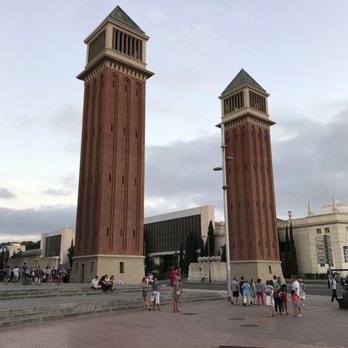
They seem out of place. These two towers of red brick were modelled after the campanile of St. Mark's Basilica in Venice. Designed by architect Ramon Reventós and built in 1927 to 1929, for the 1929 Barcelona International Exposition. Reventós had other projects in the exhibition, - the Greek Theatre, the Spanish Village (Poble Espanyol), and the Montjuïc Funicular building. They are an ornamental pieces at the bottom of the hill leading up to the Palau Nacional, marking the entrance to the exhibition area that is now called Fira de Barcelona. The towers are no longer open to the public as viewing galleries. At one time a tower housed the equipment for operating the lights of the Magic Fountain of Montjuïc. The other one once held sirens for signaling emergencies. From the tourist's point of view, they are ok to check out if you are in the area for other sites. I wouldn't go out of my way just for these. They kinda seem out of place a bit for the surrounding architecture. read more


The ornamental pair of towers are 47m high, with a 7.2 metres square cross-section. They were modelled after the campanile of St. Mark's Basilica in Venice. They were originally envisioned in the city expansion plan of 1907, as part of the redevelopment of the area for the 1929 Barcelona International Exposition. We passed them going from the Metro to the museum & magic fountain park. read more
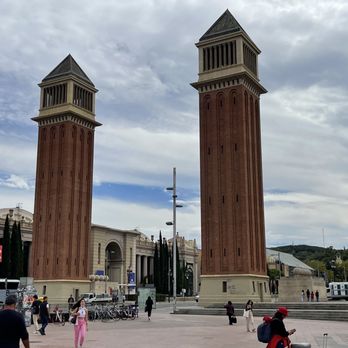

Two Venetian Towers located at the Plaça Espanya, The 47m / 154ft high towers are modeled on the Bell Tower of the St. Mark's Basilica in Venice. They were built by Ramon Raventós for the 1929 International Exhibition. read more