Services - U-Haul
Truck rental
Trailer rental
U-Haul Photos


You might also consider


More like U-Haul
Recommended Reviews - U-Haul
Start your review...


Reviews With Photos
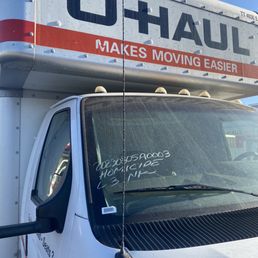

PSA: CRIME SCENE FOR RENT TW: MURDER I can't believe I am writing this review but this location tried to rent my roommate and I a literal MURDER truck. I received a phone call from my roommate & was left speechless. She informed me that the 20 ft uhaul they gave us had not only crime scene tape on it but dried, smeared blood on the inside of the truck. Her boyfriend opened the back door & came across the left behind crime. She checked the windshield & low and behold there is a tow number followed up by "homicide" written in chalk. She went to speak to a manager, double checking this wasn't some halloween prank/decor. Turns out they had a note in the system saying Sargent Sandy released the truck from the case. They didn't even get it cleaned before renting it out to customers! After doing some research, we come to find out the body was found TWO MONTHS PRIOR. Not only is this a biohazard, who the hell wants their mattress touching a uhaul that had a decaying body in it?! Because this was the last 20 ft truck on their lot, they came to the solution to give us a 26 ft truck for the price of a 20 ft truck with an additional $50 discount. We were told to return the truck by 4 pm, and received a phone call shortly after 4 since we were running a little behind. The audacity to rush us back after trying to give us an actual crime scene of a truck is beyond me. The fact that they even charged us for a uhaul is absolutely absurd. Thanks for the trauma uhaul!


I was moving over the weekend and was looking for cheap plastic containers. A quick search and U-Haul option popped up. The nearest location with availability was in San Francisco - near Candlestick Park. I booked 10 containers for the next day. It didn't specify the pick up time on the website, so that meant I could pick up before the location closes at 7pm. Next day, I drove for 1.5 hours after work and reached at 6:30 pm. Positive: The location is easy to find, just off 101. There is ample of parking spots. Apart from U-Haul trucks, moving supplies, there's also a storage facility. Negative: very slow service. I was second in the line. There is no acknowledgement from anyone. They were clearly understaffed - one person tk run the entire location. Anyway after waiting for nearly 25 mins, I was called. The person was friendly. She checked the system and mentioned that our order was cancelled 4 mins back (which was confusing as the system never indicated pick up time). Had to reorder the containers. The containers were very dirty. Also during the move, I realized that the handle is very harsh, so you need to wear gloves to protect your palms getting all red.


4 months ago
A complete RIP OFF. LIERS THE HAD A BILL WRITTEN UP FOR 4 hour charge plus miles for an estimated 69$. I only used the truck for 3 hours , 10 miles and put the gas that I used back. They changed it and charged me 182$ Also the day labor in front block you when leaving. Worker was talking loudly about the lines but there is no sign in there. Just straight trash. Never again. read more


4 months ago

7 months ago

9 months ago
4 months ago

10 months ago
11 months ago

1 year ago
7 months ago
10 months ago


2 years ago
1 year ago
1 year ago

2 years ago
1 year ago

PSA: CRIME SCENE FOR RENT TW: MURDER I can't believe I am writing this review but this location tried to rent my roommate and I a literal MURDER truck. I received a phone call from my roommate & was left speechless. She informed me that the 20 ft uhaul they gave us had not only crime scene tape on it but dried, smeared blood on the inside of the truck. Her boyfriend opened the back door & came across the left behind crime. She checked the windshield & low and behold there is a tow number followed up by "homicide" written in chalk. She went to speak to a manager, double checking this wasn't some halloween prank/decor. Turns out they had a note in the system saying Sargent Sandy released the truck from the case. They didn't even get it cleaned before renting it out to customers! After doing some research, we come to find out the body was found TWO MONTHS PRIOR. Not only is this a biohazard, who the hell wants their mattress touching a uhaul that had a decaying body in it?! Because this was the last 20 ft truck on their lot, they came to the solution to give us a 26 ft truck for the price of a 20 ft truck with an additional $50 discount. We were told to return the truck by 4 pm, and received a phone call shortly after 4 since we were running a little behind. The audacity to rush us back after trying to give us an actual crime scene of a truck is beyond me. The fact that they even charged us for a uhaul is absolutely absurd. Thanks for the trauma uhaul! read more


3 years ago

I was moving over the weekend and was looking for cheap plastic containers. A quick search and U-Haul option popped up. The nearest location with availability was in San Francisco - near Candlestick Park. I booked 10 containers for the next day. It didn't specify the pick up time on the website, so that meant I could pick up before the location closes at 7pm. Next day, I drove for 1.5 hours after work and reached at 6:30 pm. Positive: The location is easy to find, just off 101. There is ample of parking spots. Apart from U-Haul trucks, moving supplies, there's also a storage facility. Negative: very slow service. I was second in the line. There is no acknowledgement from anyone. They were clearly understaffed - one person tk run the entire location. Anyway after waiting for nearly 25 mins, I was called. The person was friendly. She checked the system and mentioned that our order was cancelled 4 mins back (which was confusing as the system never indicated pick up time). Had to reorder the containers. The containers were very dirty. Also during the move, I realized that the handle is very harsh, so you need to wear gloves to protect your palms getting all red. read more

2 years ago
Consumers be awared! I got a hit installation for my brand new vehicle at U-Haul recently. Even thought I had to go there three times due to various reasons from them, such as no part, power outage etc. Finally got my hitch installed on the third time. I was so happy to pick up my car and didn't pay attention to check my vehicle throughly. I thought I should trust they are professional to do a good jobs. However, when I pumped gas after I left U-Haul in about 20 minutes, I noticed the damages on the edges on both side of my real quarter panels. I called them right away and they told me to go in next day as the manager is off work soon that day. I went in the next morning and the tech who installed it checking my vehicle and took some photos. He told me he didn't notice earlier and sorry. He asked his manager helped me to file an incident report and told me to follow up with their insurance Repwest. I did what I was told and resubmitted all evidence after as they didn't submit the photos they took. After a month process, I received their final decision to denied their liability of this claim as the Hitch Pro denied to damage my vehicle during installation. If thr hitch tech didn't admit his wrongdoing, he could just tell me that day instead of wasting my time to go through of these. I could just get a lawyer involved for a fair investigation instead of using their own insurance company to against me. My mistake is that I didn't check when I picked it up at the store. Otherwise, they have no excuse to deny it. Just be careful if you bring your vehicle to U-Haul for hitch installation. Make sure you take photos of your car before you hand them the keys and triple check after you pick up the vehicle before you leave the U haul store. Otherwise, it's your loss if any damage they cause. From the damage photos I attached, I don't know how can cause other than someone used tools in the area to force opening the panels. Now I am stuck with the damage marks on my brand new vehicle. I am so sad and so disappointed at U-Haul. read more


3 years ago


18 years ago
I didn't like this location . . . kinda sketchy the day we visited this location because a couple of Spanish speaking immigrants walked right up to my car sticking there heads INTO my car window vying for work without applying for a legal work permit! I asked them in Spanish if these two men are US Citizens and they replied, "No, Senora-no US nos otros Mexicano . . seulemente habla Espanol . . . no intende English, okay? Tu immagre?" Whoa, what did this guy just ask me??? Hey! . . . This is not safe nor is this good or right for me being interrogated by an illegal alien! I politely replied grimmacing, "No, gracias, Senor. Vaya con dios, okay? I am returning my U-Haul trailer anyway. Muchas gracias." BTW: WARNING! Should you hire these people: You will be fined a ridiculous sum of moola for hiring an illegal alien! Oy-evay! Noooo-don't hire these guys because you can go to jail and/or/both be seriously fined! O=:-O Please do not hire these people hanging outside U-Haul's property! WHY? These people are NOT INSURED or BONDED! DUH! Truly unsafe for you and your family exposing your family in harm's way besides where do these people live anyway-will these people rob you, eh? Think about that question before hiring anyone off the street! Anyway, Joy needed to move, so she rented a U-Haul trailer online. I had to tow the trailer behind my 4 WD 4-Runner because I had purchased the top of the line U-Haul tow hitch from Santa Monica U-Haul in 2003. My tow hitch is awesome and problem-free. The cost to rent a trailer was phenominally, surprisingly inexpensive for the day's usage. I must admit I clocked over 250 miles in one day moving all Joy's stuff from SF to East Bay hauling that U-haul trailer behind my car. The trailer did rattle quite a bit and the tow hitch dipped downwards . . . I must also add I didn't like how MUCH the tow hitch dipped downward-seemed rather unsafe. Especially, when I was going over speed bumps the tow hitch would grind, scrape against the speed bump! Not good at all . . . Upon returning the U-Haul trailer at 6:35 PM (closes at 7 PM!), I waited for an employee for 10 minutes to unhitch the trailer from my 4-Runner. I was biting my fingernails when this guy would show up and unhitch the trailer from my 4-Runner! Then the guy wanted me to back the trailer into the trailer parking spot where he didn't have to physically move the trailer himself. Dude! Do your job! It's not my responsibility to park the trailer where the other trailers are parked! I parked the trailer as close as possible where the other trailers are located so, all you have to do, DUDE is reposition and straighten the trailer into the correct parking spot! O=:-O Oy-evay! How lazy can this dude possibly be??? As my old Santa Monica German roommate, Niels used to say, "Wot a la-mer!" read more


5 years ago

6 years ago

5 years ago

4 years ago

5 years ago

5 years ago

6 years ago

9 years ago

8 years ago
Skip. 1. Don't bother calling unless you want to be placed on hold for over 10 minutes, only to be told. ' 2. After hours drop off is outside their gated property with alot of shady people waiting to snatch your trailer. 3. Miscalculated and overcharged card bc they didn't report I returned the trailer. Of course when you call .... See #1. Tips. Take plenty of pictures of the rental before and after. When speaking with staff make sure you note their names. Just in case you need to ask for them. read more


7 years ago

3 years ago

6 years ago
4 years ago


7 years ago
Page 1 of 8
More info about U-Haul
Ask the Community - U-Haul
Review Highlights - U-Haul
You might also consider







Why does Yelp recommend reviews?
21 reviews that are not currently recommended
The reviews below are not factored into the business's overall star rating.
18 years ago

13 years ago

4 years ago
8 years ago

4 years ago
2 years ago

10 years ago
7 years ago

2 years ago
5 years ago

17 years ago
19 years ago

20 years ago
16 years ago

8 years ago
9 years ago
9 years ago
5 years ago

11 years ago
18 years ago


