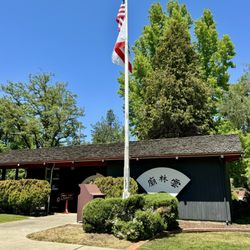
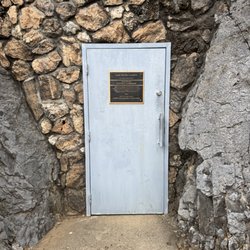
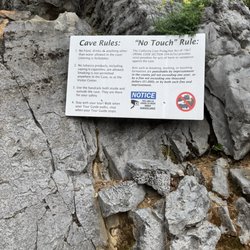
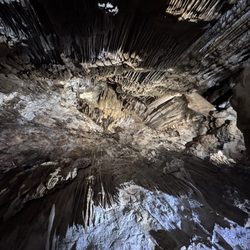
The "Temple of the Forest Beneath the Clouds," also known as the Weaverville Joss House State…read moreHistoric Park, is a remarkable historical site due to how well it is decorated and preserved. It truly offers a unique glimpse into the lives of Chinese immigrants in early California.
In the late 19th and early 20th centuries, a significant majority of Chinese emigration to North America originated from the Sze Yup (The four counties) region of Guangdong province in China. These counties are located on the west side of the Pearl River Delta. This region includes Taishan (Toi Shan), Kaiping, Xinhui, and Enping. Taishan was the largest source of these immigrants. The exodus was caused by severe ethnic wars.
The Punti-Hakka Clan Wars were a conflict between the Hakka and the Cantonese people in Guangdong, China between 1855 and 1867. The wars were fiercest around the Pearl River Delta, especially in Toi Shan of the Sze Yup counties. The wars resulted in roughly a million dead with many more displaced civilians.
Due to this immigration pattern, Taishanese was the dominant dialect of Chinese spoken in Chinatowns across North America up until the mid-20th century. While related to Cantonese, Taishanese has limited mutual intelligibility with it.
Approximately 1.3 million people are estimated to have origins in Taishan. It's noteworthy that there are more overseas Taishanese than those living in Taishan itself, highlighting the significant diaspora.
Taishanese immigrants played a crucial role in the development of early California and the United United States. For example, they constituted about 90% of the entire workforce (approximately 12,000 workers) employed by the Central Pacific Railroad to build the transcontinental railroad. They also worked in gold mines, fisheries, and various other labor-intensive jobs, contributing significantly to the state's economy.
Even today, many older generations in Chinatowns in major North American cities like San Francisco, Oakland, Los Angeles, New York City, and Boston still speak Taishanese. However, more recent immigration patterns and the increasing prevalence of Mandarin and other dialects have led to a shift in the linguistic landscape of these communities.
Despite their immense contributions, Chinese immigrants, including the Toi Shanese, faced severe discrimination and mistreatment in the US, culminating in acts like the Chinese Exclusion Act of 1882, which significantly restricted Chinese immigration for decades.
The Weaverville Joss House, as a surviving example of a rural-style Chinese temple of that era, holds immense historical and cultural significance, especially considering that many similar temples in China were destroyed during the Cultural Revolution. Its preservation offers a tangible link to this important period of Chinese American history.
I have many Toi Shanese friends, hence my interest in their origins and culture and as to why there are so many of them here in California.