Triforium Photos


More like Triforium
Recommended Reviews - Triforium
Start your review...



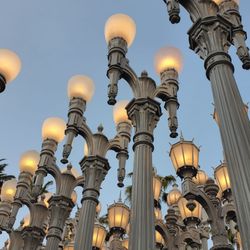
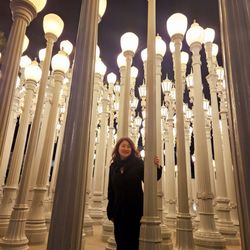
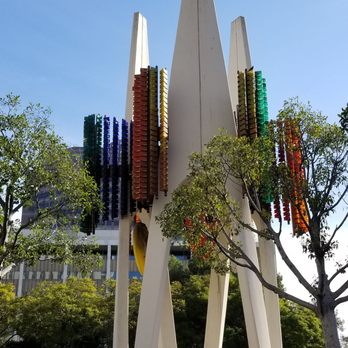
Tall, colorful sculpture! Public artwork is awesome! This gigantic art installation caught my eye as we drove through Downtown Los Angeles. I had to stop, get out of the car, and take a closer look! Wow! Alana was a bit stressed as I parked her car on the street, behind another vehicle. I did move forward, out of the bus stop area, and reassured her that we would be quick. I almost had to eat my words because a sheriff (in uniform) walked past us, but it looked like he was on lunch break because he was carrying a package (of food?)! Located in the Fletcher Bowron Square (across from the courthouse), on the corner of Temple and Main Street, this art installation was created by Joseph Young in 1975. I believe it used to play music and have a synchronized light display. It is six-stories tall and weighs six tons! It costed almost a million dollars! Yeah! I'd like to return and see this artwork at nighttime! I hope it still has lights and music... read more

11 years ago
Whenever my family drives around downtown, my father will scornfully say "That's the Triforium. They put lights and bells in it, but they ran out of money." Much like the adjacent LA Mall, the Triforium is basically a late, late, modern (ca. 1975) architectural folly with some futuristic (albeit nonfunctional) ideas that have finally started to come into vogue. When it was built in the mid-1970s at the cost of nearly a million dollars, there actually was an electronic carillon and light system in the structure that supposedly changed with people's movement. Of course, not long after the unveiling, the primitive computerized equipment broke down and the Triforium became a really expensive sculpture. But today, experientiality is quite important subject in many architectural schools. With the advent of inexpensive (i.e. $0) advanced parametric software like Grasshopper for Rhino with plug-ins like Arduino, the systems that failed in the Triforium can be recreated- and even expanded upon. With these plugins, systems can even be controlled not only by movement below, but by something as commonplace as Twitter- a certain hashtag can control movement or change the color of an LED. It's as if the Triforium's "Old Man in the Cave" can now fit into the palm of anyone's hand. These advances in technology; only science fiction 40 years ago, have allowed servo and light systems to be installed at a fraction of the price of the Triforium's original system. Much like Cayley's 1843 design of a steam powered monoplane, the Triforium certainly was ahead of its time. The concept of an automated experiential structure the designers envisioned 40 years ago have now become a reality. Today, it can be an effective, relevant, attractive project. read more


15 years ago