Titan Crane Photos


Recommended Reviews - Titan Crane
Start your review...



17 years ago
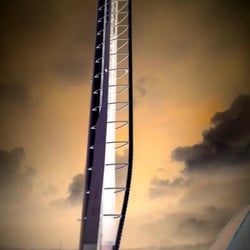
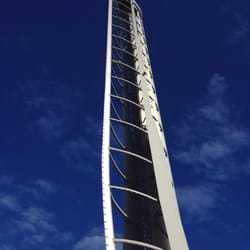
The Titan Crane in Clydebank bills itself as Scotland's most unique attraction. There is certainly an element of truth in this - as the remastered crane is quite a sight in itself, as well as enabling you to see dramatic views of the Clyde river. Based in Clydebank in the outskirts of Glasgow - the crane is very hard to miss! It stands at 150ft tall, as well as being painted a bright turqoise. Their are also very comprehensive directions on the crane's website if you are unsure of how to get there. When you arrive at this attraction, you will be met by a large carpark and the purser's office. Before you can head over to the crane, you'll need to make a trip to the Purser's office where you can watch videos of the crane's original use and it's regeneration. You'll also need to pay for the tickets - which are a little pricey. Once you've got that business out of the way, you can head over to the crane itself. You have two options here - you can either walk over (which takes about 15 mins) or you can get the mini bus. Do remember that the crane is placed right on the river's edge - so the walk is a little windy! Once you get the the crane itself you'll be taken up to the top in a lift and given the amazing view from the top. Careful if you're scared of heights though - not only is the crane VERY high, but the floor you're given to stand on is see through! The views are amazing, though, and make the whole trip worthwhile. Although there are a few souvenirs available to buy in the purser's office - don't expect to find any shops or cafe's at this attraction. Look out for special events, though, as there are always charities looking for brave souls to abseil down the crane to raise money! read more

17 years ago
OK, so there's unlikely to be a multi-lingual Clydebank Sightseeing bus launching anytime soon. However there is a mini bus that transports you from the town centre to the Titan Crane and for now, that's a sign of progress. There's no two ways of looking at it, for years, Clydebank was stagnating. Suffering from its close enough proximity to Glasgow City Centre, locals abandoned its handful of pubs and clubs leaving behind quiet streets and tired businesses. However there's a hint of positivity creeping into the town now spearheaded by the majestic crane which towers over it. With 3.75 million quid having been spent on restoring the structure, Clydebank Rebuilt decided to go one step further and turn it into a museum and heritage centre detailing its fascinating shipbuilding history, particularly during the World War II years when it miraculously survived despite being one of the Germans' most sought-after targets. The results are impressive. For four pounds you are afforded spectacular views of the Clyde (stationary binoculars are situated at the top) and a well documented history of the structure through pictures and video which, as well as exciting visitors, are enough to make even the most jaded Bankie's heart swell. # What's even more encouraging is that nothing about this has been done half-heartedly. Fliers are circulated across the country, billboards pointing the way to it are bold and vibrant while the lighting at night ensures it can be seen for miles around regardless of the time of day. The only downside is that, due to weather conditions, the crane only operates as a tourist attraction from May to October. Nevertheless it's a massive leap in the right direction for the town, as emphasised by the Chicago Aethaneum Award for Architecture it received in 2008. No, I've never heard of it either, but any recognition for this often neglected area is unquestionably a good thing. read more


9 years ago

17 years ago