The Long Wharf Photos


You might also consider


More like The Long Wharf
Recommended Reviews - The Long Wharf
Start your review...



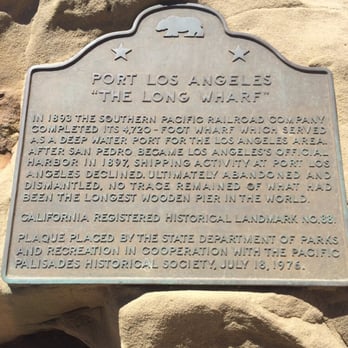
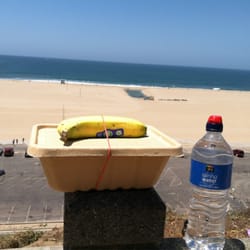
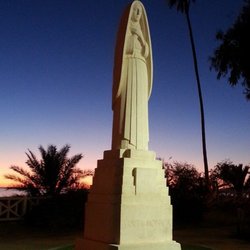
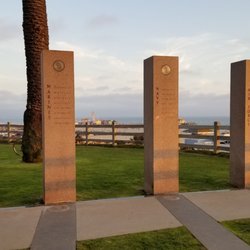
I was surprised to learn about this historical landmark. As I stared out towards the ocean I tried to visualize what it may have looked liked. How incredible would it have been to witness...I am fascinated that such a huge project left behind nothing but a plaque. This story to be told here is really interesting and so I do so with the help of author Nathan Masters: Port of Los Angeles Long Wharf is California Historical Landmark site number 881. It was located North of the present day Santa Monica Pier. The plaque is located at the Will Rogers State Beach lifeguard headquarter. The Long Wharf was built by the Southern Pacific Railroad Company and opened in 1894. Lumbar from the Northern ports was one of the major imports here. This lumbar was important due to the construction boom in California at the time.This wharf was the longest in the world at the time at: just under a mile at 4,720 feet. The purpose of the wharf was for cargo and passengers alike, until 1913. Southern Pacific Railroad and the street cars of the Los Angeles Pacific Railroad served the wharf. During the day the trams ran passengers, and then from midnight until sunrise it ran cargo cars. In 1919 the first 1,000 feet of the wharf was removed. What was left of the pier was used as a fishing pier. Sadly in 1933 the rest was removed. So what was the inspiration and purpose for the construction of the Wharf? LA's lack of of a natural harbor worried the city's business interest; LA's rival to the south, San Diego, boasted the second finest harbor in the state. Juan Rodríguez Cabrillo first identified San Pedro as a potential harbor in 1542, but conditions were less than ideal; a sandbar in the middle of the bay impeded navigation, the shore was lined with mudflats, and the Palos Verdes headland offered only partial shelter from winds and seas. With no deep water port, freighters delivering goods to Los Angeles were forced to anchor in San Pedro Bay, where they were met by small boats, known as lighters, that then carried the ships' cargo to shore. Southern Pacific Railroad and the president, Collis P. Huntington wanted to create Port Los Angeles at Santa Monica. Huntington partnered with Nevada Senator John P. Jones the founder of Santa Monica, to construct the pier. The wharf was complete with double tracks in effort to move cargo as quickly as possible on and off the pier. Competition from other railroads likely prompted the Southern Pacific's sudden change of heart. At the time, a syndicate likely associated with the Union Pacific was building a line to San Pedro Bay. The Atchison, Topeka, and Santa Fe Railroad, meanwhile, had drafted plans for Port Ballona, a shipping center to be located at the site of today's Marina Del Rey. In Santa Monica, the steep coastal palisades--and a virtual lock on oceanfront land holdings--would ensure that only the Southern Pacific's trains could reach the harbor it envisioned at Port Los Angeles. The Southern Pacific's move, Robert Fogelson wrote in his 1967 history The Fragmented Metropolis, "was consistent with its determination to monopolize trade in southern California." Suspicious of the Southern Pacific's intentions, the Los Angeles Chamber of Commerce fought back. "The Southern Pacific came here and had everybody for its friend," said real estate salesman Robert Widney (as quoted by Fogelson), "but we have learned that when they want anything badly our interest lies the other way." Both sides dug in, and a protracted political war, dubbed the Free Harbor Fight, ensued. It was not resolved until 1896, when Congress allowed the Army Corps of Engineers to choose the more suitable site for an artificial harbor. In 1897, the Corps opted for San Pedro Bay. Work began on the harbor two years later. A new breakwater--along with subsequent improvements--transformed the area into a major commercial shipping centers. Today, the twin ports of Los Angeles and Long Beach are the two busiest container ports in the United States. What was good for the commercial freight business was bad for tourism, however. In a sign of what might have happened to Santa Monica had the Southern Pacific prevailed, the exclusive Terminal Island resort of Brighton Beach became a fishing harbor after an 1916 dredging project altered the shape of the shoreline. Canneries replaced summer cottages. Santa Monica's Port Los Angeles, meanwhile, closed to shipping in 1913, unable to compete with the improved harbor at San Pedro Bay. In 1920, the wharf was torn down, leaving little physical evidence of the Southern Pacific's bold plan to turn Santa Monica into a commercial harbor. (Nathan Masters ) read more


This is another one of those, "Wow, I would have never of guessed" -type of sites. So this was once the site of the longest wharf in the world and at one time a train used to make its way down the tracks and upload cargo from incoming ships. That's pretty darn cool. read more

More info about The Long Wharf













Why does Yelp recommend reviews?
1 review that is not currently recommended
The reviews below are not factored into the business's overall star rating.

5 years ago
The Long Wharf - landmarks - Updated May 2026
Best of Pacific Palisades
People found The Long Wharf by searching for…
Pier Fishing in Pacific Palisades, California
Historic Restaurants in Pacific Palisades, California
Sunrise View in Pacific Palisades, California
Things to Do in Pacific Palisades, California
Lighthouses in Pacific Palisades, California
Sightseeing in Pacific Palisades, California
Public Services & Government in Pacific Palisades, California
Scenic Overlook in Pacific Palisades, California
Landmarks in Pacific Palisades, California
Nature in Pacific Palisades, California
Historical Sites in Pacific Palisades, California
Places to Take Pictures in Pacific Palisades, California
Old Town in Pacific Palisades, California
Open Late Museums in Pacific Palisades, California
Tourist Attractions in Pacific Palisades, California
Train in Pacific Palisades, California
Observation Deck in Pacific Palisades, California
Scenic View in Pacific Palisades, California
Open Today in Pacific Palisades, California
Military Museum in Pacific Palisades, California
Viewpoints in Pacific Palisades, California
Night View in Pacific Palisades, California
Fun Things to Do on Mondays in Pacific Palisades, California
Browse Nearby
BEST of Pacific Palisades, California Restaurants near The Long Wharf
BEST of Pacific Palisades, California Coffee near The Long Wharf
BEST of Pacific Palisades, California Things to Do near The Long Wharf
BEST of Pacific Palisades, California Breakfast near The Long Wharf
BEST of Pacific Palisades, California Photo Spots near The Long Wharf
BEST of Pacific Palisades, California Scenic Drive near The Long Wharf
BEST of Pacific Palisades, California Sightseeing near The Long Wharf
BEST of Pacific Palisades, California Caves near The Long Wharf
BEST of Pacific Palisades, California Star Gazing near The Long Wharf
Browse Brands
Browse Articles
People who viewed The Long Wharf also viewed

401 Ocean Ave
1 review

Electric Fountain
3 reviews

Sturges House
1 review
Brentwood

Japanese Garden Landmark
2 reviews
Sawtelle

O'Neill House
6 reviews

Eames Foundation
31 reviews
Pacific Palisades

Kuruvungna Springs
4 reviews
Sawtelle

Doheny Mansion
11 reviews
University Park

Marilyn Monroe Home
4 reviews
Brentwood

Bullocks Wilshire
8 reviews
Wilshire Center, Koreatown