The Art Bronze Foundry Art Galleries Photos

Recommended Reviews - The Art Bronze Foundry
Start your review...



18 years ago
Charles Gaskin worked at the famous foundry Parlanti's as a metal chaser before the First World War. After four years war service, he set up the Art Bronze Foundry at 440 Fulham Road in 1922. The Foundry carried on throughout the Second World War, in 1943 two very important customers began to use the Foundry: Jacob Epstein and Henry Moore. In the late 1950s 'General Smuts' in Parliament Square. Henry Moore likewise had many bronzes cast at this time including the 'Family Group', 'Leaf Figures' and the 'Reclining Figure' for the Festival of Britain in 1951. In 1956 it relocated to a purpose built site in Michael Road off King's Road (its present location). Many famous sculptors flocked to the Foundry over the next three decades the golden age of bronze sculpture. They included David Wynne, a customer for fifty years, Anthony Caro, Barbara Hepworth, Elizabeth Frink, Lynn Chadwick,and Eduardo Paolozzi. Over fifteen life-size statues have been cast for Doubleday and other sculptors. These included 'Churchill', 'The Queen', 'Prince Philip', Prince Charles', 'Macmillan', 'De Gaulle', 'Margot Fontein' at Reigate, and 'Charlie Chaplin' in Leicester Square. The Foundry now uses the ceramic shell method of casting. Bronze is a metal alloy that needs to be heated to 1,000C for casting, and the process is a skilled and dangerous one. The sculptor brings in his/her work, from which a mould is made first a rubber covering, then the investment over it of plaster and grog (crushed pottery). Once the mould has set and been removed from the original, synthetic wax is poured in, and the whole thing fired in the kiln for 36 hours. Only then can the molten bronze be poured into the mould. Eventually the foundry mark is impressed up to 10 editions being possible. In the safe room at the Michael Road building are several interesting casts. I am not sure if you can visit without permission but I went as an art student (I am a sculptor) and I have never forgotten the wonderment of seeing the originals and their moulds. read more


More info about The Art Bronze Foundry
1-3 Michael Rd
Fulham
London SW6 2ER
United Kingdom
West Brompton
Directions
020 7736 7292
Call Now
Visit Website
http://www.artbronze.co.uk
Hours
Outdoor Amenities
Other Amenities

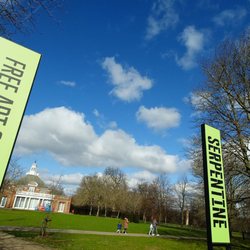

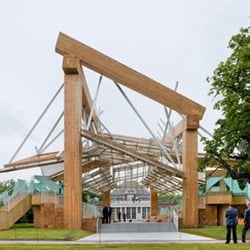



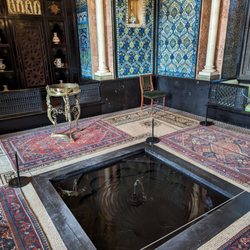





The Art Bronze Foundry - galleries - Updated May 2026
Browse Brands
Browse Articles
People who viewed The Art Bronze Foundry also viewed

Frestonian Gallery
1 review
Shepherd's Bush
£££
Pitzhanger
1 review
Ealing

William Morris Gallery
8 reviews
Walthamstow
£

The Bow House Gallery
1 review
Barnet

Timothy Taylor
2 reviews
Mayfair
££
Anthony Mould
1 review
Mayfair

White Cube
7 reviews
St James's
££££

Waddington Galleriey
2 reviews
Mayfair
Mayfair Gallery
1 review
Mayfair

Westbrook Gallery
1 review
Fitzrovia