Stuart Welcome Arch Photos

More like Stuart Welcome Arch
Recommended Reviews - Stuart Welcome Arch
Start your review...



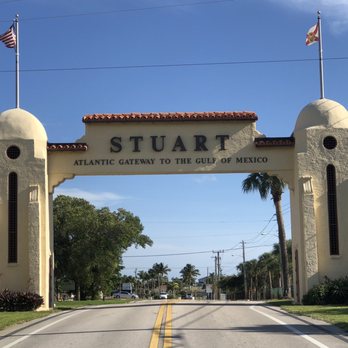
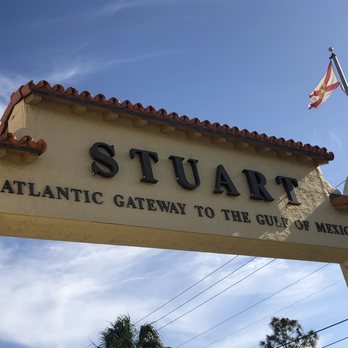
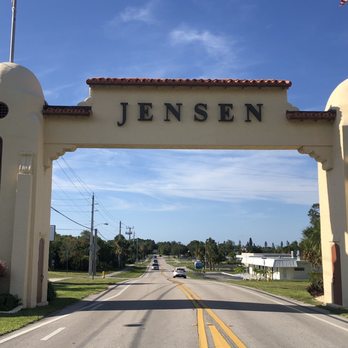
The Stuart Welcome Arch was commissioned in 1925 by the Stuart Chamber of Commerce to celebrate the creation of Martin County, with Stuart as the county seat. At the time Stuart envisioned themselves becoming even bigger than Miami. The arch was designed by Nat C. Hogdon of Pfeiffer and O'Reilly Architects, in the ornate Mediterranean Revival style that was typical during Florida's land boom years. The arch was built by A. L. Doenges and completed on February 20, 1926 at a site donated by the development of Stuart Shores. The arch was placed where Stuart's boundary on A1A met the southern limit of Jensen Beach. Businesses and individuals from both towns donated to a campaign that paid for the arch. It was conceived as a way to welcome the many motorists coming to winter in Florida on the main route to Miami. On the Stuart side the arch reads "Atlantic Gateway to the Gulf of Mexico" on the crossbeam which commemorated the 1923 opening of the cross-state Stuart to Ft. Myers canal. Great fishing on the St. Lucie River that was supposed to lure people was ruined when the state started used the canal to flush polluted overflow from Lake Okeechobee out to sea. "Jensen" appears on the south side of the arch's crossbeam. The chamber had originally planned to build gateways at both the northern and southern boundaries of Stuart but the bust of the land boom caused by hurricanes and the Great Depression prevented additional construction. During the Great Depression, the town of Jensen went bankrupt and was dissolved, while Stuart lost most of it's land north of the St. Lucie River resulting in the arch now being located in an unincorporated area of Martin County called Rio. After construction the arch was vandalized in the 1940's during WWII when the brass was stolen. A 1949 hurricane toppled the crossbeam, and a car accident destroyed the east tower in 1976. In 1977 the east tower was rebuilt and in 1994 it was painted hot pink. In 1998 the arch was again struck by a vehicle, this time a garbage truck that took out the replaced crossbeam. The arch was repaired with a new beam featuring "Welcome to Rio" on the south side and "Welcome to Jensen Beach" on the north side. On September 15, 2004 the arch was added to the U.S. National Register of Historic Places. Stuart never lived up to the it's 1920's hype and the arch saw less travelers with the building of Route 1 and Interstate 95. Even so, in 2006 Martin County paid an architectural firm in Key West $235,000 to restore the beloved landmark to the way it originally looked. A dedication plaque was installed during this time. Although arches were popular with the advent of motor travel this is one of the last few to still remain. Drive under it and remember when it was the main artery for snowbirds flocking to South Florida for the winter. read more


More info about Stuart Welcome Arch






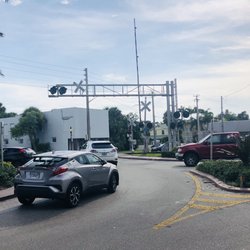


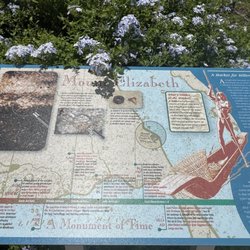

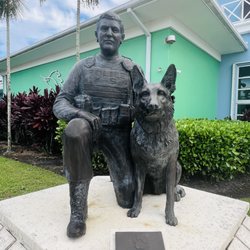


Stuart Welcome Arch - landmarks - Updated September 2026
Best of Jensen Beach
People found Stuart Welcome Arch by searching for…
Abandoned Buildings in Jensen Beach, FL
Places to Take Pictures in Jensen Beach, FL
Free Things to Do in Jensen Beach, FL
Public Services & Government in Jensen Beach, FL
Tourist Attractions in Jensen Beach, FL
Field Trips in Jensen Beach, FL
Night View in Jensen Beach, FL
Scenic View in Jensen Beach, FL
Photo Spots in Jensen Beach, FL
Places to Visit in Jensen Beach, FL
Sunday Fun Things to Do in Jensen Beach, FL
Lighthouses in Jensen Beach, FL
Historical Sites in Jensen Beach, FL
River Walk in Jensen Beach, FL
Donate Books in Jensen Beach, FL
Attractions in Jensen Beach, FL
Sightseeing in Jensen Beach, FL
Hidden Gems in Jensen Beach, FL
National Parks in Jensen Beach, FL
State Parks in Jensen Beach, FL
Trending Searches in Jensen Beach, FL
Apple Picking near Stuart Welcome Arch
Archery near Stuart Welcome Arch
Barbershop near Stuart Welcome Arch
Blow Dry Bar near Stuart Welcome Arch
Boardwalk near Stuart Welcome Arch
Cliff Jumping near Stuart Welcome Arch
Consignment Shops near Stuart Welcome Arch
Corn Maze near Stuart Welcome Arch
Eyebrow Threading near Stuart Welcome Arch
Eyelash Extensions near Stuart Welcome Arch
Formal Wear near Stuart Welcome Arch
Hidden Gems near Stuart Welcome Arch
Hiking near Stuart Welcome Arch
Kids Birthday Party near Stuart Welcome Arch
Landmarks & Historical Buildings near Stuart Welcome Arch
Lookout Points near Stuart Welcome Arch
Makeup Artists near Stuart Welcome Arch
Mens Suits near Stuart Welcome Arch
Places To Take Pictures near Stuart Welcome Arch
Places To Walk near Stuart Welcome Arch
Private Schools near Stuart Welcome Arch
Public Art near Stuart Welcome Arch
Scenic Overlook near Stuart Welcome Arch
Secluded Spots near Stuart Welcome Arch
Small Venues & Event Spaces near Stuart Welcome Arch
Browse Articles
Browse Nearby
BEST of Jensen Beach, Florida Restaurants near Stuart Welcome Arch
BEST of Jensen Beach, Florida Coffee near Stuart Welcome Arch
BEST of Jensen Beach, Florida Things to Do near Stuart Welcome Arch
BEST of Jensen Beach, Florida Breakfast near Stuart Welcome Arch
BEST of Jensen Beach, Florida Museums near Stuart Welcome Arch
BEST of Jensen Beach, Florida Parks near Stuart Welcome Arch
BEST of Jensen Beach, Florida Hotels near Stuart Welcome Arch
BEST of Jensen Beach, Florida Campgrounds near Stuart Welcome Arch
Browse Brands
Related Searches in Jensen Beach, FL
Best Lookout Points to Visit in Jensen Beach, Florida
Best Nature Trails for Hiking in Jensen Beach, Florida
Book Engaging Historical Tours in Jensen Beach, Florida
Discover Charming Historic Homes in Jensen Beach, Florida
Discover Famous Monuments in Jensen Beach, Florida
Discover Historic Sites and Places in Jensen Beach, Florida
Discover Popular Landmarks in Jensen Beach, Florida
Discover Popular Photo Spots in Jensen Beach, Florida
Discover Top State Parks to Visit in Jensen Beach, Florida
Discover a Library Near You in Jensen Beach, Florida
Discover the Best Military Museum in Jensen Beach, Florida
Enjoy the Best Family Activities in Jensen Beach, Florida
Enjoy the Best Night View Spots in Jensen Beach, Florida
Enjoy the Best Walking Trails in Jensen Beach, Florida
Experience Stunning Sunset Views in Jensen Beach, Florida
Explore Beautiful Botanical Gardens in Jensen Beach, Florida
Explore Beautiful Castles and Landmarks in Jensen Beach, Florida
Explore Beautiful Parks and Green Spaces in Jensen Beach, Florida
Explore Children's Museums Near Jensen Beach, Florida
Explore Free Things to Do Around Jensen Beach, Florida
Explore Fun Activities to Do in Jensen Beach, Florida
Explore Fun Field Trips in Jensen Beach, Florida
Explore Popular Scenic Overlook Points in Jensen Beach, Florida
Explore Popular Scenic Views Near Jensen Beach, Florida
Explore Secret Spots Worth Visiting in Jensen Beach, Florida
Explore Top Art Galleries Located in Jensen Beach, Florida
Explore Venues & Event Spaces in Jensen Beach, Florida
Explore the Top Car Museum in Jensen Beach, Florida
Find Beautiful Views in Jensen Beach, Florida
Find Parks and Recreation Activities in Jensen Beach, Florida
Find Top Art Museums in Jensen Beach, Florida
Find the Best Parks for Picnics in Jensen Beach, Florida
Find the Best Playgrounds to Visit in Jensen Beach, Florida
Must-See Tourist Attractions Around Jensen Beach, Florida
Plan a Scenic Drive Route Near Jensen Beach, Florida
Popular Indoor Attractions to Visit in Jensen Beach, Florida
Popular Places to Take Pictures in Jensen Beach, Florida
Popular Places to Walk Around in Jensen Beach, Florida
Popular Things to Do in Jensen Beach, Florida
Popular Things to See in Jensen Beach, Florida
Top Hiking Trails to Explore in Jensen Beach, Florida
Top Museums for Kids to Visit in Jensen Beach, Florida
Top Places to Visit in Jensen Beach, Florida for Sightseeing
Tour Famous Lighthouses Located in Jensen Beach, Florida
Tour Popular Historical Sites in Jensen Beach, Florida
Visit Beautiful Gardens in Jensen Beach, Florida
Visit Popular Museums in Jensen Beach, Florida Now


