Cancel

Open app

Search

St Nicholas' Church

5.0 (1 review)

St Nicholas' Church Photos

Recommended Reviews - St Nicholas' Church

Your trust is our priority, so businesses can't pay to alter or remove their reviews. Learn more about reviews.
Yelp app icon
Browse more easily on the app
Review Feed Illustration
Photo of David J.
96
2344
11912

17 years ago

Helpful 0
Thanks 0
Love this 0
Oh no 0

Verify this business for free

Get access to customer & competitor insights.

Verify this business

Church of St Pancras

Church of St Pancras

5.0(1 review)
0.7 mi

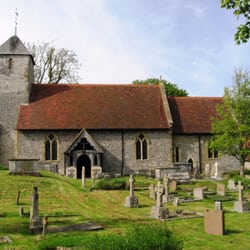
Kingston appears to most who travel through it to be a rather modern, suburban sort of place, but a…read morewooden finger post sign 'to the 14th century church' points along a lane of older houses and cottages, and St Pancras church. The church itself has a nave and chancel but no aisles, and a rather small tower, all set in a verdant churchyard. Victorian restoration after a fire (from a lightning strike in 1865) has left the exterior looking rather neat, but the interior has the atmosphere of a much older church. It is, in fact, a mediaeval foundation, and executed in Decorated Gothic throughout, giving a date of the early 14th century. It has a wide chancel arch, leading to a chancel where a slightly odd arrangement of windows, and evidence of a rebuilt south doorway, suggests there may have been some early rebuilding. The tower, with its pyramidal cap, is a mystery: its narrow proportions sit uncomfortably with the rest of the church, and suggest a possible earlier date. The church has a few interesting fittings and furnishings, most notably its bells, three of which date from the 14th century two, from around 1315, bear the mark of the London bell-founder Walter Wimbiss. The round moulded font is probably also original, and the churchyard has a rare centrally-pivoted tapsel gate, originally installed in 1729. Apparently, it can bear the weight of a coffin, should a funeral procession have to wait for the Vicar! Finally, the chancel has a small but vividly coloured memorial window to Michael Scott (1907-1983) an early campaigner for equal rights in South Africa and elsewhere.

Photos
Church of St Pancras

See all

Church of St Mary the Virgin, Kemptown - St Mary Brighton - nave from baptistery

Church of St Mary the Virgin, Kemptown

5.0(1 review)
5.7 mi

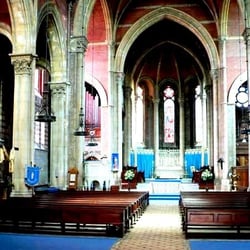
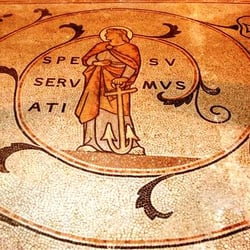
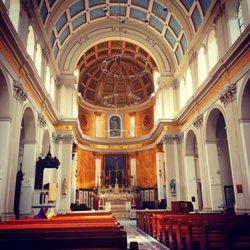
Never can such an unprepossessing exterior have hidden such a gem. From the outside, St Mary's…read morelooks like you average, run-of-the-mill neo-gothic Victorian church. It doesn't even look that large, and has the added humiliation of a public lavatory attached on one side. But once inside, you turn and find yourself in a cathedral-like space: a huge nave, an even larger crossing and a spectacular chancel and sanctuary. This is architecture as drama, writ large. St Mary's has had an interesting history: opened in 1827 to cater for the burgeoning suburbs of east Brighton, the original church was a rather handsome neo-classical building, modelled on the temple of Nemesis in Athens. Alas, like many Regency buildings, it was badly built, and partially collapsed during building work in 1876. The architect commissioned to design its replacement was William Emerson, known mostly for his work in India. St Mary's is his only church in the UK, and he chose the decorated gothic style for his new creation, albeit one with other elements: the aisle arches are round-headed and groups of Early-English lancets proliferate - all in red brick, with Bath stone detailing. The arcades rise to Corinthian capitals, both in the nave and in the apse of the sanctuary. Cleverly, Emerson made full use of the changes in levels, first down from the entrance and baptistery into the nave, and then back up again into the sanctuary, to emphasise the height. (The nave is 40ft across and 60ft high.) The only element not completed was the tower, which was abandoned for lack of funds, although early drawings show what was intended. The church has a wide array of Victorian stained glass, including an example by Kempe, although other workshops predominate. (The web-site has excellent pictures of all the glass). The furnishings are also of high quality, including a carved pulpit of Caen stone, and a marble font, which stands on a plinth of granite from the Schreckhorn mountain in the Bernese Oberland in Switzerland. This commemorates the second Vicar, Julius Elliott: an accomplished rock climber, he was the second to ascend the North Face of the Matterhorn, but died in 1869 after an apparently successful ascent of the Schreckhorn, at the age of 28. The other notable feature is its organ, which is known for its tonal quality, enhanced by the excellent acoustics of the church. The only downside to all this grandeur is that to-day's rather smaller congregation struggles to resource the scale of maintenance required of such a huge building. It needs generous visitors.

Photos
Church of St Mary the Virgin, Kemptown - St Mary Brighton - original design with the tower (never built)

St Mary Brighton - original design with the tower (never built)

Church of St Mary the Virgin, Kemptown - St Mary Brighton High Altar Reredos (1893)

St Mary Brighton High Altar Reredos (1893)

Church of St Mary the Virgin, Kemptown - St Mary Brighton Mosaic 01

See all

St Mary Brighton Mosaic 01

Church of St John the Divine

Church of St John the Divine

5.0(1 review)
19.3 mi

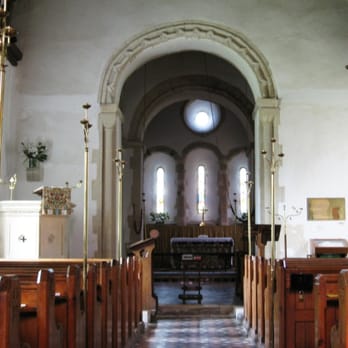
Patching village sits just above a gap in the South Downs, north west of Worthing, and above the…read moreglorious sweep of road known as 'Longfurlong', now part of the A280. The village has some picture-postcard thatched cottages, and a mediaeval church, dedicated to St John. History The village and church are first mentioned in the Saxon period in 948AD, and again in the Domesday survey, but the present building dates from around 1200. There is an unbroken list of Vicars from 1282 to the present day. The sequence of building in the church presents something of a mystery, as the fine arches beneath the tower (and the odd orientation of the nave) suggest that this may have been intended as the original crossing. The church was renovated in 1835, 1856 and especially in 1889, when the spire, porch and vestry were added, as well as its rededication to St John the Divine. The Church From the outside, the church is typical Sussex: flint walls, stone dressings and a tall, shingled spire, and Early English Gothic lancet windows throughout. Inside, the nave is wide and barn-like, with a magnificent, original roof. But what catches the eye is that the chancel arch of off-centre, with the nave apparently pushed to the left. Just before the chancel arch to the left is an archway to what is now the north transept, but is actually beneath the tower, and there are also arches to the east and west, all with shafts in classic 13th century style. The chancel is entered through an impressive Victorian screen, and has two lancets in the East End with a small Oriel window above, and a fine piscina with stiff-leaf capitals. The carved reredos is a modern addition. Furnishings include a very fine octagonal 15th century font, with quatrefoil panels enclosing rosettes, and a 19th century pulpit incorporating 16th century arabesque panels. On the floor beneath the tower is a fine 18th century memorial, to Mary (d. 1737) and Robert Bushby (1739). Their epitaphs read: Here Lyes beneath A Lass deprived of Life A tender Mother And a Loveing wife A faithfull friend A Father dear A loveing husband That lyeth here The modern parish includes the nearby church of Clapham and the larger church of Findon, up the Longfurlong road. The church is a Grade I listed building.

Photos
Church of St John the Divine

See all

The oldest synagogue in England

The oldest synagogue in England

5.0(2 reviews)
45.9 mi•Aldgate

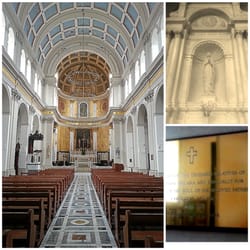
There's not much to add to Templar's comprehensive review: still regarded by many as one of the…read moremost important centres in the Anglo-Jewish community, the Bevis Marks Synagogue is beautifully maintained. It is strongly reminiscent of the Wren and Hawksmoor churches of the City in its classical architecture and furnishings, which include impressive brass candelabra and 17th century wooden benches. The Synagogue's tradition is Orthodox, so men and women are separated: men on the ground floor, women in the galleries. Their opening hours (for visits) are slightly longer than advertised on their website, so it's worth contacting them ahead of a trip to London if you want to pay a call. Tourists (as opposed to those attending services) are asked to pay £3 for entry, and men are asked to wear a skull cap - one will be provided if you don't have one. Your bags may also be searched. They sell a small range of postcards and books at the entrance.

Situated in a secluded courtyard, the Bevis Marks Synagogue was opened in 1701 to serve the Spanish…read more& Portuguese Jewish Congregation. Today it is one of the best-preserved houses of worship of its period still in regular use. The Inquisition, revived by Ferdinand and Isabella, turned its attention to these crypto-Jews, and from the last years of the fifteenth century, they: were systematically persecuted, arrested, tortured, tried, and burnt at the stake. From about this time there was a constant exodus of 'Marranos' who succeeded in escaping from Spain and Portugal or its dependencies to avoid persecution and a small number of them reached Protestant England. Outwardly, they were obliged to behave as Christians, for at that time Jews were not allowed officially, to enter the country, but at any rate they could live there, provided that they behaved with circumspection, and could meet in secret in each others' houses for prayer. The first Jewish house of worship of the resettlement of the Jews in England was as opened in 1656 in the upper floor of a house in Creechurch Lane, which is but a stone's throw from the present Synagogue in Bevis Marks The site of this house is today marked by a plaque, on the rear corner of Cunard House in Creechurch Lane. Jews were permitted to return to Britain in 1657 under Oliver Cromwell. They felt that the time was opportune to present a petition in the form of a humble address to Oliver Cromwell asking for the official re?admittance of the Jews to England Their decision was no doubt a wise one, as Cromwell, reared in a Puritanical atmosphere with its emphasis on the Old Testament was likely to hear favourably any petition presented by the 'people of the Old Testament'. Some of the most eminent figures of Anglo-Jewry sat at prayer in the Synagogue such as Sir Moses Montefiore. Disraeli was born into the Congregation and there are links to the Rothschilds. Today it is regarded as the most distinguished British Synagogue. The magnificent wooden Ark or cupboard) resembling a reredos, at the east end, is built in classical architecture in the manner of Sir Christopher Wren's time. It contains (as is the custom in Jewish synagogues') the sacred scrolls of' the Pentateuch, or five books of Moses, written in Hebrew on parchment, which are read in consecutive instalment over the period of a year as the central feature of the Sabbath Service. Several splendid seventeenth century vestments and silver ornaments belonging to the scrolls survive. The entablature of the Ark has as its central feature the Ten Commandments written in Hebrew (abbreviated), above which are inscribed in Hebrew the words 'Know before Whom thou standest'. The silver hanging Sanctuary Lamp, burning perpetually before the Ark, was presented by Edward Foligno in 1876 and evidently replaces an earlier example, now lost. Except for the addition of the doors to the Banca or Wardens' pews and to the Haham's or Chief Rabbi's seat in 1787, and of the choirstalls in about 1830, the ancient synagogue has remained virtually unchanged. Electric light was installed in 1929 Even though recently restored, the interior has barely changed since it was built. It is in the style of many Nonconformist chapels of the period. The influence of Sir Christopher wren is also evident. The Synagogue has one of the finest collections of Cromwellian and Queen Anne furniture in the country and the magnificent brass candelabra with glowing candlelight. On 19th December 1951 the Congregation held a Service to celebrate the 250th anniversary, of the opening of the Synagogue which was attended by the Duke of Edinburgh. On 22nd March 1956 British Jewry held a Service of dedication and thanksgiving at the Synagogue on the tercentenary of the resettlement of the Jews in the British Isles. Twelve pillars, symbolising the tribes of Israel, support the ladies' gallery, the reading desk and Echal are flanked by 10 candlesticks representing the Ten Commandments; and the interior is dominated by seven magnificent candelabra, corresponding to the days of the week. One of the great oak beams supporting the roof is said to have been presented by Princess (later Queen) Anne. In 1992 and 1993 the synagogue suffered great damage from terrorist bomb attacks on the City of London. Nearly £200,000, raised by donation, has since been spent in repairing and renovating the structure

Photos
The oldest synagogue in England

See all

St Augustine's Church

St Augustine's Church

5.0(1 review)
38.1 mi

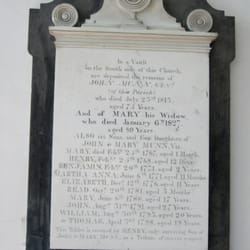
Photos added 24-07-2007…read more *************************** Set in the flat and bleak landscape of Romney Marsh, Brookland church looks weirdly out of place. The distinctive belfry, with its three conical tiers of wooden shingles, might look more at home in the Balkans than in the Garden of England. According to legend, the belfry was originally located on the roof, but leapt from the church in surprise when an aged batchelor married an equally elderly spinster. The adjacent church is a little more orthodox, although still interesting. The porch, with its wooden half-gates is charmingly rustic, and adjacent is a narrow, low tower with a clock. Dating from around 1250, the gothic nave is wide and spacious, and it has equally generous aisles. The scarily odd angles of the walls and arcade arches betray serious signs of subsidence, all adding to the charm (and betraying the real reason for not building the belfry on the church roof). It still retains its original box pews, some pretty 14th-century stained-glass windows, and a well preserved pre-reformation wall painting of the murder of Thomas a Becket. The most notable furnishing is a Norman font, made of lead: reputedly stolen by a local raiding party from a church in France, it features the signs of the zodiac and pictures of rural life. Close by are other artifacts of rural life, including a set of weights and measures, an unusual portable porch (supposedly intended to keep the priest dry at funerals), and the clock mechanism, set at ground level for all to see. But most poignant for me is the memorial erected to John and Mary Munn and ten of their children, all of whom predeceased them. It was erected by the only survivor, Henry. You can almost feel his plight.

Photos
St Augustine's Church

See all

St Nicholas' Church - religiousorgs - Updated May 2026

Loading...
Loading...
Loading...