Cancel

    Open app

    Search

    St Mary's Littlehampton

    4.0 (1 review)
    Closed 8:00 am - 4:00 pm

    St Mary's Littlehampton Churches Photos

    Recommended Reviews - St Mary's Littlehampton

    Your trust is our priority, so businesses can't pay to alter or remove their reviews. Learn more about reviews.
    Yelp app icon
    Browse more easily on the app
    Review Feed Illustration
    Photo of David J.
    96
    2344
    11912

    16 years ago

    Helpful 0
    Thanks 0
    Love this 0
    Oh no 0

    Verify this business for free

    Get access to customer & competitor insights.

    Verify this business

    The Church of St Mary Magdalene, Lyminster

    The Church of St Mary Magdalene, Lyminster

    5.0(3 reviews)
    1.8 mi

    Modern Lyminster is a charming village on the northern outskirts of Littlehampton, bisected - and…read morerather spoiled - by the A284, which sees traffic thundering through it. (A bypass seems rather overdue to me). This is all a far cry from its origins. First mentioned in the will of King Alfred the Great in 901AD, it has a Benedictine Nunnery, and in the reign of King Athelstan of Wessex (AD925-939), a 'Witans', or advisory councils, were held here, though nothing remains of Athelstan's palace. After the Norman conquest, the Nunnery was refounded as a Priory, of which nothing now remains. Except, that is for the church: the nave was the parish church, and what is now the chancel was the Nun's church. The result is a tiny village with a huge church, much of it dating from before the Norman Conquest. From the outside, the most striking feature is the nave roof. A feature of Sussex churches are roofs which sweep uninterrupted from the apex of the Nave over the aisles and finish above a low wall. But, even by Sussex standards, Lyminster's is huge. It is now tiled, as the original, heavy Horsham slates were taking their toll on its structure. Inside, the nave dominates: dating from around 1040, it is tall, narrow and dramatic. It contains some Early English lancets and circular sexfoil window, said to date from 1260. Below this is the original Saxon south door, the remains of which can also be seen outside, together with the later, lower Norman door. Both are now blocked. The chancel arch continues the theme again tall, narrow, startling - and oddly with two sets of abaci. It is speculated that the lower pair were added to match the new aisle in 1170. The low north aisle was added around 1170, with an elegant Transitional Gothic arcade of four bays. Two of the piers have capitals with plain scallop decoration and the third has stiff-leaf carving at each corner. The fine Crown-post Nave roof is thought to date from this time, too. The aisle roof was replaced around the 15th century, which was also when the north porch was added. The Chancel also dates from 1040, but the east window is Perpendicular and dates from around 1420, and there is a piscina and aumbry dating from the 12th century. The large south lancet windows are Victorian, but that on the north wall is older, and may have replaced a door into a side chapel. The West tower completes the survey, and was built in the 13th century, and raised again in the 15th. After all this drama, the furnishings struggle to compete. Both nave and aisle have attractive box-pews, and the font dates from the 12th century, with a square block of Sussex marble resting on a central pillar and four corner columns. At the rear of the North Aisle is a curious model of 'Jerusalem in Jesus' time', and adjacent to the font are two ancient stone coffin lids. One of these lids is associated with a local legend: near the church is a pool called the 'Nucker Hole'. This pool is always icy cold, and its level never changes, suggesting it is fed from a spring. The legend states that it was bottomless, and the home of a dragon, which caused much local chaos. Until, that was, a brave young boy called Jim Pulk (or a gallant knight in other versions) rose to the challenge and slayed the dragon. His tomb is the one east of the font. Interestingly, 'Nucker' may derive from the Saxon word 'Nicor' which means a 'sea-monster', so the legend may go back a very long way.

    Beautiful church, where I have attended a couple of weddings, one of which to photograph. Lovely…read moresurroundings and lych gate which helps provide interesting angles/shots. The church is very peaceful, not least because it is in a very rural location. The horse drawn carriage is just made for this church!!

    Photos
    The Church of St Mary Magdalene, Lyminster
    The Church of St Mary Magdalene, Lyminster
    The Church of St Mary Magdalene, Lyminster

    See all

    Church of St Nicholas, Poling

    Church of St Nicholas, Poling

    5.0(1 review)
    1.8 mi

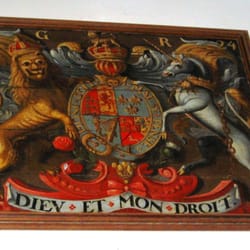
    Poling really is hidden Sussex. It's not remote, by any stretch of the imagination: it's only a…read moremile from the busy A27 between Worthing and Arundel, and two miles as the crow flies from Littlehampton. But it's tucked quietly away, a mile down a small minor road off the A27, just over a mile east of the junction with the A283 to Littlehampton. The lane is lined with old farms, brick cottages and newer houses: all are beautifully kept, not to say prosperous, with lovely gardens. In one of them, the author AA Milne and Christopher Robin once lived, and a swan from a local lake, 'Hopper', features in one of the 'Winnie-the-Pooh' stories. The church itself is rather hidden: after a bend in the road, there is a name board for St Nicholas, but to get there you walk down the adjacent path and turn left past more immaculate gardens, around the back of Manor Farm. The churchyard, like the rest of the village, is immaculately kept. The church is modest, and very Sussex, with flint walls and a low but well proportioned tower, with a sweeping roof of red tiles and Horsham slates. The interior is whitewashed, but charming. Inside, the proportions give away a Saxon nave, to which was added a south aisle with an arcade of two bays of plain pointed arches and a chancel. The church guide and Sussex volume of The Buildings of England (Nairn & Pevsner) disagree about the date of the aisle: the guide gives 1180, whereas Nairn & Pevsner give 1300. I'm inclined towards the former, but both agree about a date of 1380 for the chancel. The tower was added around 1420 and the porch in 1830. The nave and chancel are, unusually, the same height, so there is no chancel arch. Instead, the remains of a 14th century rood screen separate nave and chancel, and the composition is very attractive. There is a small Saxon window high on the north wall, and preserved below are the (incredibly rare) remains of the original wooden shutter. Apart from the East window, which was replaced in 1830, the remaining windows are all attractive Perpendicular square-headed single or twin lights, dating from 1380 to 1420. The East window contains a small fragment of 17th century glass. For a small country church it has a set of remarkably interesting furnishings. Pride of place goes to the brass on the chancel floor, to Walter Davy, vicar of Poling 1442-1499, decked out in his best ecclesiastical garb. The interior has other 17th and 18th century memorials, but by the south door is very rare survivor indeed: an iron-bound poor box on a pedestal. On the top are the initials Rt de H I C of A, and a date of 1285, thought to refer to Robert of Hastings and his wife, Isabella Countess of Arundel. On the front is the date 1797 (more likely to be the true date). Above this is a stone inscribed (complete with spelling mistake): PRAYE REMEBER THE POORE. Opposite is an ancient stone tub font, thought to be Saxon, with a rather odd, modern decorated font cover from 1946. The west wall of the Nave bears a fine painted Royal Coat of Arms of George I, dated 1714. But my favourite item is a headstone, located in the porch. It is dedicated to Alice, the wife of Robert Woolldridge, who died on 27th May 1740, aged 44 years. It has a wonderful rhyme, and one which is not entirely inappropriate for our own celebrity- and wealth-obsessed times: "The World is a round thing And full of crooked streets Death is a market place Where all Men meets If Life was a thing That money could buy The Rich would live And the Poor would dye" The church is still a focus of its tiny community, and judging by the state of the graveyard and the beautiful flowers, it is well loved.

    Photos
    Church of St Nicholas, Poling
    Church of St Nicholas, Poling
    Church of St Nicholas, Poling

    See all

    St Mary's Littlehampton - churches - Updated May 2026

    Loading...
    Loading...
    Loading...