Cancel

    Open app

    Search

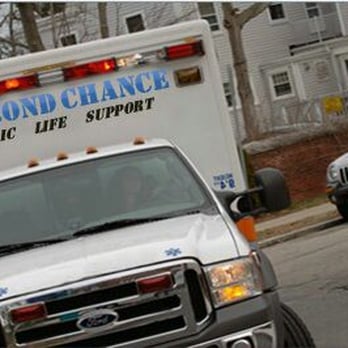
    Second Chance BLS

    4.0 (1 review)
    Closed 9:00 am - 5:00 pm

    Second Chance BLS Photos

    You might also consider

    Recommended Reviews - Second Chance BLS

    Your trust is our priority, so businesses can't pay to alter or remove their reviews. Learn more about reviews.
    Yelp app icon
    Browse more easily on the app
    Review Feed Illustration
    Photo of Nick S.
    7
    150
    126

    10 years ago

    Helpful 0
    Thanks 0
    Love this 0
    Oh no 0

    You might also consider

    Verify this business for free

    Get access to customer & competitor insights.

    Verify this business

    Historic Lemon Avenue

    Historic Lemon Avenue

    (2 reviews)

    Bayside

    Anyone who knows me knows I'm a history buff especially in Miami which is relatively new. This area…read morewas a lot different than what it is now, see below for some information about this. If you walk down the street it leads to the water's edge so you can get a glimpse of Miami from another angle. Lemon City was a community on the shores of Biscayne Bay, predating the incorporation of the City of Miami, that was home to white and Black pioneers. Most of the Blacks in this area were of Bahamian descent and established flourishing communities and businesses including the only U.S. Post Office in the area, a library, churches, "a colored school" and a cemetery. There were at least three identifiable Black communities in Lemon City--Nazarine, Knightsville and Boles Town--all dating from about 1900. After the area underwent a drastic demographic shift in the 1920s, Lemon City became a distant memory in the minds of many of Miami's Black pioneers. Today, over a relatively short period of time, Haitians have moved into the area and changed the character of the neighborhood that was once known as Lemon City. The culturally vibrant Haitian community has enriched Miami-Dade's multi-ethnic character.

    Lemon City is an unincorporated area that predates Miami. It was a farming community that sprang up…read morein the 1850's, 26 years before the founding of Miami. The community took their name from the unusually sweet lemon trees that grew in the area. By the time Miami was incorporated Lemon City already had a population of 300. Lemon City had the areas oldest school, the Lemon City School, and the first library, the Lemon City Library. Lemon City was segregated with Black families living in three neighborhoods, Nazarine, Boles Town, and Knightsville. The exact boundaries of Lemon City have been lost to time since it was never incorporated. During the 1980's many Haitian immigrants made what was once Lemon City their home. The area has now been designated as Little Haiti which upset some of the descendants of the pioneers of Lemon City who thought the name change was insulting to their history. To be more inclusive of all of the history of the area, 10 historical signs marking the history of Lemon City were erected by the Mayor's office. Markers were placed at the Lemon City Train Station, Lemon City Pharmacy, Lemon City Library, and here at Historic Lemon Avenue. In 1889 eighty-one small lots were platted in Lemon City. A main street ran down the middle named Lemon Avenue. The street originally ran from the Biscayne Bay to Rock Road which is now NE 2nd Ave. The street was forty feet wide and was sand and exposed rock. Much of Lemon City's development took place along Lemon Avenue including the areas first hotel in 1892. In 1895, owner Eugene C. Harrrington deeded the street to Dade County. Since Lemon City was unincorporated they had to pay for their own infrastructure. The all women Village Improvement Association was organized in 1896 to pave Lemon Avenue. They completed laying rocks in 1902 and Dade County provided a steamroller to finish the job. The completion of the road allowed Lemon City to expand west. Lemon City was annexed in 1925 and the name of Lemon Avenue was changed to NE 61st St. I love finding these historic markers and Lemon City has so many of them. It is fun going on a scavenger hunt for the signs. Each one provides another glimpse into a city from the past that no longer exists but still continues to influence Miami today.

    Historic Lemon City Port

    Historic Lemon City Port

    (3 reviews)

    Bayside

    This was such a cool find in the historic Bayshore area while walking around Biscayne Blvd!…read more I luv that there is so much history throughout Miami if you're willing to look for it! Finding these historical placards and being able to reference what was in them and seeing out into the bay was like being teleported for a moment and imagining ships docked offshore, lemon tree-line cobblestoned streets, and the sounds of carriages and passing trains. On a gorgeous evening, definitely worth the stroll down the street and through history!

    Lemon City is an unincorporated area that predates Miami. It was a farming community that sprang up…read morein the 1850's, 26 years before the founding of Miami. The community took their name from the unusually sweet lemon trees that grew in the area. By the time Miami was incorporated Lemon City already had a population of 300. Lemon City had the areas oldest school, the Lemon City School, and the first library, the Lemon City Library. Lemon City was segregated with Black families living in three neighborhoods, Nazarine, Boles Town, and Knightsville. The exact boundaries of Lemon City have been lost to time since it was never incorporated. During the 1980's many Haitian immigrants made what was once Lemon City their home. The area has now been designated as Little Haiti which upset some of the descendants of the pioneers of Lemon City who thought the name change was insulting to their history. To be more inclusive of all of the history of the area, 10 historical signs marking the history of Lemon City were erected by the Mayor's office. Markers were placed at the Lemon City Train Station, Lemon City Pharmacy, Lemon City Library, and here at the Lemon City Port. In 1892, Lewis Pierce set up a large steamboat wharf just south of today's Legion Park, at Lemon Avenue, now known as NE 61st Street. The first dock for vessels in Miami was in Lemon City on Biscayne Bay. A business district developed around the port. By 1891 there were four to six ships arriving in Lemon City every day delivering mail, animals, people, produce, and goods. Larger vessels had to stay in deeper water while smaller boats ferried people and items to the dock. The largest boat to arrive in Lemon City was the Emily B, a three-masted, thirty-ton schooner that traveled between Jacksonville and Key West. In 1891 Julia Tuttle arrived aboard the ship. She became known as the "Mother of Miami," because of her contributions to city. By 1895 the Lemon City port was booming. Hotels and businesses had sprung up around the port. Lemon City became the trading center of Biscayne Bay which attracted the railroads who wanted to transport the goods from the port deeper into the city of Miami. The opening of the Lemon City station on the Florida East Coast Railway in 1896 marked the end of the port as it fell out of favor for transporting goods. Businesses started to shift to Miami. By 1910, the port was no longer used commercially, only for leisure. Today you can stand and gaze into Biscayne Bay where the port used to be. It is fun to go on a scavenger hunt for the signs in the now extinct town. There are actually two historical signs side by side here. Each sign provides another insight into Miami's first settlement.

    Cushman School

    Cushman School

    (4 reviews)

    Little Haiti

    As a fan of history and 1920's architecture I had to stop when I saw this historical marker on the…read morecorner in front of the The Cushman School located in the historic MIMO Miami district on Biscayne Blvd. It is the oldest, continuously-operating, co-ed pre-kindergarten through grade 12, college preparatory, private school in Miami. The historic marker was erected by the Class of 1964 in cooperation with the Historical Association of Southern Florida. Dr. Laura Cushman moved from Iowa to Miami in the early 1900s. After becoming an accomplished teacher in the county school system, she decided to open The Cushman School on the front porch of her home in 1924 with just 12 students. In 1926 the school moved into the Mediterranean Revival building designed by Russell Skipton that is still used today. The classrooms were arranged to ger the breeze from Biscayne Bay. Windows were added to the school that came from the Royal Palm Hotel in downtown Miami. The school bell on the roof of the main building is the same plantation bell that was used to call the construction workers to Villa Vizcaya. Today the campus is a mixture of the historic buildings and new ones and the high school building is a few blocks south on Biscayne Boulevard. Dr. Cushman served as principal of the school for 52 years. She wanted the children who attended the school to not only be good scholars but also good citizens with the character traits of industry, responsibility, reliability, courtesy, honesty and integrity. In 1992 the United States Department of Education named The Cushman School as a National School of Excellence. Today, the school consists of a mix of historic and new buildings spread across a beautifully landscaped campus in a historic pocket of Miami. The high school building is a few blocks south on Biscayne Boulevard. As a fellow educator I loved learning about Dr. Cushman's educational philosophy which positively influences the development of the child but with all of the data input and test taking that goes on in schools today, is not emphasized enough in the public school system. How refreshing to see that there is a school developing tools and educational programs that help children reach their highest potential while still promoting social responsibility. All of that comes at a steep price however as tuition ranges from $33,000 to $43,000 a year at The Cushman School.

    The Cushman School located at NE 60th and Biscayne provides Kindergarten through 8th grade. It is…read morelocated in the up and coming MiMo Biscayne Boulevard District. There are a limited number of private schools near downtoown Miami and this is one of the top schools. There is 24/7 security at the school.

    Lemon City Branch

    Lemon City Branch

    (1 review)

    Little Haiti

    Lemon City is an unincorporated area that predates Miami. It was a farming community that sprang up…read morein the 1850's, 26 years before the founding of Miami. The community took their name from the unusually sweet lemon trees that grew in the area. By the time Miami was incorporated, Lemon City already had a population of 300. Lemon City had the areas oldest school, the Lemon City School, and the first library, the Lemon City Library. Lemon City was segregated with Black families living in three neighborhoods, Nazarine, Boles Town, and Knightsville. The exact boundaries of Lemon City have been lost to time since it was never incorporated. During the 1980's many Haitian immigrants made what was once Lemon City their home. The area has now been designated as Little Haiti which upset some of the descendants of the pioneers of Lemon City who thought the name change was insulting to their history. To be more inclusive of all of the history of the area, 10 historical signs marking the history of Lemon City were erected by the Mayor's office. Markers were placed at the Lemon City Train Station, Lemon City Pharmacy, Lemon City Library, and here at the Lemon City Branch Library. The first Lemon City Library was started by teacher Ada Merritt in the 1890's in the Lemon City school. She organized a philanthropic group, The Busy Bees of the Everglades which raised funds for the library and they were able to amass 400 books. In 1902 a group of prominent Lemon City ladies met and formed The Lemon City Library Association. Cornelia Keys hosted the first meeting of the group opened a library in her home and became the towns first librarian. The group began raising funds for a permanent library building. A wood frame building was completed in 1904 at the site of this historic marker. Lemon City was annexed by Miami in 1925. In 1942 the Lemon City Library became part of the Miami Public Library System. In 1963 a new library building was completed. The original plan had been to use the old library but a fire in 1964 destroyed the interior and it was torn down. The Lemon City Library still operates out of the 1963 building located across the street from where the old library once stood. In 2017 marker F-948 was installed detailing the history of the Lemon City Library. Although Lemon City no longer exists there is a lot happening in Little Haiti. You can already see the spark with new businesses opening like the Citadel Food Hall in the Little River area. I had heard of Lemon City in passing when bones were discovered in an unmarked cemetery during construction of an affordable housing unit. I always meant to learn more about this historic area but never had the time. I finally got to explore this area and was really delighted to find all of the historical markers. There is a huge MAGIC sign set up heralding what will hopefully be good things to come for this area. I am excited to see the next chapter of history unfold here.

    Lemon City Knightsville

    Lemon City Knightsville

    (1 review)

    Little Haiti

    Lemon City is an unincorporated area that predates Miami. It was a farming community that sprang up…read morein the 1850's, 26 years before the founding of Miami. The community took their name from the unusually sweet lemon trees that grew in the area. By the time Miami was incorporated, Lemon City already had a population of 300. Lemon City had the areas oldest school, the Lemon City School, and the first library, the Lemon City Library. Lemon City was segregated with Black families living in three neighborhoods, Nazarine, Boles Town, and Knightsville. The exact boundaries of Lemon City have been lost to time since it was never incorporated. During the 1980's many Haitian immigrants made what was once Lemon City their home. The area has now been designated as Little Haiti which upset some of the descendants of the pioneers of Lemon City who thought the name change was insulting to their history. To be more inclusive of all of the history of the area, 10 historical signs marking the history of Lemon City were erected by the Mayor's office. Markers were placed at the Lemon City Train Station, Lemon City Pharmacy, Lemon City Library, the Lemon City Port, the Lemon City Cemetery, and here in the historic neighborhood of Lemon City Knightsville. I have learned a lot of Florida history by stopping to read the blue historic markers which can be found all over the state. I discovered this marker while traveling through Lemon City. It recounts the history of Knightsville which is bounded by the area east of I-95, between 71st and 54th Streets. Five acre Knightsville was the cultural center of the community. It had two churches and the local chapter of the Independent Order of Odd Fellows, the first floor which was the school and the second floor was a meeting space and place for social events. Marker F-1071 was installed in 2019 by Alexander Adams and the Florida Department of State. The Little Haiti of today bears little resemblance to the Lemon City of the past. For one thing there are no more lemon trees but I love finding these historic markers that bring the past to life. It is fun going on a scavenger hunt for the signs. Each one provides another glimpse into Lemon City that despite no longer existing, still continues to influence Miami today.

    The Coppertone Girl Sign

    The Coppertone Girl Sign

    (4 reviews)

    Little River

    I am a fan of different architectural styles and there is a one mile stretch of mid century modern…read morearchitecture in Miami that is a gem. In the 1950's this area along Biscayne Boulevard from 54th to 77th streets was lined with motels in mid-20th-century architecture. as the years went by the area developed a reputation for drugs and prostitution and was generally avoided. Now it has been revitalized by developers and locals who are also in love with the iconic Miami Modern style. Today you will find boutiques, restaurants, Art Deco motels and a 35-foot Coppertone Girl sign displayed on the north side of 7300 Biscayne Boulevard. First a little history on how the sign came to be. Coppertone was invented by pharmacist Benjamin Green, who emigrated from Slovakia to Cleveland in 1904. He settled in Coconut Grove in 1943. In search of a cream to create the perfect tan, he cooked the first formula on his stove and experimented on his own bald head. He sold the results to a Miami Beach pharmacy. In 1950, investors purchased the company. The original Coppertone logo was considered offensive because it was the profile of an Indian chief, with the slogan "Don't Be A Paleface." Obviously it was not acceptable so the Taly Embry agency was hired to come up with a new ad campaign and logo. In 1953 they debuted the design of the little girl and a dog. It is said the inspiration came from Deborah Martin, granddaughter of early Coppertone owner Charles E. Clowe. It was Clowe's wife Sophia who noticed that Deborah Martin's training pants had slipped poolside exposing her tan line. Sophia felt an image of a little girl would be more family friendly than sexy bikini girls. Artist Larry Moore drew most of the original sign layouts. In 1957 the company was sold to Schering-Plough in 1957. who designed the national Coppertone Girl ad campaign. After the original designs were lost in a fire, Joyce Ballantyne Brand recreated the Coppertone Girl artwork using her daughter Cheri as the model in 1959. There were several Coppertone Girls signs in Miami but the 1959 three story sign was installed on the Parkleigh building at 530 Biscayne Boulevard. The sign is 33 feet high by 29 feet wide. In 1992 it was damaged by Hurricane Andrew and the building was demolished. The Dade Heritage Trust saved the sign and it was moved around. In 2008 it was installed at its current location when Dade Heritage Trust donated the sign to the MiMo Biscayne Association. Schering-Plough, donated $100,000 to the restoration of the sign by Norberto De La Rosa, one of Florida's best sign manufacturers. It was installed by Tropical Signs of Florida. In 2017 the little girl on the sign lost her head during Hurricane Irma. It was too badly damaged to be repaired so the MiMo Biscayne Association, as the the caretaker of the sign paid for a new one. The repair was made by Jerry Bengis, whose father built it in 1959, and art director Liessel Ferrer, of Hialeah-based Neon Sign Solutions. I love that this piece of local flavor and Miami history was saved and restored. You can imagine yourself back in the 1950's as you cruise this neighborhood and sail past the sign. If you are a fan of midcentury modern design you will want to tour this Miami neighborhood and pay a visit to the iconic Coppertone girl.

    The Coppertone Girl Is an iconic symbol in Miami - she has been moved a few times, but at present…read moreshe resides in the Mimo area, literally opposite the Historical Vagabond Motel. Here is some info I found out about her on the internet - The iconic "Coppertone Cutie," a fixture in the city since 1959, has "fully recovered from her Hurricane Irma injuries and is safely back home at 7300 Biscayne Boulevard." After Hurricane Irma battered the sign in September, the historic preservation association sent out a call for help to find a missing piece that had snapped off her head during the storm. Turns out the non-profit didn't have to look too far to find the Coppertone Cutie's head. It was there all along. The piece was found lodged behind the sign, which otherwise withstood Irma's winds. But that bit of her blond head was hidden from view. Alas, that original piece was damaged beyond repair, the group said. A temporary patch only revealed that even more extensive repair work was required to restore a look that dates back to a 1953 sketch by an art director at the Coral Gables advertising agency, Tally Embry. According to MiMo, Jerry Bengis, who has a lifelong association with the Coppertone Girl - his father's sign company created the 35-foot sign in 1959 - called in Neon Sign Solutions to restore her face. The sign company, with art director Liessel Ferrer, gave her a much-needed face-lift by eliminating a former unattractive seam beneath her nose. The sign unveiled on Monday is now "all of a piece," MiMo said, and she's back at the location from which she's greeted drivers and pedestrians along Biscayne since her move there in 2008. The sign, formerly part of the "Tan don't burn" suntan lotion ad on a downtown Miami building, now has a historic designation. "The MiMo Biscayne Association is deeply relieved to have been able to save this beloved sign from becoming a victim of Irma's destruction," Stander said. "We are hoping - though it's a long shot - that the panel will turn up in someone's backyard and will miraculously be identified and returned," MiMo Biscayne Association president Debby Stander told the Miami Herald in September.

    Bayshore Water Pump House

    Bayshore Water Pump House

    (1 review)

    Little Haiti

    After WWI during the roaring 20's, Florida experienced an economic boom known as the land boom…read moreyears. During this time in 1922 the Bay Shore Investment Company was founded by James Hilliard Nunnally, owner of the Atlanta Nunnally Candy Company. The company developed a large tract of land on the bay called Bayshore. Since Bayshore was outside city limits, the Bayshore Investment Company had to provide their own water, gas, electricity, telephone, street lights, and sewers. To meets the needs of Bayshore and Lemon City the company built the Bayshore Water Pump House located in the Palm Grove Historic District. The building was made out of oolitic limestone and Dade slash pine. Unique architectural details of the building include an arched, recessed cathedral entrance with heavy wooden doors and large iron-strap hinges The pump house contained an 8,000-gallon tank that could provide up to 32,000 gallons of water a day. In 1925 the City of Miami annexed Bayshore and the pump house was no longer needed. By 1990 the building was being considered for demolition. Over the years it has been a music venue, church, and a beauty salon. Through the efforts of the City of Miami, Dade Heritage Trust the pump house was historically designated by the City of Miami in 2012, ensuring its preservation. Today the pump house is a restaurant called ZOI. Historic marker F-1062 was erected in front of the pump house in 2019 by The City of Miami Mayor Tomas Regalado and the City of Miami in Coordination with Alexander Adams, and the Florida Department of State.

    Second Chance BLS - professional - Updated May 2026

    Loading...
    Loading...
    Loading...