Cancel

    Open app

    Search

    Salt Works Historical Marker

    3.0 (1 review)

    Salt Works Historical Marker Photos

    More like Salt Works Historical Marker

    Recommended Reviews - Salt Works Historical Marker

    Your trust is our priority, so businesses can't pay to alter or remove their reviews. Learn more about reviews.
    Yelp app icon
    Browse more easily on the app
    Review Feed Illustration

    6 years ago

    Helpful 12
    Thanks 0
    Love this 11
    Oh no 0

    Verify this business for free

    Get access to customer & competitor insights.

    Verify this business

    White's Mill & Mercantile - the mill under repair c. 2015 - the water wheel is now funtional

    White's Mill & Mercantile

    4.0(1 review)
    65.5 mi

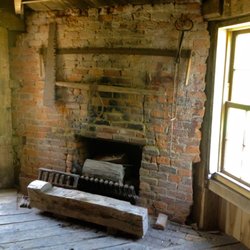
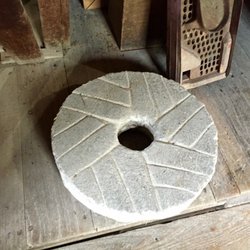
    About five miles out from Abingdon and well worth the drive down the country roads to get there,…read moreWhite's Mill and mercantile is a restored/working 18th century water mill that produces the best coarse ground yellow grits I have ever had (my first taste was the White's Mill Grit Cakes served at Abingdon's Bone Fire Smokehouse and I've never looked back/had better since). The goodness of those yellow grits are the main reason I'm writing this review, but the mill itself and the adjacent "mercantile" country store (where you can find said grits available for purchase stored within a chest freezer alongside other White's Mill milled grains (like cornmeal, flour, white grits etc.). I've never seen anyone attending the mill any time I have visited thus I cautiously wander around inside with at least one buddy in tow as the interior looks every bit as old as it's 1790 establish date (the 1866 restoration notwithstanding). From the entrance level there are rooms both upstairs and down, the lover level revealing a cool living room type of space complete with a hearth/fireplace and a lot of huge, aged and complicated-looking gears and other oddly quiet antiquated mechanics in motion. It feels like entering a portal to another time; braving the creaking stairs within the mill is an adventure in and of itself. The mercantile is an old house-turned-store next to the mill stocked windows-to-walls with goods, wears, and--let's be real--junk. If you like being overwhelmed with multiple rooms full of stuff and sifting through troves seeking treasures, get thee to this out-of-the-way country store. Aside from grain, jellies, and jams, you can find all kinds of antiques and other random oddities that only rural bric-a-brac magnets like this place can accrue. As a final testament to the boss quality of White's Mill yellow grits: when I moved to Japan I brought two bags with me that I keep squirreled away in the freezer for days when I have a fever for the flavor. To cook coarse yellow grits: boil 4 parts water and add 1 part grits. Stir every few minutes for about 25 minutes until they reach a naturally creamy consistency. Experiment to find your flavor by adding seasoning, cream/milk/water, cheese, other stuff etc. -or- let them cool and make polenta-like grit cakes :)

    Photos
    White's Mill & Mercantile
    White's Mill & Mercantile - Mill stone

    Mill stone

    White's Mill & Mercantile - Grain sack art

    See all

    Grain sack art

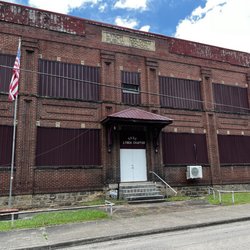
    Lynch Colored High School Historical Marker - Lynch Colored Public School

    Lynch Colored High School Historical Marker

    4.0(2 reviews)
    13.7 mi

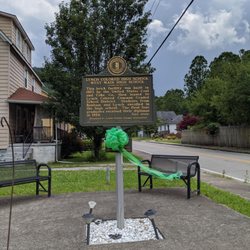
    This marker stands on Main Street to the side of a tall brick building that used to be the local…read morehigh school. The marker is on two sides and reads, "his brick facility was built in 1923 by the United States Coal and Coke Co., then leased to Lynch Colored Common Graded School District. Students from Benham and Lynch enrolled in the high school. The first four graduates received their diplomas in 1928." "W.L. Shobe was principal, 1939-56, and was an outstanding and progressive administrator. After Professor Shobe's retirement, Coach John V. Coleman promoted to principal; school name changed to West Main High. School had many notable students and athletes." Online, there is more information... When the coal boom hit eastern Kentucky in the early-twentieth century, mining companies primarily recruited their workers from three population segments. First were local residents, who were traditionally farmers. Second were immigrants, including natives of Poland, Hungary, Yugoslavia, and Italy. Third were African Americans from the Southern states. Like the native mountaineers, they were typically farmers or had worked in the iron foundries of cities such as Chattanooga, Tennessee, and Birmingham, Alabama. Many African Americans who tired of a sharecropping existence welcomed a new change of scenery and opportunity for wage labor. [Review 13459 overall, 778 of 2020.]

    Lynch is worth the drive off the beaten path!! So much history! There are several plaques giving…read morehistory and its like stepping back in time.

    Photos
    Lynch Colored High School Historical Marker - Lynch Colored Public School and black coal miner memorial

    Lynch Colored Public School and black coal miner memorial

    Lynch Colored High School Historical Marker - Lynch Colored High School Historical Marker

    Lynch Colored High School Historical Marker

    Lynch Colored High School Historical Marker - Lynch Colored High School Historical Marker

    See all

    Lynch Colored High School Historical Marker

    Salt Works Historical Marker - landmarks - Updated May 2026

    Loading...
    Loading...
    Loading...