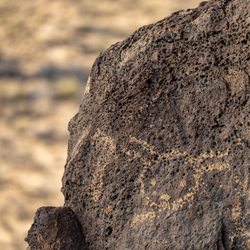
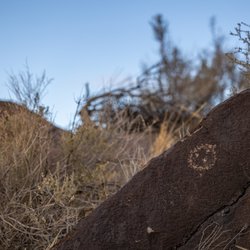
Salinas Pueblo Missions Photos


More like Salinas Pueblo Missions
Recommended Reviews - Salinas Pueblo Missions
Start your review...


Reviews With Photos
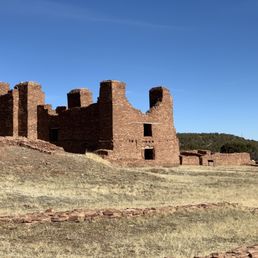

I've lived in NM for over 30 years, and had no idea these ruins existed. We decided to take a family day trip to hit all 3 sites. We're in Albuquerque so a day trip was very possible. If you have kids, it is a lot of driving around but my kids enjoyed each ruin site. Abo is probably the most impressive in my opinion. My family really enjoyed seeing all these ruins. There are big, clean bathrooms at each site.
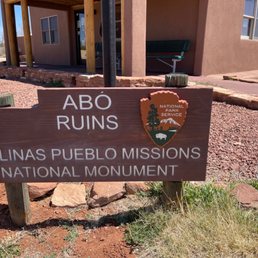

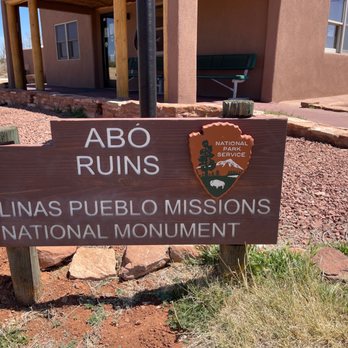
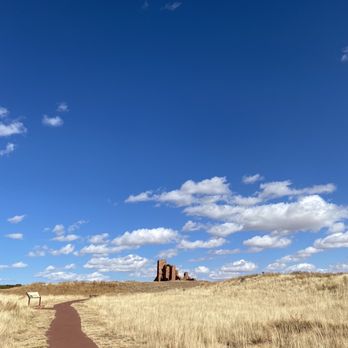
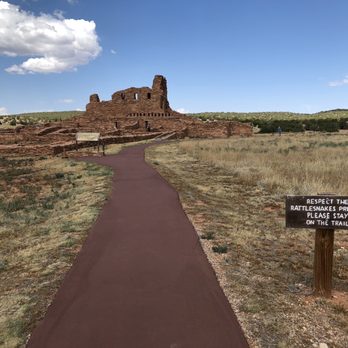
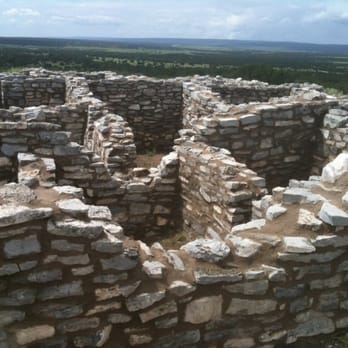
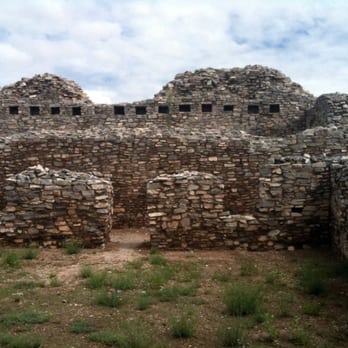
We've been in Albuquerque for just over 3 years and still working to find. The 1st warm rideable day this year put us on the motorcycle heading for the Abo Ruins. Being about 1-1/2 hr drive from Albuquerque makes it perfect to explore a historical site. We did not stop in Mountainair, we went directly to the ruins. The cut off is well marked and the road to the ruins is paved. There is a sign giving the hours as 9a-4p. We parked at the visitors center, there was no one there at the time. The ruins were amazing, the buildings were done in red sandstone, some of which is still standing. There is a trail around the ruins giving information about what you are looking at and providing you with orientation to the ruins. We spent about 60 minutes there before we headed back. We'll make another trip to the other mission sometime during the summer.


What a great place to visit on Indigenous Peoples day. A day to see the Spanish influence on this territory and the combinations of culture. We also enjoyed a mile loop of a trail nearby. They have a beautiful area for picnicking under a massive cottonwood. Fun day!
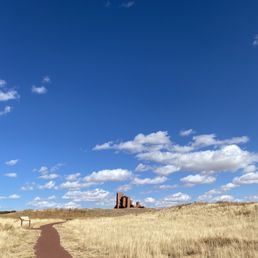

These ruins were better than I expected and worth the detour. In addition to the main visitor center in Mountainaire, each of the sites has an info center and gift shop. You can get stamps for all of the sites in Mountainaire.


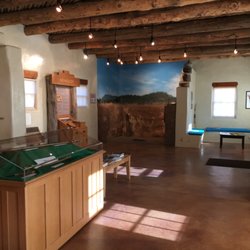
This location marks the NPS headquarters in the town of Mountainair. The inside has rangers, a gift shop, and a small museum area. There's a 14 minute video that will give you information on all three sites and history of the area. Each of the sites also has its own visitor center. I suggest picking up a trail guide for whichever site(s) you visit. Shop: I bought a T-shirt and couldn't resist buying more stickers.


A beautiful ruins with the unique styles of ancient tales, the eagle is telling the story above the sky, the ancient people is looking for you.


As we were planning our summer National Park trips through New Mexico I ran across this site, which I honestly had never heard of before. We were pleasantly surprised by this national Park site! This is actually a series of three different ruin sites and this visitor center/NPS headquarters. You'll want to pack a lunch and fill up on gas before you head out to explore all three of these sites. This is a good day trip from Albuquerque and you'll have to drive between each site. They all have there own visitor center and park rangers that can help you with any questions you may have. Be sure to get a map at the first place you decide to stop so you can easily navigate between the different areas. Also, if you have children or just want to earn a memorabilia badge, pick up the junior ranger booklet to complete as you explore the missions, you'll get a ribbon at each place, which will make this park badge unique from the other national park sites.


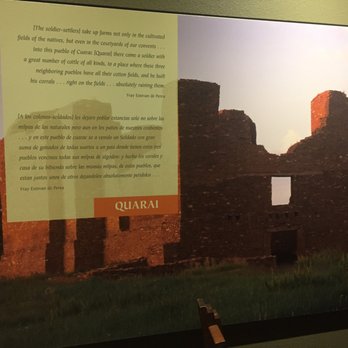
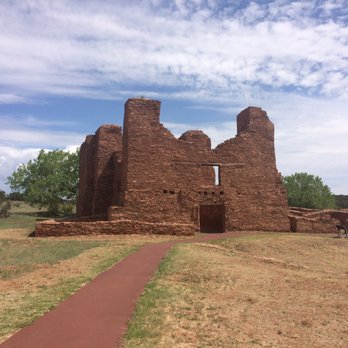
We are staying at Manzano State Park for the weekend and asked my wife if she wanted to take a little trip to the Quarai Ruins. Yay! So glad we made the decision to go. My mother was NM history buff and always talked about the Salinas Pueblo Missions and told me about the history of these ruins. When we arrived at Quarai it was like the light went on in my head. Now I was seeing what my mom was talking about. The setting is so peaceful, serene and lush. Now, I understand how the nearby village came by the name of Punta de Agua. Hard to grasp that drought caused the downfall of this community.

3 years ago
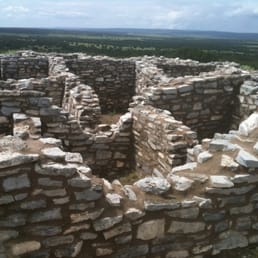
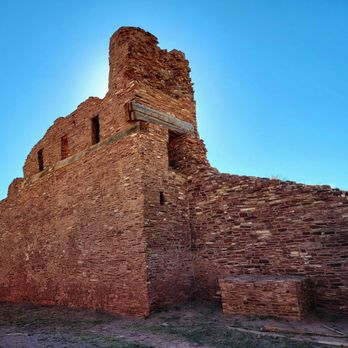
New Mexico 01-2024 ABO Ruins Salina Misson in the Mountaire area of New Mexico. Medieval Architecture looks like castle ruins. It was extremely cold with the wind whipping wildly. It was like 6 degrees !! It's located in the mountains and it's a beautiful drive up the ruins. It's Free to check it out. Check out all the photos, it's absolutely amazing there! read more

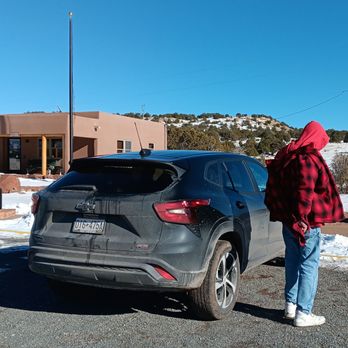
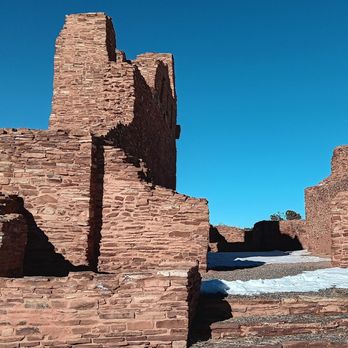
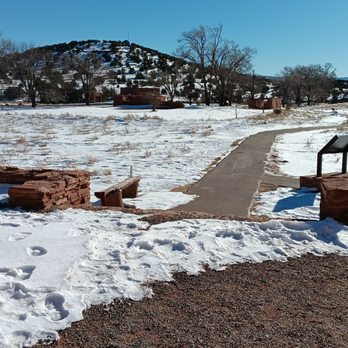


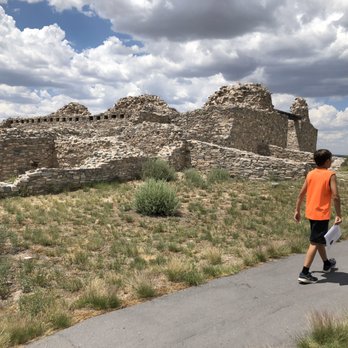
We visited Gran Quivira while passing through the area. I had never heard of the Salinas Pueblo Missions and didn't know much about it. In researching it, I got the impression all 3 sites were comparable. Unfortunately having visited Gran Quivira and seeing the pictures at the park headquarters, I think the other 2 sites were better. The have larger structures still standing. Gran Quivira may be the largest of the three, but outside of the main church, there's not much left. The ruins tend to be pretty low and largely overgrown. The main church has walls maybe 15 feet tall made with local stone. This site has not just ruins of the mission, but also of a village that sprouted up around it. We walked around it and saw it in maybe 30 minutes or less; would have been less if we'd used the ramp but it was closed due to the possibility of lightning. Gran Quivira was alright, but I'd check out Abo or Quarai instead if you get the chance. The fact that we saw the impressive ruins at Chaco Culture NHP the day before may have left me less impressed. Check these out if passing through, but I wouldn't go out of my was to see Gran Quivira. read more


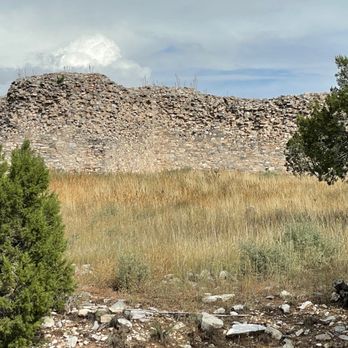

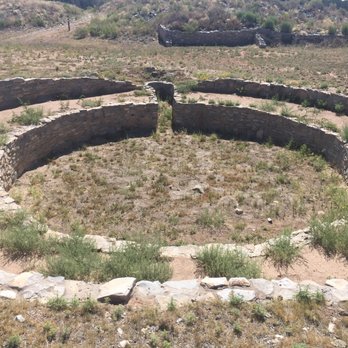
Now tall ruins stand in solitude have an aspect of sadness and loneliness, one can feel knowing what they represent... the Spanish coming changing thriving communities forever ...... Abó was the site of a Native American Pueblo. The community, composed of Tompiro-speaking Tanoans, was recorded to have a population of more than 1,600 in 1641. The Tompiro language was likely related to Piro,as well as to Tiwa, which is still spoken at present-day Pueblos of Isleta and Sandia west of Abó. Abó appears to first enter the documentary historic record in 1583, when a visit to a site believed to be Abó was recorded by the Spanish explorer Antonio de Espejo. Based on the archaeology of the site, they are estimated to have settled here around 1300 AD. As village-dwelling and sedentary Pueblo Indians, the Abó Tompiros' livelihood depended on agriculture. The region where they lived is more than 6,000 feet (1,800 meters) in elevation, near the upper climatic limit for corn cultivation. They had little surface water for irrigation, rainfall was sparse and sporadic, and winters were cold. Tompiro settlements were made viable by their proximity to salt deposits in the Salinas and to the bison herds of the Great Plains. The Tompiros were important traders and middlemen between the Plains Indians and the Pueblos of the Rio Grande Valley for salt and bison skins and meat. They s also hunted small and large game in the region, especially deer, pronghorn, and rabbits and gathered wild foods, including pinyon (piñón) pine nuts. Spanish missionary work began there in 1622, and construction of the first church began in 1629. The Pueblo was abandoned around 1672, apparently due to drought and attacks by the Apaches. The Spanish recorded that Abó residents then moved to the Rio Grande valley. read more


6 years ago
I've lived in NM for over 30 years, and had no idea these ruins existed. We decided to take a family day trip to hit all 3 sites. We're in Albuquerque so a day trip was very possible. If you have kids, it is a lot of driving around but my kids enjoyed each ruin site. Abo is probably the most impressive in my opinion. My family really enjoyed seeing all these ruins. There are big, clean bathrooms at each site. read more

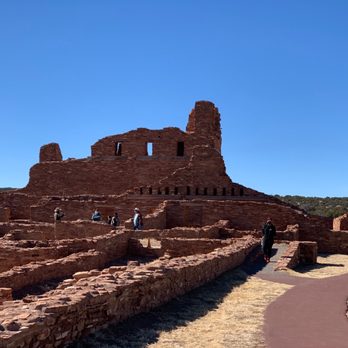


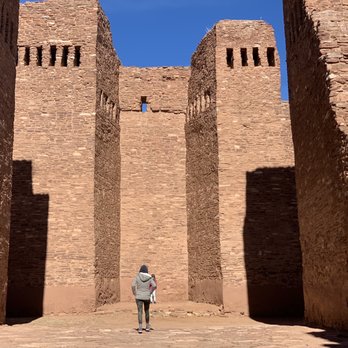

We've been in Albuquerque for just over 3 years and still working to find. The 1st warm rideable day this year put us on the motorcycle heading for the Abo Ruins. Being about 1-1/2 hr drive from Albuquerque makes it perfect to explore a historical site. We did not stop in Mountainair, we went directly to the ruins. The cut off is well marked and the road to the ruins is paved. There is a sign giving the hours as 9a-4p. We parked at the visitors center, there was no one there at the time. The ruins were amazing, the buildings were done in red sandstone, some of which is still standing. There is a trail around the ruins giving information about what you are looking at and providing you with orientation to the ruins. We spent about 60 minutes there before we headed back. We'll make another trip to the other mission sometime during the summer. read more


What a great place to visit on Indigenous Peoples day. A day to see the Spanish influence on this territory and the combinations of culture. We also enjoyed a mile loop of a trail nearby. They have a beautiful area for picnicking under a massive cottonwood. Fun day! read more


3 years ago

6 years ago
These ruins were better than I expected and worth the detour. In addition to the main visitor center in Mountainaire, each of the sites has an info center and gift shop. You can get stamps for all of the sites in Mountainaire. read more


3 years ago

This location marks the NPS headquarters in the town of Mountainair. The inside has rangers, a gift shop, and a small museum area. There's a 14 minute video that will give you information on all three sites and history of the area. Each of the sites also has its own visitor center. I suggest picking up a trail guide for whichever site(s) you visit. Shop: I bought a T-shirt and couldn't resist buying more stickers. read more



5 years ago
A beautiful ruins with the unique styles of ancient tales, the eagle is telling the story above the sky, the ancient people is looking for you. read more


3 years ago

As we were planning our summer National Park trips through New Mexico I ran across this site, which I honestly had never heard of before. We were pleasantly surprised by this national Park site! This is actually a series of three different ruin sites and this visitor center/NPS headquarters. You'll want to pack a lunch and fill up on gas before you head out to explore all three of these sites. This is a good day trip from Albuquerque and you'll have to drive between each site. They all have there own visitor center and park rangers that can help you with any questions you may have. Be sure to get a map at the first place you decide to stop so you can easily navigate between the different areas. Also, if you have children or just want to earn a memorabilia badge, pick up the junior ranger booklet to complete as you explore the missions, you'll get a ribbon at each place, which will make this park badge unique from the other national park sites. read more

We are staying at Manzano State Park for the weekend and asked my wife if she wanted to take a little trip to the Quarai Ruins. Yay! So glad we made the decision to go. My mother was NM history buff and always talked about the Salinas Pueblo Missions and told me about the history of these ruins. When we arrived at Quarai it was like the light went on in my head. Now I was seeing what my mom was talking about. The setting is so peaceful, serene and lush. Now, I understand how the nearby village came by the name of Punta de Agua. Hard to grasp that drought caused the downfall of this community. read more



10 years ago

15 years ago

16 years ago
This is a wonderful place. If you enjoy archeology, then you will love this place. Actually this is three places. There are three different pueblo ruins: Abó, Gran Quivira, and Quarai. These are mission ruins left behind and now for all to see and enjoy. This is a National Monument and for a good reason. It is a place off the main highway, but not too far...worth seeing. read more
12 years ago

12 years ago