Last review of my 2022 February Black History Series & I honestly don't know how to rate it. This…read moreis by far the most difficult piece of history to digest and the most uncomfortable to write & read. It is so difficult in fact, that I don't think I'm capable of presenting it without myself becoming upset.
Here are the words from the historic marker that was removed and place in the National Center for Civil & Human Rights because was constantly being defaced and pierced with high caliber BULLETS. It reads:
[ historic marker ]
MARY TURNER AND THE LYNCHING RAMPAGE OF 1918
Near this site on May 19, 1918, twenty-one year-old Mary Turner, eight months pregnant, was burned, mutilated, and shot to death by a local mob after publicly denouncing her husband's lynching the previous day. In the days immediately following the murder of a white planter by a Black employee on May 16, 1918, at least eleven local African Americans including the Turners died at the hands of a lynch mob in one of the deadliest waves of vigilantism in Georgia's history. No charges were ever brought against known or suspected participants in these crimes. From 1880-1930, as many as 550 people were killed in Georgia in these illegal acts of mob violence.
Erected by the Georgia Historical Society, the People's Temple, Valdosta State University - Woman and Gender Studies Program, and The Mary Turner Project.
***
[ missing details of the sign ]
What the sign does not describe is the circumstances of the death of the white planter by his black "employee". While the emancipation proclamation freed enslaved blacks in the United States, the 13th amendment allowed for one loophole. Penal labor in the United States is explicitly allowed:
"Neither slavery nor involuntary servitude, except as a punishment for crime whereof the party shall have been duly convicted, shall exist within the United States, or any place subject to their jurisdiction."
That amendment gave rise to CONVICT LEASING, a system of forced penal labor that provided prisoner labor to private parties, such as plantation owners and corporations (e.g. Tennessee Coal and Iron Company, Chattahoochee Brick Company). The lessee was responsible for feeding, clothing, and housing the prisoners AND could punish or discipline them as they saw fit. Considering slavery had barely been outlawed, the treatment of these mostly black inmates was often bitterly WORSE that of their previous slave status.
These convicts were actually profitable for state revenue. In 1898, 73% of Alabama's entire annual state revenue came from convict leasing. Corruption, lack of accountability, and racial violence resulted in "one of the harshest and most exploitative labor systems known in American history."
TheConversation.com writes this in a February 2017 article:
"They lived in squalid conditions, chained, starved, beaten, flogged and sexually violated. They died by the thousands from injury, disease and torture. For both the state and private corporations, the opportunities for profit were enormous. For the state, convict lease generated revenue and provided a powerful tool to subjugate African-Americans and intimidate them into behaving in accordance with the new social order. It also greatly reduced state expenses in housing and caring for convicts. For the corporations, convict lease provided droves of cheap, disposable laborers who could be worked to the extremes of human cruelty."
link: https://theconversation.com/exploiting-black-labor-after-the-abolition-of-slavery-72482
***
These were the conditions of the "employee" that killed the white "planter".
This killing set off a manhunt that swept southern Georgia killing more than a dozen innocent black men. When Mary went to the courthouse to complain and demand justice for her husband who was wrongfully slain, the crowd turned their anger on Mary, and, well... she and her unborn baby lost their lives in a horrifically brutal act that you can learn about here:
https://www.youtube.com/watch?v=St1maRFmP8o
[ side note ]
I should mention the correlation between the end of slavery and the rise of the incarcerated population are practically successive. Many of these men were being sent to prison for the smallest of infractions... most commonly for being unemployed (vagrancy).
[ FINAL THOUGHTS ]
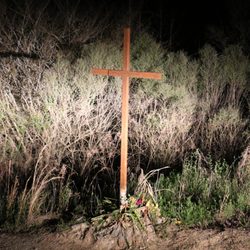
Mary Turner went to the courthouse to seek justice for the murder of her innocent husband, and the same irrational violence that took him took her at the sheer complaint of unfairness. There is so much to unpack in this American History tragedy, including how even a modern day sign erected in 2010 is treated as violently as Mary. Many have left flowers at the base of the metal cross now standing at the site. Rest in Power Turner family, my heart weeps for you all. May God repay you 100 fold for every act of violence against you.
Thank you for following my month of Black History reviews!
2022 / 60