Oceanário de Lisboa is a must if, like me, you want to visit every large-scale aquarium. I went in…read moreJanuary and it was not too uncrowded, which made a big difference.
There is a certain serenity that massive aquariums bring, a form of hypnotic biophilia that acts directly on your nervous system and reduces stress and anxiety. I have always been wondering why aquariums/deep water have such effects. The slow, continuous movement of fish and water holds attention without demanding it, allowing the brain to shift out of high-alert, task-oriented states. This results in measurable reductions in heart rate, blood pressure, and perceived stress, similar to effects observed in natural environments such as forests or coastlines. In large-volume tanks, flow patterns are slower and more laminar, encouraging natural swimming behaviors rather than repetitive or erratic movement. The presence of schooling fish and large pelagic species reinforces predictable motion patterns, which the human visual system and nervous system interprets as calming.
This giant central tank of the aquarium is widely cited as one of the largest single aquarium tank in the world. It represents four oceans, Atlantic, Pacific, Indian, and Antarctic, in one continuous ecosystem. The layout: you start at the upper level and gradually spiral downward. As you descend, the viewing angles improve and the scale becomes apparent, with large pelagic fish (incl. the massive slow-moving sunfish), sharks, rays, and schooling species sharing the same water column without visual barriers.
The central tank holds approximately 5M liters of seawater and relies on controlled lighting, filtration, and circulation systems to maintain multiple habitat zones within a single body of water. Surrounding it are satellite habitats focused on specific ecosystems, including open ocean, coastal waters, polar environments, and temperate reefs. There is also a small kelp forest section, which immediately reminded me of the magnificent kelp exhibit at Monterey Bay Aquarium in California (still unmatched; love it!), but this felt like a respectful and well-executed nod.
The aquarium sits in Parque das Nações, the former Expo '98 site, which adds a lot to the experience and activities.
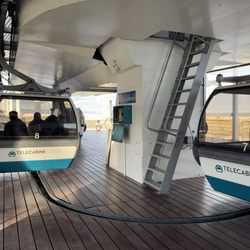
Before or after the visit, you can use the Telecabine Lisboa (cable cars). It operates along the waterfront and provides a continuous overhead view of the Tagus estuary, surrounding Expo-era structures, and the Vasco da Gama Bridge (the second longest bridge in Europe). In January, it closes at 6 PM, and the ticket allows round trips.
(Ticket cost for aquarium and cable car is less than 40 euros/person. 10-15 min from the Humberto Delgado Airport. Street parking is tough; garage parking is approx. 15 euros/24h.)