So, you're taking the GMAT soon. You've studied, practiced and repeated, and taken plenty of diagnostic tests. Now it's time to take the damn thing.
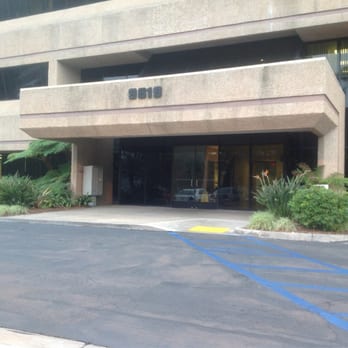
The GMAT is exclusively offered at Pearson Vue test centers, which are all very similar, and all have very high security, with palm scanners and other strict rules to make sure that you do not cheat or share questions. This particular location in Claremont is very central, and easy to get to from any part of San Diego county. Wear layers in case you get warm or cold, as you won't have any control over the temperature in the room. For more information about test-day rules, visit the GMAC website: http://www.mba.com/us/the-gmat-exam/prepare-for-the-gmat-exam/plan-for-test-day/gmat-administration-rules.aspx
In most cases, the GMAT is offered on weekdays at either 8 am or as late as 2-5 pm. I'm not exactly a morning person, so I tend to be in the 2 pm crowd, but it's all up to your personal preference. (I've taken the GMAT multiple times, since I'm a professional GMAT tutor. I do so to keep myself sharp and to stay up-to-date with any test changes.)
Don't forget to bring an acceptable photo ID, since you will need it at the test center: no ID, no test. When you arrive, the receptionist will give you a locker key and ask you to empty your pockets into the locker. You will keep your ID in your pocket, however, as you will need it to check in and out of the test.
Some tips for the actual GMAT:
Structure: 1) Analysis of an Argument Essay (30 minutes/1 question), 2) Integrated Reasoning (30 minutes/12 questions), 3) Verbal (41 questions/75 minutes), 4) Quantitative (37 questions/75 minutes).
Scoring: 1) Essay 0-6 in half point increments, 2) Integrated Reasoning 1-8, 3) Verbal 0-60, 4) Math 0-60, 5) Composite (total score) 200-800. Check out this page from the MBA website for more information on scores and their respective percentiles: http://www.mba.com/us/the-gmat-exam/gmat-exam-scoring/your-score-report/what-percentile-rankings-mean.aspx
Question types by Section:
-Integrated Reasoning (Multi-Source Reasoning, Graphics Interpretation, Two-Part Analysis, Table Analysis)
-Verbal (Reading Comprehension, Critical Reasoning, Sentence Corrections)
-Quantitative (Data Sufficiency, Problem Solving)
-Pacing: you have approximately 1.83 minutes per Reading Question, on average, and approximately 2.03 minutes per Quantitative question. Integrated Reasoning questions consist of 12 questions with several sub-questions. You have exactly 2.5 minutes per IR question.
-Breaks: you will be given two 8-minute breaks, one after the IR section/before the Quantitative section and one after the Quant section/before the Verbal section.
Data Sufficiency Tips (Math)
DS questions can be very tricky at first, until you get the hang of them.
Here's how I look at them:
A = #1 only is sufficient to answer the question
B = #2 only is sufficient to answer the question
C = neither #1 nor #2 works by itself, but in combination, they are sufficient to answer the question
D = Either #1 or #2 individually is sufficient to answer the question (they both work by themselves, NOT in combination)
E = Neither #1 nor #2 is sufficient to answer the question
Sometimes I like to think of this as "A, B, BEN."
A = A (#1) only
B = B (#2) only
C = B oth
D = E other
E = N either
Remember to write down your letter answers in two groups: "A/D" and "B/C/E"
Shorthand: "works" = is sufficient
If #1 works, then the answer must be A or D. If #2 doesn't work, then the answer must be B, C, or E.
If #2 works, and #1 also worked, then the answer is D.
If #2 works, but #1 did not work, then the answer is B.
If #2 does not work, but #1 did work, then the answer is A.
If #2 does not work, and #1 didn't work either, then the answer is either C or E.
If #s 1 and 2 work when combined, but NOT individually, then the answer is C.
If #s 1 and 2 do not work when combined, nor individually, then the answer is E.
After the Test is Over
When the test ends, you will have the option to either keep or cancel your score. Since it is a computer adaptive test, you will receive your Math and Verbal scores right away (0-60), as well as your composite score (200-800).
Unless you feel that you totally bombed your test, I would recommend viewing your score. You may have done better than you thought. If not, don't fret: most students score higher the second time they take the GMAT.
If you want to know more, then google "GMAT Action Plan" to read my personal GMAT prep plan.
Good luck!
Brian McElroy, GMAT Tutor, San Diego CA read more