Osterley Park and House Photos



Recommended Reviews - Osterley Park and House
Start your review...



11 years ago

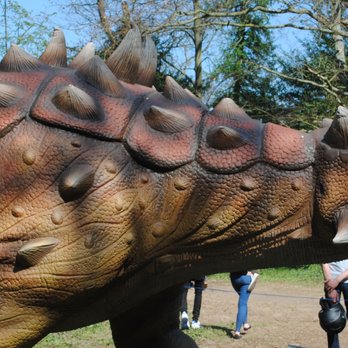
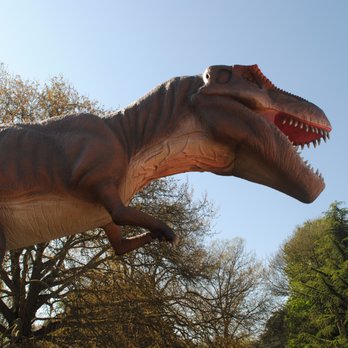
Jurassic Kingdom Exhibition. My first tip, a big one, is arrive early. We arrived at 10.30 am to find the car park in Osterley Park filling up quickly. We had a few hours of wandering amongst the exhibits without be pushed from pillar to post. When we left, at 1.30 pm the queues at the entrance were long and the carpark almost full. Warning over, the reasons for this overcrowding will be explained in the following review. We were overwhelmed by this exhibit. Initially we wondered if it would be interesting for we 'oldies' and wondered where we could hire a couple of ankle-biters so we would not feel out of place. Our children being of the older age group. Even my grandchildren are 18+. However, those worries disappeared. Seeing those life size animatronic dinosaurs was, I hate the word, awesome. It was great seeing the reaction of the smaller members of each family. They were enthralled. An easy, well signposted, walk around with ample 'educational' signage at each model. We learned that the names had changed over our lifetime. Very interesting to see where in the world, as we know it now, each dinosaur was found. Half way round there was a refreshment area selling hot dogs, noodles, drinks etc etc. A very welcome break for a coke. But carrying on to see more of those wonderful 'models', I was getting to the point of thinking of them being real (think it was the sun and no hat, Sunday was a hot day). At the end there, again, was a watering area and we decided to something to eat. I decided to treat my partner to an al fresco meal. Least I could do. We sat on the grass eating our burgers LOL. I was pleasantly surprised at the prices. Not a fiddle for the captive audience but reasonable prices. Guys, this exhibition will be travelling the UK. Well worth a visit, especially if you have young ones. Prices are reasonable especially the family tickets. Make an effort but, REMEMBER, go early to avoid the rush and enjoy the exhibition. www.lovepopupslondon.com #lovepopupslondon www.jurassickingdom.uk read more





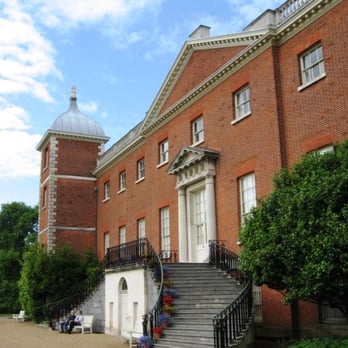
Osterley Park and House is a National Trust historic property situated near Isleworth about 30mins away from Heathrow airport. This fantastic (originally Elizabethan) Georgian House and garden stand in a large parkland. The House was refurbished by the architect Robert Adam in the middle of the 18th Century and claims to be one of the finest examples of his work in the United Kingdom. The house still has original furniture, really amazing ceilings, objects d'art from China and Japan, a fine collection of paintings from the Venetian school. You can walk through the meadow at will or use the paths that have been mown through it and see butterflies, grasshoppers, beetles, etc.. it is very relaxing and particularly enjoyable on a sunny day, There is also a large area of parkland with a lake and some marvellous old trees. They have a cafe and shop onsite also. There is a small admission fee to see the house and the gardens. read more


Now in the care of the National Trust, Osterley Park and House is large 18th Century mansion with extensive grounds in West London, renowned for its interiors by the famous architect Robert Adam. With the A4 to the south and the M4 to the north, and Heathrow a few miles to the west, it is an astonishing and often overlooked - oasis from the busy modern world around it. Its history begins with Sir Thomas Gresham, financial advisor to Elizabeth I and founder of the Royal Exchange. He bought the manor in 1562 and in 1576 demolished the existing farm house to build a large, red-brick mansion, in which Elizabeth was entertained at least twice. The house was acquired by a speculator, Nicholas Barbon in 1683, but passed in 1713 to the founder of Child's Bank, Sir Francis Child, in lieu of unpaid debts. In 1761 Child's grandson, also named Sir Francis Child, commissioned Robert Adam to modernise the house and its interiors in the then-fashionable classical style. Adam added the grand portico with doric columns to join the two wings and inserted Georgian windows, but retained the Tudor corner towers and spent most of his effort on the interior, where he also designed the carpets and furniture and fittings. Child's brother inherited the house in 1763 and continued the work, also landscaping the grounds and creating a series of lakes and ponds. The large stable block was left largely untouched and remains essentially in its 16th century form. The house ceased to be a main residence in the 19th century, and in 1949 Lord Jersey gave the house to the National Trust. The house is one of the best surviving examples of Adams' work, in part because it was largely untouched in the 19th century. The main rooms on the first floor form the core of the house, and include a grand entrance hall and a particularly impressive Long Gallery. The rooms are an excellent example of Adams' restrained style, and many of the ceilings, for example, are modelled on those from classical temples in Greece. A small selection of the family's personal rooms is also open on the second floor, as well as most of the servants' quarters (including a kitchen beer and won cellar and a strong room) literally 'below stairs' on the ground floor. Many rooms retain their original furniture, ornaments and even Adams' carpets, and the strong room in particular has a very fine collection of swords, silver and silver gilt from the house, including an enormous silver wine bowl from William III's reign. Unfortunately many of the family's collection of paintings have been lost, and those in place now are on loan from the Victoria & Albert Museum. Frustratingly, most of the paintings are unlabelled and not recorded in the guide book, and on my visit the staff were unable to help out. Indeed, the presentation of the house is very formal but rather limited and, despite the best efforts of the guides, feels a little stiff and lifeless, notwithstanding the impressive interiors. More interpretation in the rooms and more informal details of the daily life of the house would go a long way to enriching visitors' experience. A nice touch was a small exhibition of children's paintings from a nearby school, following a visit. Outside, the 350 acres of grounds provide a rare example of the mixture of meadow, park, and gardens which once typified such houses. Oddly, interpretation is much better outside, and the huge spaces are great for kids to run around and undertake nature walks. The gardens are slowly being restored to their original 18th century pattern, and include two neo-classical summer houses built for entertaining, an American garden containing plants from the New World, and a Tudor walled garden. The flower beds are particularly attractive, and there is a long (half-hour) woodland walk around the perimeter of the grounds, returning via the lake. The meadow and park never ploughed is left largely wild and contains a wide range of flora and fauna. The path takes in the boathouse island at the head of the lake and the remains of an ice house. The 16th Century stable block is worth a look in its own right, and houses a gallery space, and the inevitable National Trust café and shop. Overall, and despite the shortcomings in presentation, this is a lovely place for an afternoon out of central London, and is often very quiet, so you really can have the house and gardens to yourself. Practicalities The house is about a mile and a half from Osterley underground station, or just under a mile from Osterley Library stop on the H28 bus. It is well signposted from the A4. An electric buggy is available to shuttle those less able to walk from the car park to the House (400m) and around part of the grounds. The house itself has very limited level access (lots of steps and some uneven floors) although a stair-climber for unpowered wheelchairs is available enquire in advance. Charges (2008) House & Garden: £8 adult, £4 child, £20 familyGarden only: £3.50 adult, £1.75 childCar read more


15 years ago

16 years ago

7 years ago

19 years ago