
Terrace Gardens Photos


Recommended Reviews - Terrace Gardens
Start your review...



18 years ago
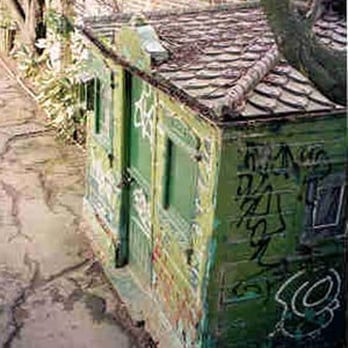
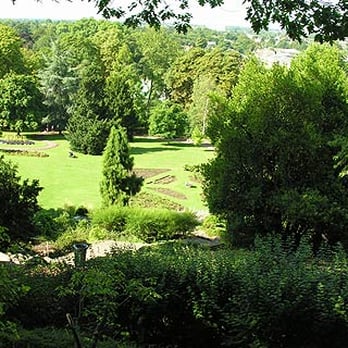
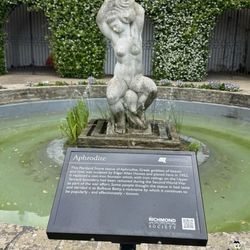
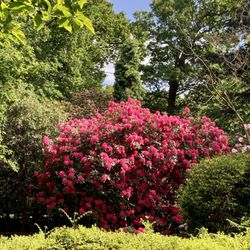
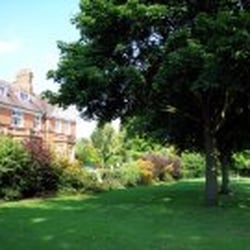
From being a child this has been one of my favourite places on a summers day. Sleeping with friends, during the Richmond Festival, as a teenager..under the terrace ..we were awoken by police dogs and I hopped in my sleeping bag with a snapping one at my errm rear! On the west, rising above the river are the Terrace Gardens: these gardens were laid out in the 1880s and extended down to the River Thames some 40 years later; the broad gravel walk along the top is earlier and the view west towards Windsor has long been famous. Laid out in the 1700s, the Terrace Walk towards the end of the 20th Century was in need of upgrading. The famous View from Richmond Hill was protected by an Act of Parliament in 1902 and it was this Act which provided the catalyst for the development of the London's Arcadia project. Works carried out during Phase 1 include resurfacing and re-grading of the walk, restoration and repainting (though not repositioning) of the railings on the road side by contractors. The railings along the hedge side were restored over a six week period by prisoners on day release from Latchmere House Prison. Magnificent Lime trees have been planted to 'gap-up' the historic avenue of trees on the Terrace and at the top of Terrace Fields. Richmond Terrace Walk is listed as Grade II* in the English Heritage Register of Parks and Gardens of Special Historic Interest The Terrace Gardens and adjacent Terrace field, overlooking the River Thames, were formerly brick works. During the 18th century various noble owners had fine houses erected, all now sadly demolished. Some features of the gardens' history remain, including the re-sited statue of the River God and an ice house set in the slope to the rear of the thatched summer house. The Terrace Gardens, Petersham Road, are famous for their seasonal bedding, shrubberies, rockery and rose garden, all set amongst fine trees and sloping lawns. Close to the main entrance in Petersham Road is a conservatory with tropical plants. To get an idea of why the landscape here is considered so special, you should pause at the top of Richmond Hill, above the pretty Terrace Gardens. Below you the Thames curls, serpent-like, amid trees casting long shadows in the silvery water. You can pick out the roof of Ham House through the greenery and, away on the horizon, Box Hill and the Surrey Hills. So celebrated is this view that they passed an act of parliament in 1904 to protect it from development - it's the only protected view in England. The legislation was the first-ever piece of environmental planning, and a plaque on the hill commemorates the passing of the act. JMW Turner painted it, and the poet Alexander Pope waxed lyrical about it, as did Sir Walter Scott, who described it in his great novel The Heart of Midlothian (1918). Petersham Meadows, periodically grazed on by herds of cattle, as they have been for centuries. That willow-fringed island to your right is Glovers Island, one of a series of picturesque islets that dot this stretch of the Thames. On the balustrade seating area (where we slept) on the top terrace is a formal pool with its modern statue of Aphrodite (affectionately known as Bulbous Betty). Take a look at the watchmans hut. Built in 1887, the Terrace Gardens Hut has survived for more than 115 years against all odds. The wooden hut represents a sophisticated and exceptionally rare architectural style Anglo-Japanese. The style was briefly current during the years of the Aesthetic Movement of the 1870s and 1880s the era of the Mikado and Walter Pater's 'Art for Art's Sake'. The modest Terrace Gardens Hut is one of the only surviving structures that can properly be described as 'Anglo-Japanese' Other features of the Terrace Gardens Hut, however, are decidedly not Japanese not surprisingly, since it was the product of an eclectic era. The tiled roof is an interesting feature; the tiles are made of a lightweight metal, possibly zinc, and are likely to have been manufactured according to a long-forgotten patented system. The diagonal tongue-and-groove panels on the door are typical of 'reformed gothic' design of the 1860s and 1870s. Remains of the wrought-iron fixings for a notice possibly enamelled that announced the purpose of the hut, are still visible on the apex of the roof. Go stroll..take a picnic..eat in the cafe..have a pint close by but don't miss it. read more


8 years ago
Terrace Gardens is an openly accessible, fairly expansive public park area close to Richmond Centre and separated only by a road from the Thames and the promenade. You will find a small café there, and large flower beds are spread over the whole area. Nice and quiet, ideal for an evening walk or to escape the bustle and noise of the city. Lovely. read more




18 years ago

18 years ago

19 years ago

18 years ago
More info about Terrace Gardens













Why does Yelp recommend reviews?
1 review that is not currently recommended
The reviews below are not factored into the business's overall star rating.
18 years ago


