Museo Episcopal de Vic Photos

Recommended Reviews - Museo Episcopal de Vic
Start your review...



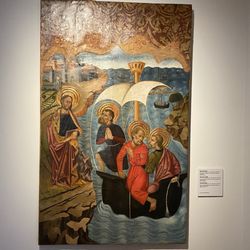
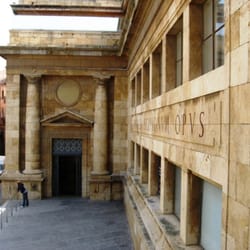
Despite the slightly unpromising name, this is one of Spain's foremost collections of mediaeval art, and worth a couple of hours of anyone interested in art history. It is second only in importance to the collection in Barcelona in terms of mediaeval religious art in Catalonia, but in some ways the more intimate setting makes it more accessible. Background The collection was brought together by Bishop Morgades in 1891, as part of the resurgence of interest in Catalan art and heritage in the 19th century, associated with the rise of Catalan nationalism. The focus is religious art, with items brought from a wide range of churches, cathedrals and religious houses across Catalonia. The collection was moved to the present purpose-built museum in 2002. The high point is the Romanesque and early Gothic collection, where a range of statuary, altar fronts and altar pieces of exceptional quality and excellent state of preservation cover the 11th-13th centuries. Also well represented is the later Gothic period, from 13th to 16th centuries, and there are collections of textiles, glass, metalwork and ceramics covering the period up to the early 20th century, together with a small local Roman collection and some Egyptian artefacts. The collection Starting in the basement are collections of Roman monumental sculpture, Roman artefacts from local sites, and a small Egyptian collection, which includes a fine mummy from the later Egyptian period. An audiovisual room gives a presentation about the museum's history (in Catalan). The ground floor is, in many ways, the high point: the collections here, arranged largely chronologically, cover the 11th to early 15th centuries, and are entirely religious in origin. They comprise statuary, altar fronts and altar pieces, and some recreated sections of fresco from Pyrenean churches. Of particular note are the life-sized Descent from the Cross from the church in Erill de Vall, from the first half of the 12th century, and the recreated Gothic patio with a truly stunning 15th century reredos. The first floor contains more 15th century gothic painting and sculpture, with later pieces from the 16th and 19th centuries. There is also a large collection of religious textiles, including altar coverings, albs, cloaks, mitres and other ecclesiastical garb, from the later mediaeval period to the 19th century; and a large collection of local glassware. The second floor continues the ecclesiastical theme, with leather work and more familiar Episcopal collections of metal work, including processional crosses, monstrances, chalices, thuribles and candelabra; a large collection of locally forged iron-work of both religious and secular origin; and a substantial collection of local ceramics. Finally, the so-called 'Study collection' is worth a look, comprising a range of items from storage, arranged informally, but interesting for both their variety and quality. Practicalities The museum is located next to the cathedral, in the old part of town. Parking nearby is difficult, but it is only 10 minutes' walk from the railway and bus stations. The building has level access throughout, with disabled toilets. There are lockers for bags and coats (photography is not allowed) and a small shop, selling postcards and books. Entry (2011) in EUR5 for adults and EUR2.50 for children/concessions. read more