Museo Ebraico Di Roma Photos


Recommended Reviews - Museo Ebraico Di Roma
Start your review...


Reviews With Photos


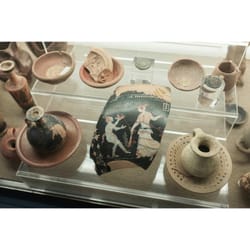
Museo Ebraico di Roma, the Jewish Museum of Rome, is located in the basement of the Great Synagogue of Rome (Tempio Maggiore di Roma). The museum holds large collection of works of art produced by the Jewish community. It also offers information on the Jewish presence in Rome since the 2nd century BCE. A visit to the museum includes a guided tour of the Great Synagogue and of the smaller Spanish Synagogue, or Tempio Spagnolo, in the same complex. The Jewish Museum of Rome has several collections and exhibits of Judaica of international interest. There is a Gallery of Antique Marbles from the synagogues of the ghetto, around 100 marble pieces. Also, displayed is a fascinating collection of textiles from the 15th to the 19th centuries, which includes around 900 liturgical and ceremonial textiles and illuminated parchments. There are silver liturgical objects, about 400 pieces of silverwork, bound prayer books, and 18th-century lamps, jugs, Ark keys, and bowls. Additionally, you can view a collection of historical art from the ghetto and old photographs from the 19th century. The Jewish Synagogue of Rome is the seat of the Chief Rabbi of Rome, and hosted an unexpected visit from Pope John Paul II in 1986, and from Pontiff Pope Francis in 2016. The museum was established in 1960. It was initially set up in a room behind the Torah ark of the Great Synagogue. In 1980 the staircase leading to the museum was decorated with stained glass by the artist Eva Fischer. To permit expansion the museum was moved to the basement of the Great Synagogue next to the Spanish Synagogue and officially opened on November 22, 2005. In the early 2000s the museum was renamed "The Jewish Museum of Rome" in order to emphasise the close relationship between the Jewish Community and the city. A Foundation to support the museum was established and renamed in honour of the former Chief Rabbi, Elio Toaff, in 2009. Support for the museum and its collection was provided by the European Union, the Italian and Lazio governments, and the city of Rome, as well as by private donations, including from Alcatel.


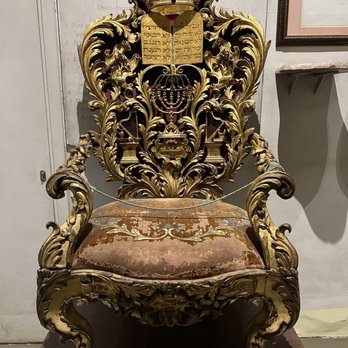
Explore over two thousand years of history at the Museo Ebraico di Roma, the Jewish Museum of Rome. Located in the basement of the Great Synagogue of Rome, it offers insight into the Jewish community in Rome since the second century BCE. The museum explains the history and relationship of the Jewish community with Rome. Jews have lived in Rome for over two thousand years. Their presence in Rome predates Christianity. It is probably the oldest continuous Jewish community outside of the Israel and the Middle East. Written records trace the Jewish community to as early as 161 BCE when Judah Maccabee sent envoys to Rome. During the Roman Imperial period, as many as twelve synagogues existed in the city. During the Middle Ages, Jews spread out throughout Europe, but were often forced to flee and relocate from the city where they had settled due to religious persecution. They often move to Rome. In 1492, all Jews (and others who were not Catholic) were expelled from Spain. Many fled to Rome. This led to a great diversity in religious customs and traditions. Despite tension and restrictions, Rome is the only city in Europe to never expel Jews. For hundreds of years, Jewish families coexisted with their neighbors. They worked as bakers, butchers, physicians, money lenders and craftsmen. As the friction between the papacy and the Jewish community in the 1500s escalated, walled off Jewish ghettos were created following the model in Venice. The Roman Ghetto was established as a result of Papal bull Cum nimis absurdum mandated by Pope Paul IV on 14 July 1555. The bull required that the 2,000 Jews who lived in Rome at the time to live in the ghetto, which was not only walled off, but the gates were also locked from the outside at night to keep them in. The Jewish community was also forced to pay 300 Roman scudi for the construction of the wall and gate. The location was prone to flooding and quite undesirable. By the late 1580s, roughly 3,500 inhabitants were living in inhuman conditions. During the plague of 1656, 800 of the ghetto's 4,000 inhabitants died. The bull revoked almost all the rights of the Jewish community. It placed many restrictions on Jews including prohibition on property ownership (even within the ghetto), not being allowed to provide medical care to Christians and compulsory Catholic sermons on the Jewish Shabbat Following the unification of Italy in 1870, the Jews were granted citizenship of Italy. In 1888, after an agreement between the Jewish Community and the city authorities, the Roman Jewish Ghetto was demolished, including five historic synagogues. The Great Synagogue was subsequently built in the former Ghetto area in 1904. The Roman Ghetto was the last remaining ghetto in Western Europe until ghettos were reintroduced by Nazi Germany in the 1930s. Today, the museum houses artifacts that span those two thousand years of history, including historic menorahs, torahs, circumcision chairs and tombstones. It was also interesting to see rimonim and menorahs from contemporary Roman artists. Check the hours for a visit. The museum also includes a guided timed visit to the Great Synagogue of Rome. Dress code restrictions apply. It is closed on Shabbat and Jewish holidays. Security in place as well. read more


The museum is opened 10 to 5, admission is 11 Euro's. We passed airport security, barricades & men were given head coverings. We wandered through the museum Seeing Jewish life in Rome from the 1400s to the present. About 50 of us took a :30 English tour starting at the old synagogue of Rome. This orthodox temple was built in 1904. The windows are the colors of Rome, it's a square dome to display freedom of the Jews. During the holocaust 2,000 Jews from here were carted to Auschwitz & 41 returned. The temple has been attacked and since the 1980's security has been tight. Currently there are 14,000 congregants; many Libyan Jews have been welcomed. Jew have been a part of Rome since the 1400's. The temple is still being used today and there was a wedding while we were there. read more


11 years ago
This museum is located at Jewish Town. A little bit over 10 euro for the admission. They show information about Jewish community in Europe. Pictures, documents, art work, etc. Informative if you are interested in Jewish community in Europe. read more


Museo Ebraico di Roma, the Jewish Museum of Rome, is located in the basement of the Great Synagogue of Rome (Tempio Maggiore di Roma). The museum holds large collection of works of art produced by the Jewish community. It also offers information on the Jewish presence in Rome since the 2nd century BCE. A visit to the museum includes a guided tour of the Great Synagogue and of the smaller Spanish Synagogue, or Tempio Spagnolo, in the same complex. The Jewish Museum of Rome has several collections and exhibits of Judaica of international interest. There is a Gallery of Antique Marbles from the synagogues of the ghetto, around 100 marble pieces. Also, displayed is a fascinating collection of textiles from the 15th to the 19th centuries, which includes around 900 liturgical and ceremonial textiles and illuminated parchments. There are silver liturgical objects, about 400 pieces of silverwork, bound prayer books, and 18th-century lamps, jugs, Ark keys, and bowls. Additionally, you can view a collection of historical art from the ghetto and old photographs from the 19th century. The Jewish Synagogue of Rome is the seat of the Chief Rabbi of Rome, and hosted an unexpected visit from Pope John Paul II in 1986, and from Pontiff Pope Francis in 2016. The museum was established in 1960. It was initially set up in a room behind the Torah ark of the Great Synagogue. In 1980 the staircase leading to the museum was decorated with stained glass by the artist Eva Fischer. To permit expansion the museum was moved to the basement of the Great Synagogue next to the Spanish Synagogue and officially opened on November 22, 2005. In the early 2000s the museum was renamed "The Jewish Museum of Rome" in order to emphasise the close relationship between the Jewish Community and the city. A Foundation to support the museum was established and renamed in honour of the former Chief Rabbi, Elio Toaff, in 2009. Support for the museum and its collection was provided by the European Union, the Italian and Lazio governments, and the city of Rome, as well as by private donations, including from Alcatel. read more

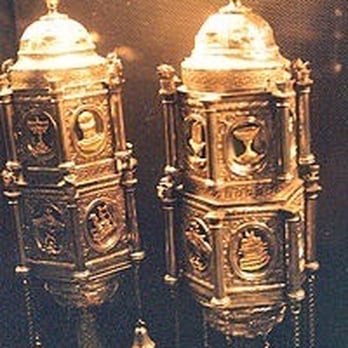


Worth a visit as you will learn during the tour the history of the Jews in Rome. Entrance is 10 euros for adults. Students cost 4 euros and over 65 costs 7,50. Disabled and children under 10 get in free. The admission fee goes to up keep of the museum and synagogue. The museum is small...though it is interesting and during the tour you will go upstairs into the synagogue and learn about the construction of the temple. read more


7 years ago

12 years ago