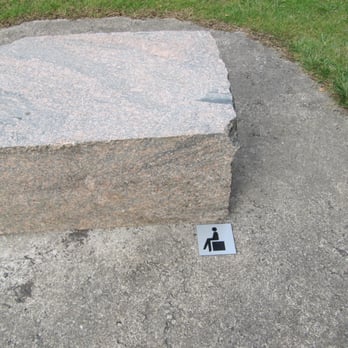
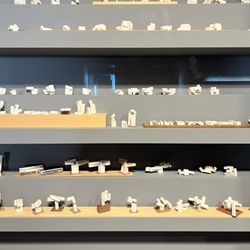
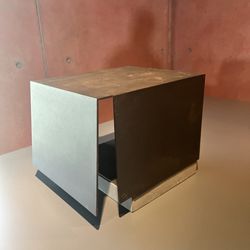
DISNEYLAND OF THE CUAJADA-BOURGEOISIE Eduardo Chillida was an artist who developed a lenguaje to manifest how materiality, resulting from the industrial or artisan processes of extraction and fabrication, and space manifested weight and light. He worked through genres (incisive carving of blocks of pink granite stone, voiding of alabaster blocks, bending of thick and solid corten steel bars and plates, folding of hanging white felt pieces, and paper, painted and slit on terracota masses, engineered large scale reinforced concrete pieces, and a few others).
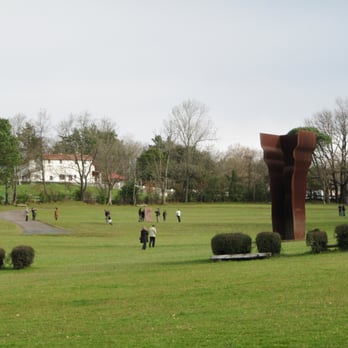
In the 1990s, Eduardo Chillida acquired an old caserio named Zabalaga, and the surrounding land, which included a earlier XXth century villa, all at a 15 minute drive from Donosti's city center, to create a place where he could set his work in relationship with landscape and architecture.
UNINTERROGATED PRIVILEGES
The Chillida family (starting with the patriarch Eduardo Chillida) had a long history of being ambiguos politically to get the favor of a broad range of politicians (the the Franco regime power -including the infamous Huarte family-, the earlier democratic progressive president Felipe Gonzalez, the Basque independentist, the Basque conservative governments, the neoliberal Aznar President etc.). The Chillidas managed to get advantages from all of them buy showing the Chillida support to each of them, without publicly stating it, and by representing the fiction of an ultra-catholic Basque bourgeois clan with a supposed arty dissident twist -which obviously meant close to nothing politically-. This came to a dead end, when Eduardo died, as the cost of maintaining Chillida Leku was too high by a family who mostly have proved to have aversion for work, and needed to squeeze Eduardo's legacy to add stipends for the next grandchildren generation.
FINALLY, THE RELIEF. The Swish Saviours
Here is where the international gallery Houser & Wirth, and their successful luxury vacation and art-buying invention plays a role in this story. They reached an agreement to fuel cash to the Chillida aversion-to-work-clan by commercializing the fruits of the genres machinery, and pay for the Zabalaga cost, as a commercial resource to entertain high profile buyers, and tolerate the general public (mostly from 20 km around, who enjoy the self-indulging fantasy-of-Basque-exceptionalism-immersion.
Now, this place is lost in political mess and extreme capitalism. A beautiful piece of land, with a nice example of vernacular Guipúzcoan architecture, half nicely preserved, half ruined by the old Chillida -not really good at architecture, but with the good
intentions of showing the primary structure of the building- and the incapacity to understand the complexity of a caserio like this. With mostly secondary Chillida works, only a few representing the best of his production; but most of them nicely set by Eduardo himself while still alive.
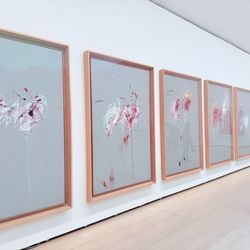
No critical in anyway, and with not even trying to engage with any historical discourse whatsoever, this is not a museum but rather a gallery of added works. The most critical reflections here are some embarrassing reflections by Eduardo Chillida himself that someone who really loved him should have hides long ago (like: "my work is modern like waves, and old like the sea", no comments). The whole thing feels like a big commercial space.
At the entrance a bit of the cliches showing the gallery lack of originality (a tuti -fruti garden by Piet Oudolf -who seems not to know much about the area's complex ecosystems and gardening traditions, a store where candles with Chillida drawings are sold as a new cheap genre of wax alongside the issues of the magazine "Basque Luxury".
At the end of the visit it is hard to decide if this is a visit to the stupidity of the times we live, or to Eduardo Chillida's efforts to reflect on a poetry of the relationship of the aesthetics of industry and extraction with a visual and rather romantic approach to landscapes. Probably they end up being the same thing, if we compare this compliance with status quo with the real poetry of Édouard Glissant or the writings on ecology by Audre Lorde. These two are far better than Eduardo Chillida, his non-working clan, and H&W. read more