Money Museum Photos

You might also consider


More like Money Museum
Recommended Reviews - Money Museum
Start your review...


Reviews With Photos


Free exhibit to learn about the federal reserve and what they do! I have been to several of the mints and reserves already but though this one was high on the list. There is a large cube of $1 million in dollar bills that was impressive to see. Lots of history and information on the signage, plus interactive exhibits throughout.


Off the beaten path Musuem that kept everyone (young and old) interested. Well worth the price of admission (free) and souvenirs for all. We all loved seeing the different ways that a Million dollars was displayed and the history buff LOVED all the exhibits. Don't forget to bring ID for all adults.


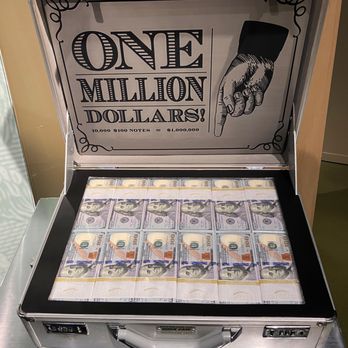
One of the most novel museums in Chicago, a city known for its museums, is the Federal Reserve Bank's Currency Museum. A "museum of money," if you will. Maybe that sounds boring but ask yourself: Have you ever actually seen a million dollars? What about THREE million dollars? This museum, which is one the first floor of the Chicago Federal Reserve Bank, has displays of a million dollars in singles (that's the official name for $1 bills), $20 bills and $100 bills. But there's so much more to see ... and DO ... in this little museum. There are displays showing the history of modern currency from around the world. These include Deutsch Marks, French Francs, Italian Lire, and others that were replaced by the Euro. There are also examples showing how currencies have evolved within different countries. Vietnamese currency, for instance, changed several times between the end of World War II and the end of the Vietnam war. The North Vietnam government introduced its currency, called đồng, in 1946. The word "đồng" implies money in Vietnamese. The đồng replaced the French Indochinese piastre. Similarly, the South Vietnam currency was also dominated by piastre notes, which was replaced by đồng in 1953. The capture of Saigon in 1975 led to the change in the name of the South Vietnam currency to liberation đồng. The museum also features a variety of exhibits focused on economics, money, and the roles of the Federal Reserve. One hands-on exhibit encourages visitors to try their hand at detecting counterfeit notes. But back to the million dollar displays. The display that dominates the room is a huge cube that contains one million $1 bills! The ones are bundled in packs of $50 each. The cube contains packages in 19 rows by eight columns by about 132 layers. That means about 20,064 packages of $50 each, or $1,003,200. My guess is that the Fed took 64 packages out of the last layer to make the math work. Ever seen a movie where some bad guy is demanding several million dollars in ransom or some other payment and a courier with a small briefcase is dispatched to deliver it? The display of one million dollars is $100 bills blows that unrealistic scenario out of the water. $1 million in hundreds is 10,000 notes (another word for bills). Bundled in packages of 100 bills, or $10,000 per package, that means 100 packages. Easy enough to fit $1 million into a briefcase, but not much more. In between, there is also a display of $1 million in $20 bills. Other interactive exhibits test visitors' knowledge about the Federal Reserve, good financial planning and budgeting practices, and skills tests to see if a visitor has what it takes to become a successful banker. As a former loan officer, I'm pleased to report I did quite well, but it might be a challenge for those without banking or lending experience. Other exhibits show how the Fed deals with currency that is too worn out to continue using. Visitors are invited to help themselves to "Fed Shreds," money that has been taken out of circulation and finely shredded. These are the only "free samples" the museum has to offer. Don't ask. On the way out, visitors walk over the Money Pit, a large glass-covered pit filled with coins illuminated by constantly changing colored lights. A fun way to end a visit. The museum, located at 230 S. LaSalle St. about two blocks west of the Jackson Station on the "L's" Blue Line, is open from 10 a.m. to 5 p.m. Monday through Friday, except for Federal holidays. There is no admission fee but guests must show a REAL-ID compliant identification and pass through a metal detector.


Need something to do in Chicago that's free? Definitely stop by the Money Museum inside the Federal Reserve Bank of Chicago. It was so interesting how it talked about the history of American currency and how inflation happens throughout the years. You also get to test whether a bill is fake or real as well as be a consultant and see if you would approve someone of a loan or not. Very fun activity, don't miss out on it!


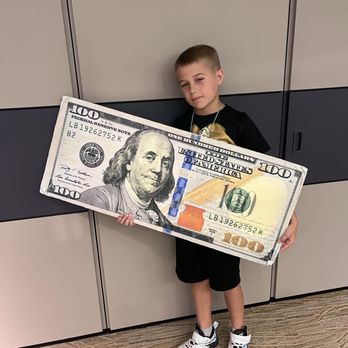
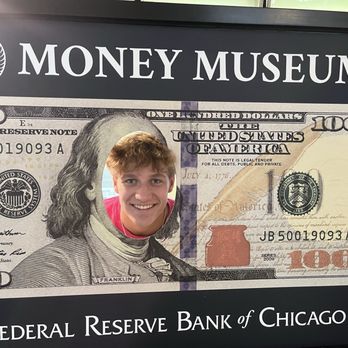
This was a fun little and FREE museum that we stopped by when we were visiting Willis (formerly Sears) Tower. Located at the Federal Reserve Bank of Chicago, you just need to show your ID at the front desk, and then security will buzz you in. You'll put your bags through the scanners and walk through the metal detectors. Once you clear security, you can enter the museum. They have several displays of pieces of money and explain the history of money. They have interactive activities to identify counterfeit bills and several photo op spots - put your face in a $100 and $2 bill, snap a pic of a cube of one million dollar $1 bills, a dome of one million dollars in $20 bills, and take a pic with a sleek case of one million dollars in $100 bills! There were also free samples of shredded money - "Fed Shreds" - in a small bin. At first glance, it looked like a trash can, but upon closer examination, there was actually a note that said to grab your free money sample here (one per person). This was a cute little take home souvenir to commemorate our visit. I definitely recommend popping in if you find yourself in the area!


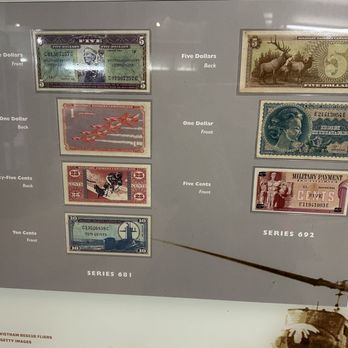
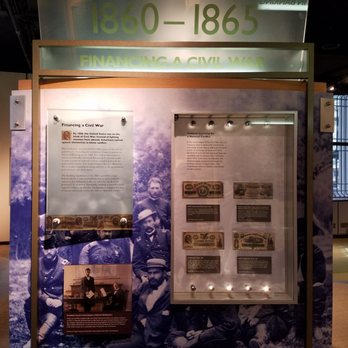
Fun, interactive museum that's in a bank! Saw actual money from centuries past and learned that American soldiers once had their own currency. You can try to guess which bills are counterfeit and play around with a inflation display. Great photo opportunities with a cube of one million dollars in single bills and a briefcase of one million dollars! Plus free admission with complimentary bag of shredded money.


Really fun and free interactive museum inside the Federal Reserve Bank. Make sure that all adults on the visit have a form of official identification (driver's license, passport, etc.). On the way in you have to walk through detectors, you have to take out cell phones/electronics, and your bag gets scanned. Inside are really nice interactive exhibits. I'd say that it's definitely not something that young kids would find interesting, but definitely good for tweens and up. The finding counterfeit money identification and understanding inflation was a hit. We spent around half an hour inside with the exhibits. While you are in there, you can't help but think of Austin Powers/Dr. Evil saying 'One Million Dollars' while trying to run away with the million dollar cube. You can't take a million dollars, but you can get a free bag of shredded money 'Fed Shreds'.


Cool little FREE museum! Stopped by here during my first trip to Chicago. There are some interactive activities and historical information that was interesting. You can see what one million dollars looks like too! It's pretty small so you'll prob only spend 30 minutes here, but I'd recommend you check it out!


The Chicago fed museum was a cool and Free museum to learn history about money recommend especially for families with kids


As chairman of the federal reserve board, I can handle anything. Including Aliens. In case anyone's asking, the answer is: it's aliens. And possibly lowering rates. Jpow can handle inflation, I'll handle the Aliens. Be aware you're going to need to go through a metal scanner to get in and will be asked to show your ID before that. This is a fun place! It has a lot of interesting things in there. It's honestly a good location with people of all ages, and it's a reasonable stop if you're going downtown from Ogilvie as this place is effectively in the middle in either direction. The one thing I did notice is that the scanners/lights/etc for counterfeit money were malfunctioning or in disrepair. In either case, they weren't working. So I guess that means everyone can go counterfeit some money since the Fed can't stop you! Don't let The Man get you down! I kid. Additionally, I did see some spanish materials for those who may also benefit from multilingual options.

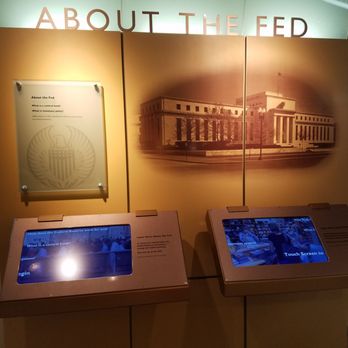
I'm giving it five stars because it is interesting and kinda unusual! There are several educational displays teaching about the evolution of money, displaying all the different types/coins/bills from the beginning of bartering until today. You also learn about the federal reserve, inflation. There are super neat displays that show various iterations of a million dollars. There is a huge cube of one dollar bills (which weighs over 2000 pounds). There is a stack of twenties. There is a case of Benjamin's. You learn about Alexander Hamilton, the centralization of currency, how money is minted, and how to spot counterfeit money. There are a lot of interactive displays that would be very cool! Except the video/talking displays are so close together that if you're playing one and someone else is playing the next one, it makes it a cacophony of misery. This spot is also pretty small and can get quite crowded. You do have to show an ID upon entry, walk through a medical detector, and send all the items on your person through an X-ray machine. Free and overall fun, but I found it tough to enjoy to the fullest because of the small size and closely spaced displays.

It's free and you have great photo opportunities with a million dollars and free shredded money. There's a lot of great history and interactive activities. Be sure to bring an ID (if old enough to have one) and be aware that your items will be scanned when coming in. We stayed for 30 minutes or so but could be longer.


5 star experience here! If you're into money ( who isn't?), and you'll find a wealth of information here! Historical data on how money came into existence and its development throughout the years. Interactive and informative displays about money and how to detect authenticity! Best of all, it's free to enter! You will need to go through security and a screening to enter. There is even a free souvenir bag of shredded currency that you may take with you. Thank you Money Museum for a five star experience! Recommended for all ages. read more

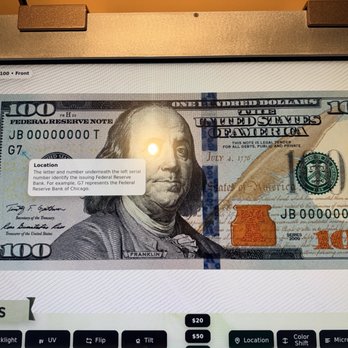

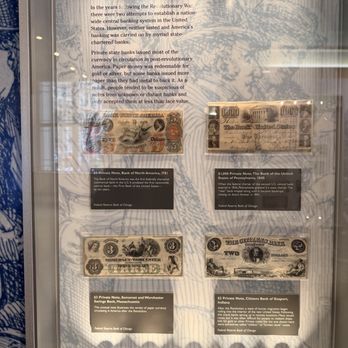


The Money Museum is a great free museum and an interesting place to learn about the history of the U.S. Federal Reserve System. There is a lot of information throughout the museum, along with interactive exhibits and several visual displays that really showcase what $1 million looks like. I'm the type of person who likes to go through every exhibit, so I spent a good 2.5 hours exploring the museum. While that may seem like a long time, there was plenty to see and learn. I was able to learn about the origins of U.S. currency, the different types of military currency used during various wars, and the role and responsibilities of the Federal Reserve Chair. The interactive exhibits also helped make some of the information more engaging and easier to understand. Overall, this was a great experience, especially considering that admission is free. read more




Free exhibit to learn about the federal reserve and what they do! I have been to several of the mints and reserves already but though this one was high on the list. There is a large cube of $1 million in dollar bills that was impressive to see. Lots of history and information on the signage, plus interactive exhibits throughout. read more


Off the beaten path Musuem that kept everyone (young and old) interested. Well worth the price of admission (free) and souvenirs for all. We all loved seeing the different ways that a Million dollars was displayed and the history buff LOVED all the exhibits. Don't forget to bring ID for all adults. read more


One of the most novel museums in Chicago, a city known for its museums, is the Federal Reserve Bank's Currency Museum. A "museum of money," if you will. Maybe that sounds boring but ask yourself: Have you ever actually seen a million dollars? What about THREE million dollars? This museum, which is one the first floor of the Chicago Federal Reserve Bank, has displays of a million dollars in singles (that's the official name for $1 bills), $20 bills and $100 bills. But there's so much more to see ... and DO ... in this little museum. There are displays showing the history of modern currency from around the world. These include Deutsch Marks, French Francs, Italian Lire, and others that were replaced by the Euro. There are also examples showing how currencies have evolved within different countries. Vietnamese currency, for instance, changed several times between the end of World War II and the end of the Vietnam war. The North Vietnam government introduced its currency, called đồng, in 1946. The word "đồng" implies money in Vietnamese. The đồng replaced the French Indochinese piastre. Similarly, the South Vietnam currency was also dominated by piastre notes, which was replaced by đồng in 1953. The capture of Saigon in 1975 led to the change in the name of the South Vietnam currency to liberation đồng. The museum also features a variety of exhibits focused on economics, money, and the roles of the Federal Reserve. One hands-on exhibit encourages visitors to try their hand at detecting counterfeit notes. But back to the million dollar displays. The display that dominates the room is a huge cube that contains one million $1 bills! The ones are bundled in packs of $50 each. The cube contains packages in 19 rows by eight columns by about 132 layers. That means about 20,064 packages of $50 each, or $1,003,200. My guess is that the Fed took 64 packages out of the last layer to make the math work. Ever seen a movie where some bad guy is demanding several million dollars in ransom or some other payment and a courier with a small briefcase is dispatched to deliver it? The display of one million dollars is $100 bills blows that unrealistic scenario out of the water. $1 million in hundreds is 10,000 notes (another word for bills). Bundled in packages of 100 bills, or $10,000 per package, that means 100 packages. Easy enough to fit $1 million into a briefcase, but not much more. In between, there is also a display of $1 million in $20 bills. Other interactive exhibits test visitors' knowledge about the Federal Reserve, good financial planning and budgeting practices, and skills tests to see if a visitor has what it takes to become a successful banker. As a former loan officer, I'm pleased to report I did quite well, but it might be a challenge for those without banking or lending experience. Other exhibits show how the Fed deals with currency that is too worn out to continue using. Visitors are invited to help themselves to "Fed Shreds," money that has been taken out of circulation and finely shredded. These are the only "free samples" the museum has to offer. Don't ask. On the way out, visitors walk over the Money Pit, a large glass-covered pit filled with coins illuminated by constantly changing colored lights. A fun way to end a visit. The museum, located at 230 S. LaSalle St. about two blocks west of the Jackson Station on the "L's" Blue Line, is open from 10 a.m. to 5 p.m. Monday through Friday, except for Federal holidays. There is no admission fee but guests must show a REAL-ID compliant identification and pass through a metal detector. read more


Need something to do in Chicago that's free? Definitely stop by the Money Museum inside the Federal Reserve Bank of Chicago. It was so interesting how it talked about the history of American currency and how inflation happens throughout the years. You also get to test whether a bill is fake or real as well as be a consultant and see if you would approve someone of a loan or not. Very fun activity, don't miss out on it! read more


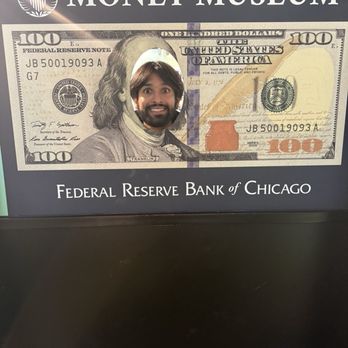


This was a fun little and FREE museum that we stopped by when we were visiting Willis (formerly Sears) Tower. Located at the Federal Reserve Bank of Chicago, you just need to show your ID at the front desk, and then security will buzz you in. You'll put your bags through the scanners and walk through the metal detectors. Once you clear security, you can enter the museum. They have several displays of pieces of money and explain the history of money. They have interactive activities to identify counterfeit bills and several photo op spots - put your face in a $100 and $2 bill, snap a pic of a cube of one million dollar $1 bills, a dome of one million dollars in $20 bills, and take a pic with a sleek case of one million dollars in $100 bills! There were also free samples of shredded money - "Fed Shreds" - in a small bin. At first glance, it looked like a trash can, but upon closer examination, there was actually a note that said to grab your free money sample here (one per person). This was a cute little take home souvenir to commemorate our visit. I definitely recommend popping in if you find yourself in the area! read more


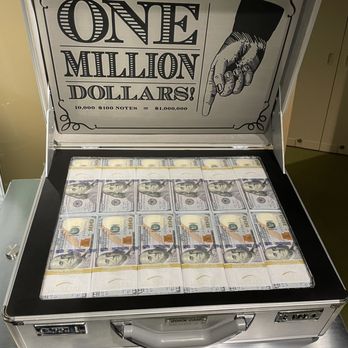

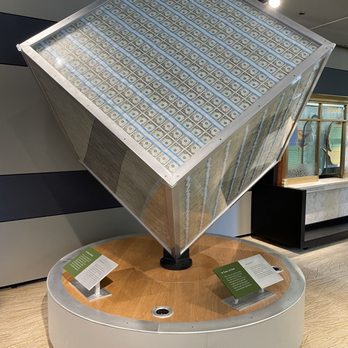

Fun, interactive museum that's in a bank! Saw actual money from centuries past and learned that American soldiers once had their own currency. You can try to guess which bills are counterfeit and play around with a inflation display. Great photo opportunities with a cube of one million dollars in single bills and a briefcase of one million dollars! Plus free admission with complimentary bag of shredded money. read more


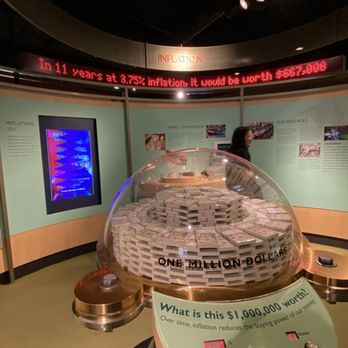


Really fun and free interactive museum inside the Federal Reserve Bank. Make sure that all adults on the visit have a form of official identification (driver's license, passport, etc.). On the way in you have to walk through detectors, you have to take out cell phones/electronics, and your bag gets scanned. Inside are really nice interactive exhibits. I'd say that it's definitely not something that young kids would find interesting, but definitely good for tweens and up. The finding counterfeit money identification and understanding inflation was a hit. We spent around half an hour inside with the exhibits. While you are in there, you can't help but think of Austin Powers/Dr. Evil saying 'One Million Dollars' while trying to run away with the million dollar cube. You can't take a million dollars, but you can get a free bag of shredded money 'Fed Shreds'. read more


3 years ago
Cool little FREE museum! Stopped by here during my first trip to Chicago. There are some interactive activities and historical information that was interesting. You can see what one million dollars looks like too! It's pretty small so you'll prob only spend 30 minutes here, but I'd recommend you check it out! read more


2 years ago
The Chicago fed museum was a cool and Free museum to learn history about money recommend especially for families with kids read more


4 months ago

As chairman of the federal reserve board, I can handle anything. Including Aliens. In case anyone's asking, the answer is: it's aliens. And possibly lowering rates. Jpow can handle inflation, I'll handle the Aliens. Be aware you're going to need to go through a metal scanner to get in and will be asked to show your ID before that. This is a fun place! It has a lot of interesting things in there. It's honestly a good location with people of all ages, and it's a reasonable stop if you're going downtown from Ogilvie as this place is effectively in the middle in either direction. The one thing I did notice is that the scanners/lights/etc for counterfeit money were malfunctioning or in disrepair. In either case, they weren't working. So I guess that means everyone can go counterfeit some money since the Fed can't stop you! Don't let The Man get you down! I kid. Additionally, I did see some spanish materials for those who may also benefit from multilingual options. read more

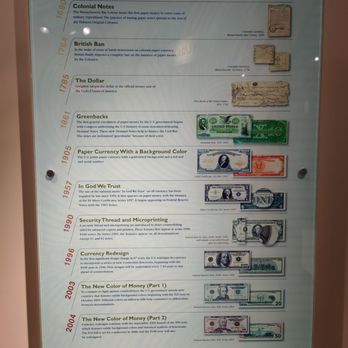
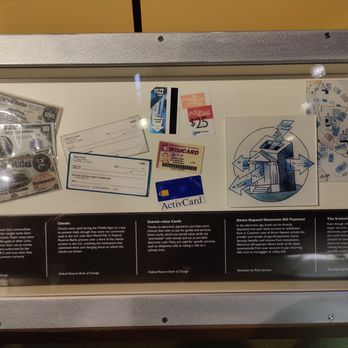


I'm giving it five stars because it is interesting and kinda unusual! There are several educational displays teaching about the evolution of money, displaying all the different types/coins/bills from the beginning of bartering until today. You also learn about the federal reserve, inflation. There are super neat displays that show various iterations of a million dollars. There is a huge cube of one dollar bills (which weighs over 2000 pounds). There is a stack of twenties. There is a case of Benjamin's. You learn about Alexander Hamilton, the centralization of currency, how money is minted, and how to spot counterfeit money. There are a lot of interactive displays that would be very cool! Except the video/talking displays are so close together that if you're playing one and someone else is playing the next one, it makes it a cacophony of misery. This spot is also pretty small and can get quite crowded. You do have to show an ID upon entry, walk through a medical detector, and send all the items on your person through an X-ray machine. Free and overall fun, but I found it tough to enjoy to the fullest because of the small size and closely spaced displays. read more


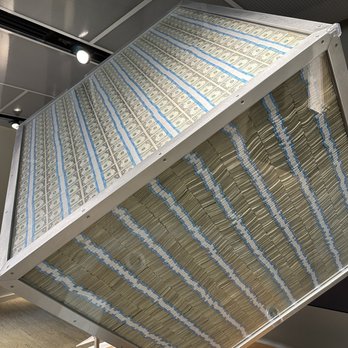

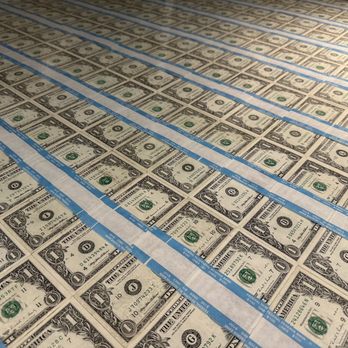

1 year ago
1 year ago
It's free and you have great photo opportunities with a million dollars and free shredded money. There's a lot of great history and interactive activities. Be sure to bring an ID (if old enough to have one) and be aware that your items will be scanned when coming in. We stayed for 30 minutes or so but could be longer. read more



1 year ago

Museum was great! It is a tiny museum and I would not make a special trip to see it on it's own. It is great for kids. Maybe it teaches them the value of money? Well at least it teaches the history and how to spot a counterfeit. Parking is expensive in the area but, if your around it's free and not a big time commitment. read more


2 years ago


3 years ago
This place is truly fascinating to visit and explore the world of money! What's even better is that admission is free. As a souvenir, you can even take home a bag of shredded money. One of the highlights for me was discovering old colonial currency, something I had never seen before. The museum has numerous captivating exhibits, including ones that teach you how to detect counterfeit money, delve into the history of currency, explain the impact of inflation on money, reveal what money is made of, and showcase the life cycle of currency through an incredible and massive marble display. Although I wished I could have witnessed the money-making process firsthand, I understand that it's not possible due to security reasons probably. Such neat and educational outing. To fully absorb all the information and truly appreciate the museum, plan for about 2 hours and be prepared to dive into the fascinating world of money. Don'[t forget your photo ID as you must have this to get in and you must go through a security scanner. read more
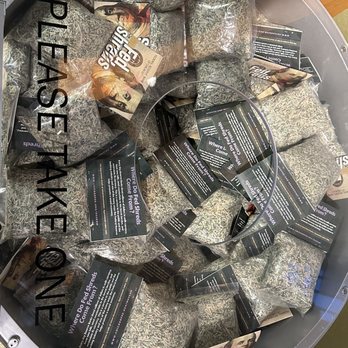


Came here with friends on a weekday! It's not very well-known that you can just walk in, but it's a great free museum located in the bank that's educational and fun! Although the museum is small, you learn a lot about the history and process of printing money and preventing theft and fraud. You do need to go through security if you wanna check it out, which is reassuring. Doesn't take that long to walk through either. They even had a curator sitting at her desk ready to answer any questions you may have! They also give out shredded money as souvenirs. Definitely would recommend checking this out if you're by Union Station. read more


3 years ago
Can't really complain, as it was free. Nice 40 minute stop. Only complaint is we had to come back another day because we didn't know we needed an ID. read more


This is a sleeper exhibit in Chicago. It doesn't seem to be all that well-known but it's a must-do when you're in town. It's inside the Federal Reserve building so once you go inside, the officer at the front desk will ask if you're there for the money museum or not. You'll be required to present another agent with photo ID and go through security/metal detectors, before going inside. We were there for about 30-40 minutes before attending a seated verbal tour led by a Fed employee. This verbal tour finished with a short video explaining the Federal reserve. There are tons of hands-on activities to do inside the exhibit. You can take little quizzes on Fed decision making, make your own currency, and inspect real/fake bills. There is also a cube a million dollars casually rotating in the middle of everything. The money museum is a great location to learn about what the Fed does and the history of US currency. read more


8 years ago
If you live in the City Of Chicago or just visiting please take a moment to visit the Money Museum. It's well worth the time and effort to visit. Very informative information about the Federal Reserve Bank & a great place for kids and teens to learn about money. I went on my lunch with my bestie and had nice time. The place is small but has some interactive exhibits for you to enjoy. You have to enter through the main doors of the Federal Reserve Bank, show your ID and then go through the security screening process. FYI... Please bring your I.D and make sure that you do not have any sharp objects in your purse or jackets. O yeah did I mention that it is Free. No Cover Charge to enter and experience some fun. You can not beat it. It's a must place to come and visit. Fun & Free for the whole family and no age limit. I guarantee no matter what the age you will find it useful and informative. Yes, this museum is free and open to the public year round from 9 A.M. to 4 P.M ( Monday through Friday) except on Bank Holidays. All adults must bring a I.D and bags & purses must be searched. Get a chance to see $1,000,000.00 dollars, see if you can detected counterfeit money, be able to create your own money, military money from 3 different wars, stand and take pics on top of $50,000.00 in coins and learn about the history money. The good thing is you will be able to leave with a few souvenirs (a bag of shredded money) many memories of pics. Sorry you can't try to piece the money together and spend. Great place to visit with the family. Plan your next visit. read more
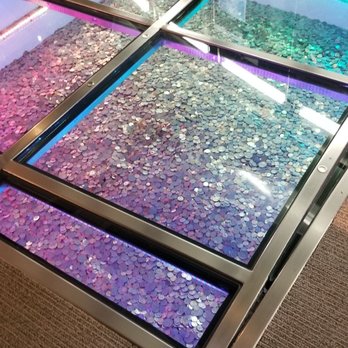




A great museum to bring kids of all ages! A museum all about money!!! Enter through the main doors of the Federal Reserve Bank, show your ID and then go through the security screening process. This museum is free and open to the public year-round from 9 a.m. to 4 p.m., Monday through Friday, except on Bank holidays. Adults must bring a government issued ID, and are subject to all bags being searched. Take a look at $1,000,000,.00 dollars, try your luck at detecting counterfeit money, create your own money, see military money from 3 different wars, stand on top of $50,000.00 in coins, learn about the history of U.S. money. if you are bringing children, be sure and take a tour, you will watch a short film that tells kids that "money doesn't come with instructions," the kids head into the museum for a scavenger hunt that familiarizes them with the exhibits. They also receive "Be Money Smart" comic books. Your can learn all about the federal reserve, and there are lots of interactive exhibits. You even get to take home a souvenir bag of shredded money, just don't try to spend it anywhere. read more





8 years ago
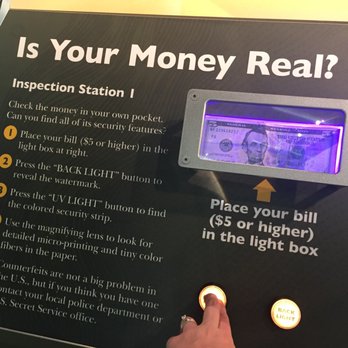
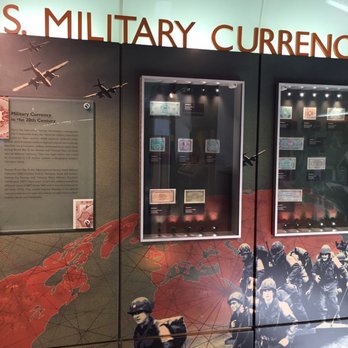
Bottom Line: A free museum with lots of interactive exhibits about the Federal Reserve Bank and US currency. Inside the Chicago branch of the Federal Reserve Bank is a museum dedicated to our nation's money. The museum covers the history of money going back to the days of trade and the current issues with currency like counterfeiting. The interactive exhibits here are great! I enjoyed using their inspection stations to see if my money is real or fake. I also liked testing my ability to make sound decisions in loaning money. I failed miserably at the challenge of deciding if money should be shredded or recirculated but I still had fun doing it. My husband and I were the only ones in the museum so we had fun shoving our heads through the oversized bills and taking pictures of ourselves. On a serious note, I learned that the Federal Reserve Bank is not funded through Government appropriations. Rather, it is funded by the interest it earns on loans. I also learned that US troops use to earn a special currency that they could more easily and legally use on foreign soil. It was called Military Payment Certificates or MPC. There was a great quote from a Korean War Vet saying how exchanging money to and from the States made him feel. To enter the museum, enter through the main doors of the Federal Reserve Bank, show your ID and then go through the security screening process. read more




7 years ago
Don't let the small size of the museum fool you. The Money Museum is a great stop on any tourist itinerary. Since it's a bit small, it's also easier to finish fast, and it's fun as hell. The Money Museum is located within the Federal Reserve Bank of Chicago in the Loop. There's no entry fee and its hidden nature keeps the crowds small. I came here after work on a Friday after giving a presentation on financial planning. What better way to wrap up my workday by learning about how our nation's money work? I was impressed by what I found here. Most exhibits are interactive, many opportunities to take pictures, and souvenirs are free. The staff was friendly and open to answering questions and the entire museum can be taken in any order. The exhibits were informative in explaining what the Fed does and why it's important. Even as someone who's familiar with some of the things the Fed does, I learned a ton from this museum. Expect an hour and a half well spent if you make a stop here. 5/5. Great hidden gem that's free & not too crowded. What more can you ask for? read more


Money, money, money. If you want to see how millions of $1 and $20 billion stack up, this is the place. You can hug it, kiss it, touch it, drew on it but you cannot take them home. But you can have a Benjamin Franklin $100 bill with your face. This museum is free. The security is tight because they are part of Federal Reserve. The are twelve Federal Reserve in the country and Chicago has one. The Federal Reserve was created at 1913. Money Museum is part of the this Reserve. The have displayed of military currency. They also have different bank notes over different time of the history. The also have the display of $10,000 bank note. There are 350 is in the current circulation, if you have one don't spent it with the face value. The market price for the $10,000 note is about $140,000. 14 time of the actual value. read more




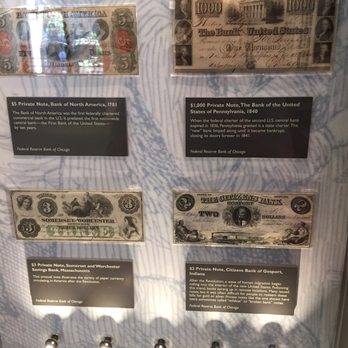

What a fun museum and most of all it's free!!! And they give you $346 in free money. You can also take a free photo with a million dollars!! I'm glad The big Bus Tour guide told us about this cute museum! It was great to get Out of the cold Windy financial district To visit with all This money. And all you had to do was show Your Id and go through a metal detector. Our photo is really Cute too holding a briefcase Of $1.000.000!! read more


9 years ago
FREE ADMISSION! That was the deciding factor of going to the Money Museum during my lunch break. It's right across from the Chicago Board of Trade and was a good way to spend a small portion of my day. The museum is little and talks all about money! What more can you ask for? You get to see $3 million dollars in 3 different ways and get to learn about money. Don't expect anything extravagant (besides the extravagant amount of money!!). The museum itself is very small but worth a trip! Don't forget your ID. Although it's free, they do ID you and you are required to go through a security check. read more
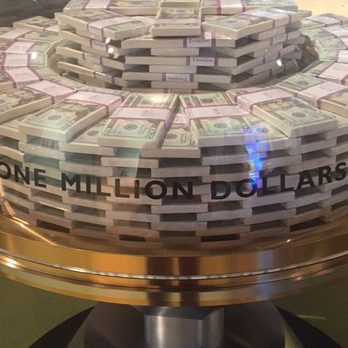


Free museum! This museum was suggested to me for a group of students...And it was a great suggestion! I did some research online and yelp (of course) and decided to give it a go. When you walk in you show photo ID and then go through security (like at an airport). Then when you walk in there's lots of fun stuff to do. They have some displays of old money & some history. They also have some hands on fun - like quizzing yourself on touch screens, trying to see if you recognize counterfeit money & photo ops - oh and there's a place where you can have your picture taken & they give you a print out! And as everyone else mentioned you also get a free bag of shredded money as a souvenir. To top it off the money displays were pretty cool- especially if you want to see what a million one dollar bills looks like! Overall, it was a great museum: Interactive, interesting and fun. Give yourself about 30 minutes (maybe longer if you want to read everything!) read more


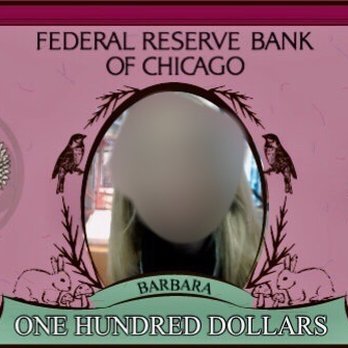


Note that there is a security check before you enter the museum! Items not allowed will be held for you until you exit. FREE museum! Interesting, interactive, educational. Great for children and adults. There was also a presentation given by a FED employee, who talked about what his job is, how the Federal Reserve Bank works, etc. Don't forget to grab a bag of shreds! ;) **When you walk in, go all the way to the left hand side and grab a Scavenger Hunt pamphlet! It's great to make learning more fun and interactive. read more


It's one of the best "free" museums I've visited so far. However, before heading to the location, leave your pepper spray at home and make sure bring a government-issued photo identification, for the security will promptly stop you at the Money Museum entrance and ask to see it, followed by the airport-style metal detector. I found this place on Yelp since I was looking for some free entertainment in the city (recommended after the Black Friday weekend shopping...though I worked 32 hours at my job...I splurged myself with some purchases on my wish list). I also noticed that they offer a tour/presentation at 1pm from Mondays through Fridays, except bank holidays. Amy, who works for the Federal Reserve Bank of Chicago, gave us a nice, educational, and informative overview on what this agency does. I didn't expect to learn this much about history on U.S. currencies, interest-rate regulations, detections on counterfeit bills, and other miscellaneous facts that I never paid attention to prior to visiting this museum. As a matter of fact, my store recently was issued a notification from the local bank that we have an account with about receiving at least one (1) $100 counterfeit bill. I guess the knowledge I gained this afternoon will certainly put into a good use, won't it? The museum itself is rather small, but I spent an hour and half working through different stations and exercises. There are two (2) souvenirs that visitors can take home: 1) $364 shredded money in a bag, and 2) a photo with a briefcase stuffed with bill bundles. Some Yelpers mentioned on their reviews that postcards are available at their comment booth. Photography is allowed INSIDE the museum. Nevertheless, picture-taking isn't allowed on other parts of this federal building. The closest "El" stop is LaSalle/Van Buren (brown, pink, purple, and orange lines), but the Jackson stop (blue and red) is two (2) blocks east to the museum. The museum entrance is on the corner of La Salle and Jackson, diagonally across from a McDonald's. read more


8 years ago
It is hard to beat a free museum open early in Chicago. Especially when the museum is the Money Museum which everyone loves! This museum is part of the Federal Reserve Bank of Chicago located in downtown open early Monday through Friday, but closed weekends. After a decent security check, you enter the mostly modern and interesting museum. They do a good job showing the history and use of central banking in the United States. Prior to the federal reserve system, we had varying success with other central banks and their varying success in helping the economy. You can even try your luck with several economic simulators. Hamilton would be proud of his creation, especially the various displays of one Million Dollars. FYI, one million dollar bills weighs a ton. $1,000,000 in hundreds is much easier at about 20 lbs which is why so many criminals use them. However as is well known, the best way to rob a bank is to own one! Fortunately the regulators at the Federal Reserve keep an eye on our banks and help protect our economy by managing supply and demand for dollars. You can even get a souvenir bag of destroyed currency! The Money Museum is a fun and free way to learn about those dollars in your pocket and the global economy they support. read more


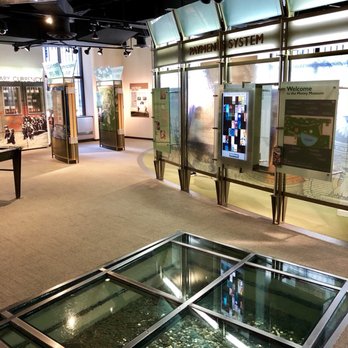

7 years ago
This is a really nice free museum. When you walk in, you go through security. The security guard was very nice and told us that we can take pictures of the exhibit but not of the lobby area. We went within 30 minutes of close and could have used some extra time so go at least an hour before I would say. We were watching the free movie when the lights came on and the screen went away so when they say 5, they mean it lol. The exhibits are well done and it is a good way to spend an hour. read more


Page 1 of 3