MIDWEST BUDDHIST TEMPLE · YELP ASSISTANT
Ask Yelp Assistant
Midwest Buddhist Temple Photos


More like Midwest Buddhist Temple
Recommended Reviews - Midwest Buddhist Temple
Start your review...


Reviews With Photos


First, the low reviews are rating the 'Ginza Festival' not the temple. This is kind of like rating France on a bike ride. That aside read YAS M.'s review. I could not have done a better job of describing it. So I'll stick with my personal experiance. I have a doctorate in religion. This came about not from intent, but rather from doing extensive research on all different religions. In the perhaps hundred places I have attended service this place resonated with me the most. I can't explain it fully, but I feel at peace here the most. I encourage you to drop by for SUnday services at 10:30 on Sundays. It's very low pressure and friendly. Anyway, I love the place, the people and the treachings. I could not give it a high enough rating.


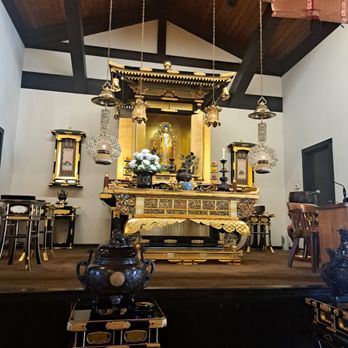
Buddhism varies quite a bit by nationality, sect, ethnicity, and geography. This is a Japanese-American Buddhist temple of the Jodo-Shinshu "Pure Land" sect, founded by Issei and Nissei Japanese-Americans fleeing the growing scapegoating racism of the American West during WWII. The American Midwest was relatively more tolerant, but some of the idiosyncrasies of the practices of this sect made blending in with a minimum of conflict possible as well. The temple is set up more like an American Protestant Church with Japanese architectural influence, rather than a traditional Japanese mainstream temple - you keep your shoes on and sit in Western style pews, instead of monks, ministers conduct the services on Sunday mornings, Dharma talks mimic homilies or sermons, the opening chant is the only Japanese for the English services, and some of the hymns are actually Protestant traditional hymns with adjusted words. The Pure Land metaphor of nirvana sounds like Christian heaven, the pseudo-deification of Lord Buddha can sound superficially like references to the Judeo-Christian God. Thus, I recommend a visit to this temple to tourists, visitors, travelers, especially those interested in comparative religion, immigration history, cross-cultural studies, and members of any other Buddhist group. Over the years, the members of this temple have come to resemble the "dual congregation" pattern described by Paul Numrich (Old Wisdom in the New World, 1999) there's the ethnic Japanese-Americans who come here for the holidays, the cultural classes for children, the food events (for example breakfast for holiday volunteers is often fried baloney and short-grain steamed white rice, Internment Camp food a generation or two later), but there's also the White converts who tend to pay much closer attention to the Dharma talk and Buddhist philosophy presented by the learned ministers (with less interest in the ethnic sub-cultural aspects). I also recommend the temple as a place to visit if you're enrolled in a college or graduate comparative religion, anthropology or sociology of religion class. I'm going to warn you that at the end of service they ask visitors to stand up and say hi, but you really don't have to if you're embarrassed, just stay seated and look down. Look for the annual Ginza Holiday festival in August, the annual fundraiser featuring delicious Terriyaki chicken (or vegetarian Boca burgers), and Mochi-Tsuki in December. Mochi is a Japanese and Hawai'ian-Japanese dessert that is an acquired taste, but the pounding required in preparation is surprisingly therapeutic and helps Buddhists be non-violent. You have to try it out to understand. Check the website for services (not quite every Sunday, and one service is in Japanese), and classes.


It was their Ginza Holiday annual event! They had lots of food vendors and crafts! Performances on the main stage by Minyo dancers, Taiko drumming, Martial arts demonstrations and other groups. It was very entertaining! read more


2 years ago

13 years ago
First, the low reviews are rating the 'Ginza Festival' not the temple. This is kind of like rating France on a bike ride. That aside read YAS M.'s review. I could not have done a better job of describing it. So I'll stick with my personal experiance. I have a doctorate in religion. This came about not from intent, but rather from doing extensive research on all different religions. In the perhaps hundred places I have attended service this place resonated with me the most. I can't explain it fully, but I feel at peace here the most. I encourage you to drop by for SUnday services at 10:30 on Sundays. It's very low pressure and friendly. Anyway, I love the place, the people and the treachings. I could not give it a high enough rating. read more


Buddhism varies quite a bit by nationality, sect, ethnicity, and geography. This is a Japanese-American Buddhist temple of the Jodo-Shinshu "Pure Land" sect, founded by Issei and Nissei Japanese-Americans fleeing the growing scapegoating racism of the American West during WWII. The American Midwest was relatively more tolerant, but some of the idiosyncrasies of the practices of this sect made blending in with a minimum of conflict possible as well. The temple is set up more like an American Protestant Church with Japanese architectural influence, rather than a traditional Japanese mainstream temple - you keep your shoes on and sit in Western style pews, instead of monks, ministers conduct the services on Sunday mornings, Dharma talks mimic homilies or sermons, the opening chant is the only Japanese for the English services, and some of the hymns are actually Protestant traditional hymns with adjusted words. The Pure Land metaphor of nirvana sounds like Christian heaven, the pseudo-deification of Lord Buddha can sound superficially like references to the Judeo-Christian God. Thus, I recommend a visit to this temple to tourists, visitors, travelers, especially those interested in comparative religion, immigration history, cross-cultural studies, and members of any other Buddhist group. Over the years, the members of this temple have come to resemble the "dual congregation" pattern described by Paul Numrich (Old Wisdom in the New World, 1999) there's the ethnic Japanese-Americans who come here for the holidays, the cultural classes for children, the food events (for example breakfast for holiday volunteers is often fried baloney and short-grain steamed white rice, Internment Camp food a generation or two later), but there's also the White converts who tend to pay much closer attention to the Dharma talk and Buddhist philosophy presented by the learned ministers (with less interest in the ethnic sub-cultural aspects). I also recommend the temple as a place to visit if you're enrolled in a college or graduate comparative religion, anthropology or sociology of religion class. I'm going to warn you that at the end of service they ask visitors to stand up and say hi, but you really don't have to if you're embarrassed, just stay seated and look down. Look for the annual Ginza Holiday festival in August, the annual fundraiser featuring delicious Terriyaki chicken (or vegetarian Boca burgers), and Mochi-Tsuki in December. Mochi is a Japanese and Hawai'ian-Japanese dessert that is an acquired taste, but the pounding required in preparation is surprisingly therapeutic and helps Buddhists be non-violent. You have to try it out to understand. Check the website for services (not quite every Sunday, and one service is in Japanese), and classes. read more


5 years ago

17 years ago

It is August and once again it is time for the Ginza Festival, where there are a deluge of people descending upon the Buddhist temple grounds in Old Town ! The Midwest Buddhist Temple has been a fixture in Old Town since July 1944, and has been located on its' present site since 1948. For the past 59 years the Midwest Buddhist Temple has held the Ginza Festival in mid August. This festival is marked with artists, representing the different crafts that Japan is famous for, the festival has many different interesting exhibitions of art and nature. In addition , the guest artists do demonstration of their different techniques, these pieces can be purchased from the artists at he festival. On the main stage there are presentations including: dancing , Taiko Drum, Kendo (fencing). Aikido, Judo, etc... In addition this year the festival was lucky enough to have Yoko Noge and Japanese combine their unique fusion of Japanese "Minho" folk music with Chicago Blues. It was fantastic , Yoko got everybody up out of their seats and involved in their music, the place was rocking! No one knew what was going to happen next, the music kept getting better and better! Finally, don't forget to purchase some of the famous teriyaki chicken made fresh right at the festival! There is always a line of people snaked around the food vendors waiting to purchase the chicken teriyaki meal. The scent of the teriyaki permeates the whole festival, motivating the customers to go and get that chicken. In addition, there are many other items that can be purchased with tickets from the food stands, such as: sushi, udon, vegetable plate, corn on the cob,edamame, sno cones, etc... Along with soda, lemonade, beer and sake are served with proof of ID. I am giving the Ginza Festival five stars, it is done so well, there is a lot of teamwork involved in making this a continued successful event in the community. All the visitors are happy and respectful of each other, everyone looks like they are having a wonderful time and are content. This festival helps raise money for different programs throughout the year for the Midwest Buddhist Temple, which in turn gives back to the Old Town Community. I can't wait to see next years 60th Ginza Festival, it should be outstanding! read more


12 years ago

16 years ago


19 years ago

12 years ago

19 years ago

10 years ago
More info about Midwest Buddhist Temple
Ask the Community - Midwest Buddhist Temple
Review Highlights - Midwest Buddhist Temple





Why does Yelp recommend reviews?
1 review that is not currently recommended
The reviews below are not factored into the business's overall star rating.
17 years ago


