Wikipedia says:
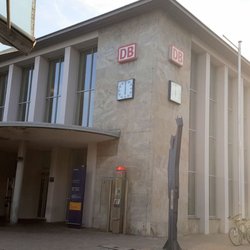
Originally built as in the neo-Gothic…read morestyle, it was rebuilt by Karl Zenger, in 1900 largely in the Neo-Baroque style. The most striking feature is the muschelkalk which characterises the exterior façade. The portals to the individual halls are richly decorated and primarily depict symbols of technological progress, for example a winged wheel above the portal in the Mittelhalle. The lounge, in which the present-day travel centre is located, was built in 1904/1905 by Bruno Paul in the Jugendstil. Sections of the walls are decorated with fine mosaics, the roof is ornamented with unobtrusive stucco. The Jugendstil lounge is one of the few areas of the station, which has survived the destruction of the Second World War.
I say:
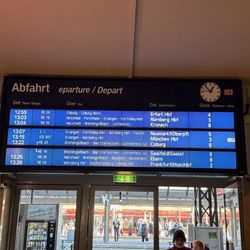
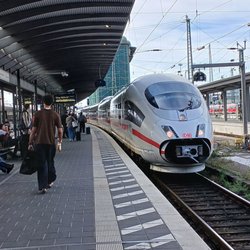
It's a very convenient train station with trains and more connecting you to anywhere you wish to go. As one of the larger stations in Germany even the high-speed trains do stop here, as well as the more local trains.
It conveniently connects directly with the subway, just take an escalator down.
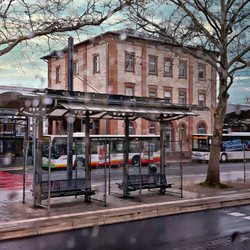
Across the street is a large station where you can catch a tram or bus.
A little further down the road are the long distance bus station where you can catch busses to take you all across Europe.
There is a large taxi stand out front of the main hall and cabs are always lined up ready to take you anywhere.
There are of course ticket machines, but also a ticket office if you need help with trip planning or ticket purchases.
There are plenty of restaurants and shops to hang out while you wait for your connections.
A personal favorite of mine is the large bookstore. I shop there even if I am not travelling.