Who in their right mind would spend 18 years and hundreds of thousands of dollars trying to restore…read morea 1944 4-8-4 steam locomotive?
Always had a passion for locomotives, and one of the highlights of my childhood was getting an electric Lionel train, complete with a steam locomotive, railway cars, caboose, rail tracks for Christmas.
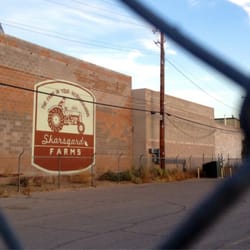
Got the address of the NMSL&RHS, and used my 10 year old GPS tracker to find the place. Not easy to see, as the museum is located on an old railway spur in an industrial section of Albuquerque (ABQ). Only a sign on post pointed me the right way.
I've seen locomotives up close, and been inside some at the Sacramento Railroad museum. Before I can even get a look, got to mount a hard hat. Two buckets of hard hats, to be cleaned, and cleaned. Didn't see anyone cleaning the to be cleaned hats, and hope the previous user of this hard hat didn't have lice!
Once fitted, the wife and I got a first hand individual tour of the locomotive. A representative of the NMSL&RHS spoke for a good half an hour, answering our questions, or rather the wife's questions, as she is an industrial hygienist, and knows all the ins and outs of hazardous chemicals involved in restorations.
Locomotive #2926 went into service in May 1944, and served until 1953, when it went into mothballs, on a static display behind a security fence in Coronado park in New Mexico, rusting away until 2000, when it was purchased by the Railroad Historical Society. Heard that the purchase price was like $100, but with a big precondition: the locomotive had to be transported from it's mothball location to a permanent storage location elsewhere.
Transporting a several hundred ton non-operational locomotive can be a daunting task, involving giant cranes. It ended up on this rail spur. The historic society set out to restore the locomotive to operating condition. Had to put in thousands of work hours, getting the right parts, and if the parts were no longer in circulation, having the parts made on the spot. The restoration is 17 years in the making, and still in progress.
One of the most expensive part of the restoration process is the half million dollars it cost to remove the asbestos coating around the locomotive, used for insulation.
2926 is a steam locomotive, but doesn't run on coal, but bunker oil. The steam tender holds up to 7000 gallons of bunker oil, the same type of oil used to power up naval ships on the high seas in WW2. 2926 has a skyroof , as the heat generated in running the engine can quickly turn the engine room into a blast furnace.
The compartment is a maze of switches, gauges, levers, pulleys and other equipment among the 4 seats. Usually they only have 2 seats, one for the conductor, and another for the guy shoveling coal. Here the back two seats are for observers, either brass in the company , or politicians.
Two tiny forward windows.
Place is open to the public only on Wednesday and Saturday. All monetary donations appreciated. No chance of me hitting the wrong lever, and starting the train down the track! No DWA!