Cancel

    Open app

    Search

    Lancaster Square Photos

    Recommended Reviews - Lancaster Square

    Your trust is our priority, so businesses can't pay to alter or remove their reviews. Learn more about reviews.
    Yelp app icon
    Browse more easily on the app
    Review Feed Illustration

    14 years ago

    New shops/cafes opening up now though, so this may change.

    Helpful 0
    Thanks 0
    Love this 0
    Oh no 0

    Verify this business for free

    Get access to customer & competitor insights.

    Verify this business

    Plas Mawr

    Plas Mawr

    4.7(9 reviews)
    0.1 km

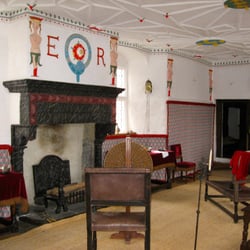
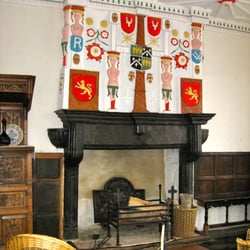
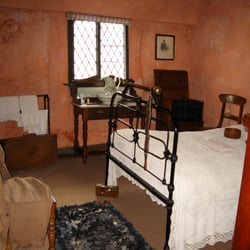
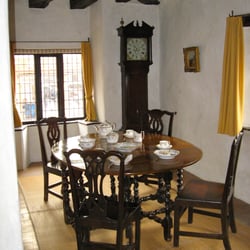
    Regarded by many as the best preserved Elizabethan town house in the UK, this historic gem is well…read moreworth a visit. It contains a wealth of decorative plasterwork and woodwork. History The house was built by Robert Wynn, a younger son of John Wynn of Gwydir Castle. He had served with the British Ambassador in Bruges, and travelled around the Continent. When he retired to Conwy, aged 50, he built himself a town house incorporating the latest features and styles, reflecting his prestige. It was built 1576-1585. After his death, a dispute over his inheritance meant the house was eventually split into a lodging house, and also functioned as a school, and then the headquarters of the local antiquarian society, before being taken over and restored by Cadw (Welsh Historic Monuments). The house This large building occupies a whole block of Conwy's streets. The main frontage consists of an elaborate gatehouse, courtyard and then the main house, which has its own courtyard and garden. The exterior has been plastered and limewashed, as it would have been originally. Inside, the rooms are a mixture of the 'working' rooms of the house kitchen, storage rooms, servants' quarters and so on, and the grander rooms intended for Wynn and his family. These have impressive fireplace mantels and panelling, and particularly large expanses of decorative plasterwork. In many places this is highly coloured, and includes decorative friezes of coats of arms, Tudor roses and other heraldic devices (and above all, Wynn's initials, RW, which appear everywhere). Another recurring motif is that of naked caryatids, carrying bowls of strawberries on their heads. They wear loincloths of leaves, and cover one breast, leaving the other bare. The plasterwork images are often touchingly naive and primitive, as local plasterers tried their best to reproduce unfamiliar images copied from pattern books. The house also has some impressive furnishings, although these have been sourced separately and are not original. In the attic, one room is furnished as it would have been in the early 19th century, as the home of a lodger, a washer-woman. Practicalities There is a guided audio tour available, which is well worth using, although the Tudor jingle which precedes each section may get irritating after a while. There are also static presentations on aspects of Tudor and later life. Access for those with restricted mobility is limited, due to the presence of stairs and uneven floors. There is also a shop at the entrance selling the usual cards, books and gift items.

    My wife and I thoroughly enjoyed touring this Elizabethan house. When you first go in they actually…read morehave clothing you can try on from that period. I would highly recommend visiting.

    Photos
    Plas Mawr
    Plas Mawr
    Plas Mawr

    See all

    Statue Of The White Rabbit

    Statue Of The White Rabbit

    1.0(1 review)
    4.0 km

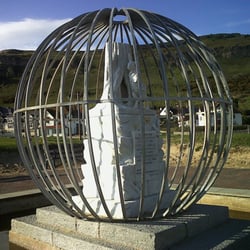
    Llandudno has for some time attempted to cash in on it's slightly dubious Alice In Wonderland…read moreconnections. Alice Liddell, the inspiration for the character of Alice was known to holiday with her family at a house called Penmorfa on the West Shore. The house later became the Gogarth Abbey hotel. Charles Dodgson, aka Lewis Carroll, is rumoured to have visited Penmorfa although the evidence appears to suggest he didn't. The Alice links are now beginning to fade. The Gogarth Abbey was briefly renamed the Penmorfa but has since been demolished. The Alice museum in Trinity Square closed down when the owner retired and couldn't find anyone willing to take it on as a going concern. So if you're an Alice fan all that's left to see is the statue of the White Rabbit. And how disappointed will you be if you go out of your way to find it. The first thing you'll notice is how small it is. The rabbit is about the size of a real-life rabbit. As the statue has been the target of vandals in the past it's now protected by a steel cage and surrounded by a "moat". The cage obstructs your view and moat prevents you from getting a close up look (unless you've planned ahead and brought wellies). If you really want a look the statue is located just past the boating lake at the West Shore but it really needs to be relocated to a more appropriate location. Preferably one where you can get close enough to actually see it and where it can safely be locked away at night.

    Conwy Town Walls - Conwy Town Walls

    Conwy Town Walls

    4.5(6 reviews)
    0.3 km

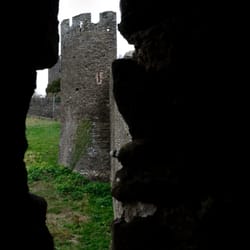
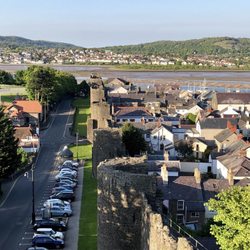
    These beautiful town walls fully encompass the town of Conwy, as they have since the 1280's. Yep,…read morethey're old, they're historical, they're beautiful, and you can totally walk all over them. As mentioned, they circle the city, so if you'd like a unique view you can make a loop around (stopping when you have to enter the castle, of course), giving you remarkable views both within and without. Along the way there are some placards posted with information in assorted towers; other towers, however, have been completely left barren so you can get a feel for how the ruins look if that's more your feel. It was fun going inside these and imagining how they stood those hundreds of years ago; you can still see the remnants of what used to be fireplaces and divided floors. I feel it's an absolute must to explore the walls, taking the time to go around inside and out to realise the magnificence of them. Anyone visiting the city must walk the walls.

    Many people will be familiar with the town of Conwy for it's historic castle. However, in addition…read moreto building the Castle, Edward I also ordered the construction of a fortified wall around the town as it was back then. The wall runs for about 3/4 mile in total and incorporates 21 turrents. Considering it was completed in 1286 it's remarkably well preserved. Although some sections are no longer accessible I would guess that around 1/2 mile of the total is open to the public. Unlike the castle there are no admission charges so it's well worth a look. Not surprisingly as the nanny state hadn't been thought of in the 1280's health and safety issues were not considered in the design. The steps up to the wall are quite steep and as the floor is made of stone it can become slippery if it rains. Therefore you really need to be fairly agile to visit. However if you can manage it you'll be rewarded with some specatular views of the town and the surrounding area. The best part is probably the highest point, alongside Mount Pleasant, where there's a turret that you can climb to the top of. Give it a go, it's free and if nothing else it's good exercise!

    Photos
    Conwy Town Walls
    Conwy Town Walls - Through an arrow loop

    Through an arrow loop

    Conwy Town Walls

    See all

    Lancaster Square - landmarks - Updated August 2026

    Loading...
    Loading...
    Loading...