Cancel

    Open app

    Search

    Beginning And End Photos

    Recommended Reviews - Beginning And End

    Your trust is our priority, so businesses can't pay to alter or remove their reviews. Learn more about reviews.
    Yelp app icon
    Browse more easily on the app
    Review Feed Illustration
    Photo of Andrew B.
    10
    387
    11146

    13 years ago

    Helpful 0
    Thanks 0
    Love this 0
    Oh no 0

    Verify this business for free

    Get access to customer & competitor insights.

    Verify this business

    Rhuddlan Castle

    Rhuddlan Castle

    (6 reviews)

    the castle has nice views ( when it's not raining, and in summer it's great…read more rhuddlan is just great, there's caravan parks ( Clwyd view and sun Valley)

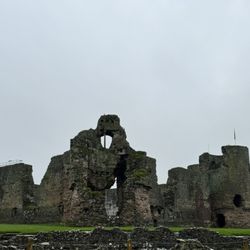
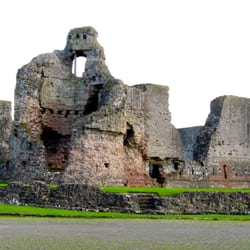
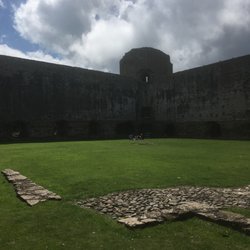
    Rhuddlan castle was one of the first of Edward I's castles to be built in north Wales, at the same…read moretime as that of Flint. There was actually a pre-existing Norman motte-and-bailey castle close by, erected in 1073, now called the Twthill, but the new design was both much larger and more advanced. Begun in 1277 and completed in 1282, it was erected during the first of Edward's campaigns in North Wales. It follows the familiar design of a strongly fortified inner ward and further concentric walls forming an outer ward, protected by a moat, in this case walled in stone. The inner ward has an unusual 'diamond' plan with huge double-tower gates at the East and West corners and single towers at the North and South. A key feature of his campaign was seaborne support, and the castle was built adjacent to the River Clwyd and close to the sea. Edward had the River Clwyd straightened to enable the castle to be provisioned by ship if the overland routes were disrupted, and a defended water-gate and dock are still well preserved. Rhuddlan was the venue for the signing of the Statute of Rhuddlan in 1284, which was the governing document for North Wales, introducing English Common Law into the Principality. It was superseded only in 1536 when Henry VIII introduced the Acts harmonising the law fully in England and Wales. The castle was attacked by the Welsh in 1294 and again in 1400 by Owain Glyndwr's forces, but held out (the town unfortunately being burned). The castle was defended by Royalist troops in the Civil War, but taken by the Parliamentary Forces in 1646. Like many castles, it was partly demolished in 1648 by Cromwell's forces to prevent its future use. It is now in the care of Cadw. Although much smaller than the later Edwardian Castles like Conwy and Caernarfon, it is still well worth a visit. There is a large car park, toilet facilities and a small gift shop. There is partial level access around the site for wheelchair users, albeit on grass or gravel paths. A walkway on the upper walls affords fine views of the surrounding countryside.

    Plas Mawr

    Plas Mawr

    (9 reviews)

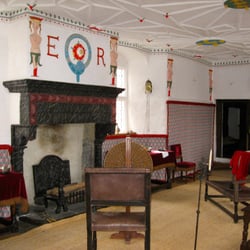
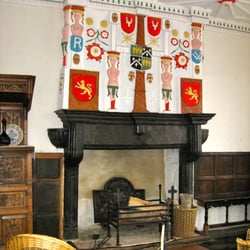
    Regarded by many as the best preserved Elizabethan town house in the UK, this historic gem is well…read moreworth a visit. It contains a wealth of decorative plasterwork and woodwork. History The house was built by Robert Wynn, a younger son of John Wynn of Gwydir Castle. He had served with the British Ambassador in Bruges, and travelled around the Continent. When he retired to Conwy, aged 50, he built himself a town house incorporating the latest features and styles, reflecting his prestige. It was built 1576-1585. After his death, a dispute over his inheritance meant the house was eventually split into a lodging house, and also functioned as a school, and then the headquarters of the local antiquarian society, before being taken over and restored by Cadw (Welsh Historic Monuments). The house This large building occupies a whole block of Conwy's streets. The main frontage consists of an elaborate gatehouse, courtyard and then the main house, which has its own courtyard and garden. The exterior has been plastered and limewashed, as it would have been originally. Inside, the rooms are a mixture of the 'working' rooms of the house kitchen, storage rooms, servants' quarters and so on, and the grander rooms intended for Wynn and his family. These have impressive fireplace mantels and panelling, and particularly large expanses of decorative plasterwork. In many places this is highly coloured, and includes decorative friezes of coats of arms, Tudor roses and other heraldic devices (and above all, Wynn's initials, RW, which appear everywhere). Another recurring motif is that of naked caryatids, carrying bowls of strawberries on their heads. They wear loincloths of leaves, and cover one breast, leaving the other bare. The plasterwork images are often touchingly naive and primitive, as local plasterers tried their best to reproduce unfamiliar images copied from pattern books. The house also has some impressive furnishings, although these have been sourced separately and are not original. In the attic, one room is furnished as it would have been in the early 19th century, as the home of a lodger, a washer-woman. Practicalities There is a guided audio tour available, which is well worth using, although the Tudor jingle which precedes each section may get irritating after a while. There are also static presentations on aspects of Tudor and later life. Access for those with restricted mobility is limited, due to the presence of stairs and uneven floors. There is also a shop at the entrance selling the usual cards, books and gift items.

    My wife and I thoroughly enjoyed touring this Elizabethan house. When you first go in they actually…read morehave clothing you can try on from that period. I would highly recommend visiting.

    Beginning And End - landmarks - Updated May 2026

    Loading...
    Loading...
    Loading...