Cancel

    Open app

    Search

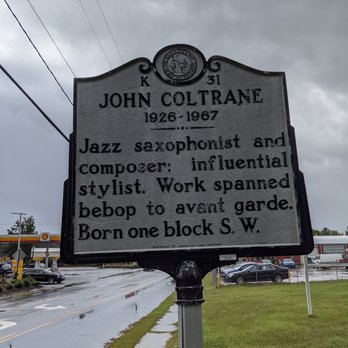
    John Coltrane Historical Marker

    4.0 (1 review)

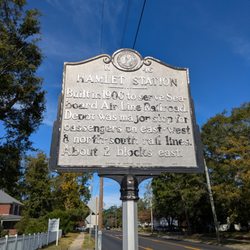
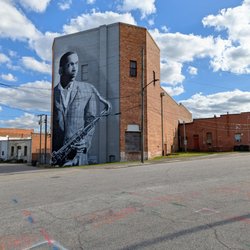
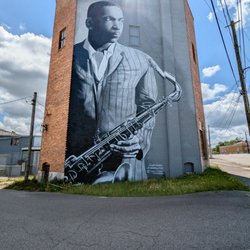
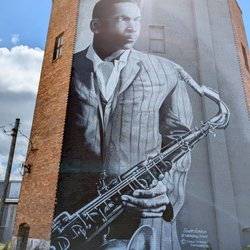
    John Coltrane Historical Marker Photos
    More like John Coltrane Historical Marker
    Recommended Reviews - John Coltrane Historical Marker
    Your trust is our priority, so businesses can't pay to alter or remove their reviews. Learn more about reviews.
    Yelp app icon
    Browse more easily on the app
    Review Feed Illustration

    6 years ago

    Helpful 12
    Thanks 0
    Love this 11
    Oh no 0

    Verify this business for free

    Get access to customer & competitor insights.

    Verify this business

    Sherman's March Historical Marker - Sherman's March Historical Marker, Rockingham

    Sherman's March Historical Marker

    3.0(1 review)
    5.5 mi

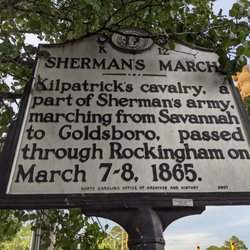
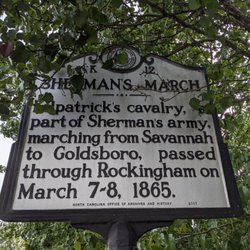
    This marker is located just east of the city of Rockingham on US-1 opposite a gas station. It…read morepoints out some Civil War history that happened here. The marker reads, "Sherman's March. Kilpatrick's Cavalry, a part of Sherman's Army, marching from Savannah to Goldsboro, passed through Rockingham on March 7-8, 1865." Online, there is more information. "In late 1864, Union General William T. Sherman began moving his forces, some 60,000 battle-hardened soldiers strong, northward from Atlanta to "divide the Confederacy in two." The plan was to march the Union forces through Georgia, South Carolina, and North Carolina in order to squeeze Confederate forces under General Robert E. Lee in Virginia between Sherman's men to the south and those of General Ulysses S. Grant to the north. Along the way, Sherman hoped to disrupt Confederate supply lines and break the will of southerners on the home front. This "total war" assault on civilians - women and children included - by Union forces was a break from traditional warfare that had, up until this time, focused largely on military targets." "In Georgia and South Carolina Sherman's men freely plundered their surroundings as they marched, leaving whole towns in ashes. As they approached North Carolina, Sherman's forces were divided into separate divisions or corps. They traveled across the state to protect each other's flanks, forage for supplies and to spread their influence throughout the state." "Sherman's army entered North Carolina in stages, with one contingent entering the state in modern-day Richmond County. A portion of General Judson Kilpatrick's cavalry unit entered Richmond County on the March 7 and engaged Confederate troops under the command of Matthew Butler in Rockingham. Kilpatrick's troops returned the next day and destroyed a cotton factory and a shipment of firearms before destroying track, rails and other equipment of the nearby Wilmington, Charlotte, and Rutherfordton Railroad." [Review 15461 overall, 965 of 2021, number 3005 in North Carolina.]

    Photos
    Sherman's March Historical Marker - Sherman's March Historical Marker, Rockingham

    See all

    Sherman's March Historical Marker, Rockingham

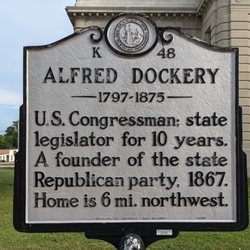
    Alfred Dockery Historical Marker - Alfred Dockery Historical Marker, Rockingham

    Alfred Dockery Historical Marker

    3.0(1 review)
    5.9 mi

    This marker is located in front of the Richmond County Court House here in Rockingham and points…read moreout a sign that is six miles away. That seems to be the usual, but if it was there then no one would see it. So here it is. The marker reads, "Alfred Dockery. 1797-1875. United States Congressman; state legislator for 10 years. A founder of the state Republican party, 1867. Home is 6 miles northwest." Online, there is more information. "Alfred Dockery, Congressman and legislator, was born in 1797 into a large family living in Richmond County. Unable to attend school regularly because of his responsibilities on the family farm, Dockery planned to become a farmer but became involved in politics at the age of twenty-five when he served in the House of Commons from his home county. Always interested in continuing to work his farm, Dockery returned to farming whenever not involved in political office." "As a Whig, Dockery pushed for internal improvements and general reforms statewide although he focused his efforts on promoting western interests. He was also a proponent of public education, supporting a public schools bill while serving in the state senate. Among his major contributions was his involvement in the establishment of Wake Forest Institute and his service on the first board of trustees of Wake Forest College. In 1845, he was elected to Congress for one term, after which he refused to be re-elected to the same post, seeking, instead, to return to his farm." "Dockery was elected to serve in Congress from 1851-53. He was a Unionist at a time when pro-Union sympathies were unpopular in most parts of North Carolina. However, once war was declared, Dockery quietly supported the war, sending two of his sons to fight for the Confederacy. After the war, he served in the postwar government of North Carolina and was a member of the 1865 failed state convention to end Reconstruction. A founding member of the state's Republican Party, Dockery did not live to see the end of Reconstruction and died at home in 1873. [The marker is incorrect.]" [Review 15503 overall, 1007 of 2021, number 3045 in North Carolina.]

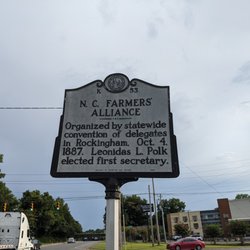
    NC Farmers' Alliance Historical Marker - NC Farmers' Alliance Historical Marker

    NC Farmers' Alliance Historical Marker

    4.0(1 review)
    6.1 mi

    This marker is in front of a farm stand not far from downtown Rockingham and points out the history…read moreof an important local union. The marker reads, "North Carolina Farmer's Alliance. Organized by statewide convention of delegates in Rockingham, Oct. 4, 1887. Leonidas L. Polk elected first secretary." Online, there is more information. "The Farmers' Alliance, which originated in Texas and appeared in North Carolina in 1887, was an important agent of change in an era of political and social upheaval. The organization, national in scope, was private and nominally nonpartisan. According to John D. Hicks, pioneer of Alliance historiography, the national organization's aims were fourfold: social, educational, financial, and political. In North Carolina the entanglements of the Alliance with politics were many, culminating with the defection of a sizable number of Alliance men to the Populist Party in 1892. Historian Lala Carr Steelman detailed the State Alliance's attempts to win control of the Democratic Party, purify politics, elected farmers to office, and enact agrarian reforms." "The organizational meeting of the State Alliance was held in Rockingham over two days, October 4-5, 1887. The convention drew up a constitution and appointed committees. Chosen as officers were: Alexander, president; Thaddeus Ivey, vice-president; Polk, secretary; J. D. Allen, treasurer; and Elias Carr, chairman of the executive committee." [Review 15457 overall, 961 of 2021, number 3001 in North Carolina.]

    Photos
    NC Farmers' Alliance Historical Marker - NC Farmers' Alliance Historical Marker

    See all

    NC Farmers' Alliance Historical Marker

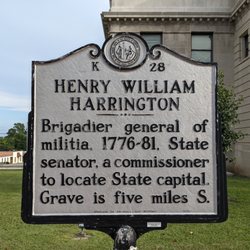
    Henry William Harrington Historical Marker - Henry William Harrington Historical Marker, Rockingham

    Henry William Harrington Historical Marker

    4.0(2 reviews)
    5.9 mi

    As historical markers go, this one is pretty typical. As you can see, it is a gray sign with black…read morelettering. While it won't blow your socks off, it isn't ugly either. In fact, it looks similar to all other historical markers in North Carolina. If you're ever in Richmond County and in the mood to see a genuine state historical marker, I recommend that you consider this one. It certainly met all of my expectations for what a historical marker could and should be.

    Located in front of the Richmond County Court House, this marker points out a local hero of the…read moreRevolutionary War. The marker reads, "Henry William Harrington. Brigadier general of militia, 1776-81, State senator, a commissioner to locate State capital. Grave is five miles south." This is another instance where there is some distance from the site being pointed out to here where the marker is located. There is more information online. "Henry William Harrington, Revolutionary War political and military leader, was born in London in 1747. He immigrated to Jamaica in the 1770s, but left after a short time for South Carolina, where he settled along the Pee Dee River. At the outbreak of war in 1775, Harrington accepted a captaincy in the South Carolina militia. The following year he married Rosanna Auld, the daughter of a prominent Anson County militia officer. The couple moved to North Carolina, settling in part of Anson that became Richmond County in 1779." "Harrington was elected colonel of the Richmond County militia in November following their arrival and briefly commanded a militia regiment in Charleston, South Carolina, in 1780 before returning to serve in the General Assembly. In the summer of 1780 he was called upon to accept a temporary position as the brigadier general in command of the Salisbury District militia while Griffith Rutherford was serving in the Camden expedition." "After the conflict [a British raiding party attacked his home in January 1781] Harrington represented Richmond County in 1783 and again in 1785. In 1784 he was appointed a trustee of Salisbury Academy, and five years later became a trustee of the University of North Carolina, a post he held for six years. He also served as one of the commissioners that approved of placing the state capitol at Raleigh. In the latter 1790s Harrington retired to his plantation. He died on March 31, 1809, and is buried in the family cemetery overlooking the Pee Dee River." [Review 15474 overall, 978 of 2021, number 3017 in North Carolina.]

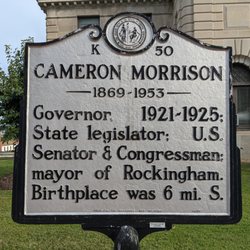
    Cameron Morrison Historical Marker - Cameron Morrison Historical Marker, Rockingham

    Cameron Morrison Historical Marker

    3.0(1 review)
    5.9 mi

    This marker is located in front of the Richmond County Court House here in Rockingham and points…read moreout a sign that is six miles away. That seems to be the usual, but if it was there then no one would see it. So here it is. The marker reads, "Cameron Morrison, 1869-1953. Governor, 1921-1925; State legislator; United States Senator & Congressman; mayor of Rockingham. Birthplace was 6 miles south." Online, there is more information. "The fifty-year public career of Cameron Morrison, governor and United States Senator and Representative, illustrates the duality of North Carolina's reputation during the coinciding Progressive and Jim Crow eras. On the one hand, Morrison was long celebrated for internal improvements which earned North Carolina a reputation as the most progressive Southern state in the 1920s and earned him the nickname of the "Good Roads Governor." On the other hand, Morrison was also a participant in, and career beneficiary of, the state's brutal white supremacist campaigns of the turn of the century which marked the backwardness of racial relations in the region and in much of the country as a whole." "Born in 1869, Morrison was the son of a Confederate veteran who had joined the Republican Party after the war. He attended school in his native Richmond County. He did not attend college but in 1892 studied law with Judge Robert Dick of Greensboro. That same year he passed the bar and returned to Rockingham to practice." "Morrison devoted himself to internal improvements, endorsing practically all of the goals of the Good Roads movement. By generating widespread grassroots support, Morrison prompted the 1921 legislature to fund construction of 5,500 miles of hard-surface roads. Swift action and fiscal daring shocked Morrison's conservative backers, who warned that the plan would bankrupt the state. Morrison also persuaded the legislature to fund improvements for higher education and the state's charitable institutions. Despite his earlier history, Morrison sought to improve race relations, but did so within a context that took the continuation of white supremacy for granted. His most notable achievement in this area was his successful use of force to all but suppress lynching in the state." "Morrison died in Quebec on August 20, 1953, and is buried in Charlotte's Elmwood Cemetery." https://www.yelp.com/biz/elmwood-cemetery-charlotte?hrid=ziKrTvynz2DXqDXAVkNp8w [Review 15509 overall, 1013 of 2021, number 3051 in North Carolina.]

    Historic Richmond County Courthouse - Historic Richmond County Courthouse, Rockingham

    Historic Richmond County Courthouse

    4.0(1 review)
    5.8 mi

    The historic Richmond County Courthouse in Rockingham was completed in 1923 and stands as a proud…read moreexample of Renaissance Revival architecture. It was designed by one of North Carolina's most prolific early 20th-century architects, Charles Christian Hook and reflects the civic ideals of permanence, order, and classical dignity. Its façade is composed of a three-story central pavilion flanked by two-story wings that lend the structure a sense of weight and refinement. The most commanding architectural element is the hexastyle portico: a recessed porch supported by six massive columns that rise to a broad entablature, visually extending the building's height and anchoring its symmetrical composition. The entrance is recessed on the second story, accessible by a grand staircase, while the south side descends a natural slope, revealing arched windows and additional massing that enhance the building's visual depth. This courthouse is the fourth in Richmond County's judicial lineage. The county's first court convened in 1779 inside a modest Presbyterian meeting house near Hitchcock Creek, reflecting the frontier conditions of the time. A one-room wooden courthouse followed in 1784, succeeded by a more substantial brick structure in 1845. That building was destroyed by fire in 1888, prompting the construction of a third courthouse in 1889. This structure replaced it in the early 1920s, incorporating fireproofing and modern materials while preserving the classical vocabulary of civic architecture. Across the street, the Richmond County Judicial Center was completed in 2009, shifting many, but not all, courtroom functions to a modern facility. The historic courthouse remains in active use for select proceedings and administrative functions, preserving its role as a living monument to the county's legal heritage. [Review 1333 of 2025 - 4452 in North Carolina - 24885 overall]

    Photos
    Historic Richmond County Courthouse - Historic Richmond County Courthouse, Rockingham

    Historic Richmond County Courthouse, Rockingham

    Historic Richmond County Courthouse - Historic Richmond County Courthouse, Rockingham

    See all

    Historic Richmond County Courthouse, Rockingham

    John Coltrane Historical Marker - landmarks - Updated May 2026

    Loading...
    Loading...
    Loading...