As a preface, I suffer from treatment-resistant Major Depressive Disorder (MDD). I have been seeing…read moreboth in-patient and out-patient psychiatrists since I was a teenager, so now, as a woman of 40, I believe I have a solid understanding of the good, bad and ugly of the psychiatric profession and am well qualified to make objective assessments of caregivers.
I have been seeing Dr. Girish Subramanyan twice a month for the last year, since moving to San Francisco (for work).
Note that Dr. Subramanyan's specialties are ADHD-spectrum disorders, and MDD, with particular expertise in treatment-resistant MDD. He is scrupulously current with the literature, research, new and experimental techniques and clinical trials.
His offices, which he shares with a small group of colleague are professional, private, clean, comfortable and tastefully decorated, with a neutral odor. The rooms all have active noise cancellation.
There is no secretary or satellite staff at his office, so you just plunk yourself down on a sofa, wait five minutes or so, and Dr. Subramanyan emerges from his office to greet you, and bring you into one of the session rooms.
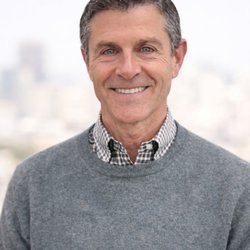
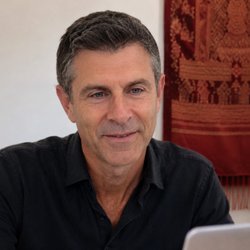
Dr. Subramanyan (his name is easiest to remember and to pronounce as 'soo-ber Man-yun') as a person is handsome, healthy, always well-dressed and groomed, gentlemanly, friendly, good-natured, and physically non-threatening. He has an immaculate command of the English language, with a typical American accent, and a pleasant, clearly audible voice. He always gives me a firm but friendly handshake both before, and after a session.
Upon your first visit you will typically see him for a two hour intake session, during which he will exhaustively review your medical history, have you fill out various documents (information releases, etc.). If you are currently taking medications, make sure that you bring them all with you, or write down all of the details in advance (e.g. medication, dosage, frequency, purpose, how long you have been taking it, etc.). It is also prudent to make sure that you bring contact information for as many relevant past and present physicians you have seen as possible.
As a psychotherapist, Dr. Subramanyan is deeply but objectively empathic, highly perceptive, and able to gently unfold layers of memories and ideas, to detect traumas, logical inconsistencies and thought disorders without judgment. He takes notes in an unobtrusive manner, and also has a very keen memory so he does not forget the discussion context and details from one visit to the next.
As a psychiatrist and physician, Dr. Subramanyan is a master of dose titration and mixology, able to counteract side effects with small additions, and to enhance or extend effects via enhancers or promoters. He is not dogmatic or patriarchal, and is genuinely interested in your perspectives on how the meds are working, where the bottom line is safety, and efficacy. He is willing to discuss with and possibly prescribe alternative medications, refer you for treatments such as ECT, or electromagnetic trans-cranial stimulation, or to refer you to FDA-approved trials (such as deep brain stimulation), or centers that perform emergency ketamine infusion.
Although he is a good guy and is willing to listen and evaluate, he is not a pushover, and fully aware of phenomena such as benzodizepine tolerance leading to dose inflation, lethalities of barbituates, etc., so he's not going to let you do things like escalate benzo use, or trick him into prescibing a suicide coctail (having tried). It seems that his genuine goal is for you to live and be happy.
In a typical visit he will help you evaluate your current mood state, the reasons for it, then go over your emotional weather since the last visit, trying to locate possible triggers, and stressors. This will be correlated with your medications - your assessment of their efficacy, possible gaps, etc. Wrapping up, he will make any adjustments to your meds, and discuss signs to be aware of, preemptive actions, things to try until the next visit. Finally, he will fire off scripts to your pharmacy.
Dr. Subramanyan will discretely keep in touch with you by telephone, email (he is tech savvy) and sometimes texting, as needed by the context. He will endeavor to maintain a continuity of care between visits. He seems to be genuinely concerned about how you are doing, and doesn't charge for these little extras.
During a crisis or hospitalization, Dr. Subramanyan will liaise with the hospital or treatment-center personnel as well as disseminate relevant information about your condition and therapeutic plan to loved-ones (provided you have signed releases for these), providing reassurance and understanding.
Dr. Subramanyan doesn't accept insurance and doesn't seem to have a sliding fee scale. He is relatively expensive compared to other psychiatrists. However, if you suffer from severe ADHD or MDD, he is worth every penny.