This campus is what you would hope to see at a longstanding venerable European institution such as…read morethe University of Glasgow. Founded in 1451, it is the 4th oldest in the English-speaking sphere. The architectural splendor reflects the historical standing of this wonderful institution. With around 38,000 students (undergrad and grad, 24K and 14K, respectively), it is a sizeable campus.
Located in the Hillhead neighborhood of Glasgow near the Hillhead Metro stop, it is outside city centre a bit and dominates the landscape of the area. Moreover, while many European universities are spread out in their respective cities with clusters of mini-campuses and individual buildings, this campus is more concentrated similar to US universities. Having said that, there are parts of the University, such as the Veterinary School and Dental School, that are located elsewhere in the city. But most of the activity seems to be on this central campus. The University was actually originally located on High St. in City Centre. It moved to this location in the latter half of the 19th Century.
Strolling through, it is easy to sense the historical significance of this place. Even though the buildings only date back to the late 19th century, the feeling seems like it is more longstanding than that. Perhaps it is because the campus was built with four centuries of institutional history and legacy engrained. It was, for example, part of the eighteenth-century Scottish enlightenment. It's alumni include three British PMs, three Scottish First Ministers and other notables such as Adam Smith, James Watt, Lord Kelvin and Francis Hutcheson.
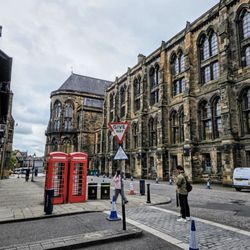
While our visit to the campus was partly to appreciate the historical aura, we were also not disappointed by the illustrious architecture. Built in the Gothic Revival style, the oldest buildings on campus are impressive, including structures such as the Main Building and the Clock Tower that inspire admiration. It is also interesting that the University purchased several Victorian Houses adjacent to campus in the 1930s which now house the Psychology Depetment and other University functions. We noticed with curiosity these structures as we made our way to the perimeter of the campus. It is interesting that one of the reasons that the University relocated in 1870 from its original High St. location, where it was housed for over 400 years, was the de-gentrification of the neighborhood surrounding it. The latter was transforming to a lower class enclave. Perhaps this was part of the reason for purchasing surrounding homes near the new campus, in addition to the legitimate need for more land.
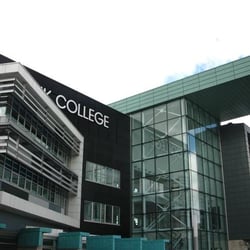
The campus today sports an eclectic mix of structures to complement the original buildings. The splendid Wolfson Medical School building with its glass front perhaps stands out the most among the newer structures. The library building is also imposing, but much less impressive architecturally (I'm not a fan of late-20th Century architecture, at least post-WWII through the 80s).
If you are in Glasgow, it's worth heading to Hillhead to stroll through this campus. You can take in the area while you're there. Nearby attractions such as the restaurants and ambiance on Ashton Lane and the back alley market on Ruthven Lane add to the enjoyment of a visit to this area.