Cancel

    Open app

    Search

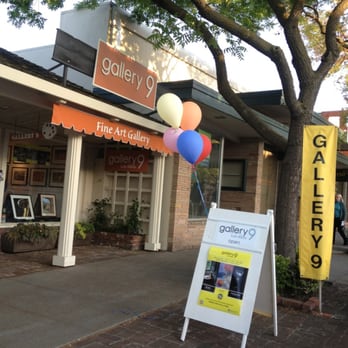
    Gallery 9

    4.3 (3 reviews)
    Closed Closed

    Gallery 9 Photos

    You might also consider

    Recommended Reviews - Gallery 9

    Your trust is our priority, so businesses can't pay to alter or remove their reviews. Learn more about reviews.
    Yelp app icon
    Browse more easily on the app
    Review Feed Illustration

    9 years ago

    Helpful 6
    Thanks 0
    Love this 5
    Oh no 1
    Photo of Ellen L.
    656
    2425
    2337

    14 years ago

    Helpful 1
    Thanks 0
    Love this 0
    Oh no 0

    9 years ago

    Helpful 0
    Thanks 0
    Love this 0
    Oh no 0

    Ask the Community - Gallery 9

    You might also consider

    Verify this business for free

    People searched for Art Galleries 1,528 times last month within 15 miles of this business.

    Verify this business

    Los Altos History Museum

    Los Altos History Museum

    4.8
    (94 reviews)
    0.2 mi

    Los Altos History Museum is such a hidden gem! It's tucked right by the Los Altos Library, so…read moreparking is easy and plentiful, which makes it a low stress outing. Inside, there's a rotating art exhibit that makes each visit feel a little different, plus a beautiful model train setup that is especially great if you're visiting with kids. It's the kind of thing that can keep little ones happily entertained for a bit. Admission is free, though donations are suggested, and it feels like a lovely community spot that's worth supporting. It's not a huge museum, but that's part of the charm, it's easy to pop in, explore, and leave feeling like you discovered something special.

    I would highly recommend booking this museum in Los Altos for your wedding or any event, really…read more The venue is absolutely stunning for an outdoor wedding and has an indoor section too. We really wanted a cozy intimate backyard wedding vibe and that's exactly what we got here! Huge plus is my husband loves history, and you get free access to the museum for a year with a ton of other benefits once you have an event here + your donation is tax deductible. You also don't need much decor at all due to the natural beauty but we hired a decorator for the arches, stages, and table settings. Lisa will also give you a list of vendors partners you can work with just in case. Overall, she was really amazing to work with and super responsive because anytime we needed to do a tour walk through with vendors or a tour of the venue, she was there. Thanks Lisa for answering all my questions!! You can't go wrong having your wedding here. We had a spring wedding of close to ~200 folks and thank God it didn't rain but summer or even fall would be beautiful here. For photoshoot opportunities there's a ton onsite and a beautiful orchard just steps away from the museum for sunset shots. A magical day indeed.

    Photos
    Inside museum
    Inside museum
    Courtyard
    Courtyard
    Permanent Exhibition and the globe chair for hearing oral histories

    See all

    Permanent Exhibition and the globe chair for hearing oral histories
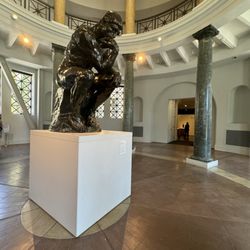
    Cantor Arts Center

    Cantor Arts Center

    4.6
    (320 reviews)
    4.8 mi

    Have some time & the itch to visit a museum? Head over to the Stanford campus to check out this…read morebeautiful center! * Location: Car accessible (free museum parking), or 20 min walk from Palo Alto Caltrain station. * Admission: Free! Walk-in & say hello to the front desk staff to get your center map via QR code and recommendations. * Exterior & interior architecture are beautiful in their own right, Rodin sculpture garden makes it even better. * Center is relatively compact but contains great range of collections - antiquities from around the world, 16th-18th century European art, modern 21st century, & more. Roaming the many halls is a fantastic way to spend an afternoon! Tip: Checkout their website for an overview of temporary exhibits and guest speakers.

    This is a great free art museum on the Stanford Campus. We visited on a Saturday so there was ample…read morefree parking in the lots right in front of the building. It's a beautiful building and well laid out, it took us maybe an hour and a half to two hours to see most of the exhibits. They have a great collection of different eras and regions of art. Many artists I've heard of thought not their most famous paintings. I really enjoyed the modern gallery too. The highlight for me was the extensive collection of Rodin sculptures including details on how he constructed the spectacular "Gates of Hell" that is replicated outdoors. I visited the Rodin museum in Paris a long time ago and this collection, while small, was still really good and informative. I also love a good Richard Serra steel sculpture and there is one outdoors on the other side of the museum from the Rodin garden.

    Photos
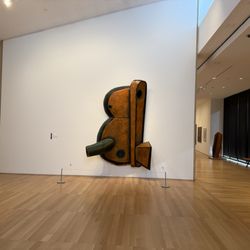
    Folly, 2021
    Folly, 2021
    The Golden Spike, May 8th, 1869
    The Golden Spike, May 8th, 1869
    The Three Shades (Les Ombres) 1881-86

    See all

    The Three Shades (Les Ombres) 1881-86
    Computer History Museum

    Computer History Museum

    4.4
    (392 reviews)
    3.1 mi

    I absolutely loved visiting the Computer History Museum! There is so much to offer here for both…read morekids and adults alike. If you have any interest in learning how computers were invented and how they've evolved over the last century, this is the perfect place to explore. It's incredibly well-curated and engaging. A few tips for your visit: Time: Personally, I would recommend setting aside at least 2 hours to fully explore the exhibits and really soak it all in. Food & Drink: They have a wonderful cafe on-site that serves great hot chocolate, coffee, and light snacks--perfect for a quick energy boost mid-tour. Parking: No need to stress about parking. They have a massive lot that looks more than capable of handling even the busiest weekend crowds. Highly recommend checking this place out if you're in the area!

    Spent a few hours at the Computer History Museum and didn't expect it to feel as reflective as it…read moredid. The museum walks you through the evolution of computing, from early mechanical calculators to modern microprocessors, software systems, and AI. You can see machines like ENIAC (one of the first general-purpose electronic computers) along with punch-card systems, the Apple I, and other machines that once felt futuristic and now look dusty and almost fragile. Everything here is built in layers, not in isolation: ideas evolving over time, people contributing in ways that are not always visible at first, yet shaping the outcome. Still, it is striking to see how these machines have become extensions of how we think nowadays (our brains). We offload memory, rely on algorithms to anticipate what we want, and increasingly hide behind screens. We run away from the real world and avoid real human connection. In some ways, it can feel easier to trust systems than real people because systems are predictable, responsive, dopamine-inducing, and do not require human effort or vulnerability. People do. People are messy. Here where the museum unexpectedly becomes even more reflective. It makes you wonder how easily we stay self-contained, avoid the messiness of real connection, and fill the space with endless technological distraction. Roughly 1 in 2 U.S. adults report experiencing loneliness, with in-person social interaction declining over time. Technology makes it easier to stay in your own world, away from uncertainty, risk, and the effort real closeness requires. So where does this lead us? What is our future? Is it for our good? If it feels easier this way, is it actually better? Are we becoming more connected, or just more efficiently alone? P.S. I think the admission for youth should be cheaper.
    Photos
    Punched Card Gallery in Revolution exhibition.
    Punched Card Gallery in Revolution exhibition.
    Calculators Gallery in Revolution exhibition.
    Calculators Gallery in Revolution exhibition.
    Calculators Gallery in Revolution exhibition.

    See all

    Calculators Gallery in Revolution exhibition.
    Qualia Contemporary Art

    Qualia Contemporary Art

    5.0
    (3 reviews)
    5.2 mi

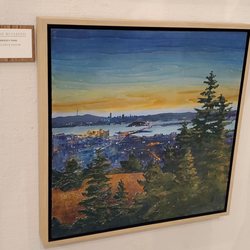
    Cute little gallery located in the heart of downtown Palo Alto! I think they feature local and…read moreinternational artists. I liked how it was very clean and informative - they had all the artist/painting information laid out as well as their books/prices. They have a main gallery room as well as another smaller side gallery. If you're exploring Palo Alto downtown or interested in art exhibitions, would recommend stopping by!

    Qualia Contemporary Art Gallery is a welcoming breath of fresh air in a high tech heavy…read moremetropolitan area without much attention given to cultural developments. Ms Daxue Xu, the artistic director of the gallery, and the guest curator Professor Xiaoze Xie from Department of Art and Art History in Stanford have a keen sense for art works that reflect the current socio-political and cultural changes on the global stage with an emphasis on how the East and the West arrive at the same place from different starting points. The artworks selected for exhibitions express the artists' sentiments and thoughts in a lucid and poignant manner that it is hard for the audience not to be touched in some way. Ms Xu lives up to the apt name of the newly founded gallery. The first exhibition titled "Catastrophic Beauty: Art in the Age of the Anthropocene" curated by Professor Xie takes on an unanticipated angle of discovering beauty in catastrophe. Shang Yang is a leading avant-garde Chinese artist well versed in ink, oil and mixed media. Unlike his contemporaries who took on an idealist or disillusioned or cynical views on modernity in China, Shang Yang takes a less traversed path of bringing awareness to environmental impact of modernity by alluding to ancient ink paintings and socio-political objects. The Decay series exhibited is an extension of his signature Dong QiChang series in which his attenuated criticism towards environmental impact from modern reforms is directed towards the socio-political areana. The beauty lies in his tasteful manner of fusing ancient Chinese ink painting aesthetics and western styles. John Sabraw turned the environmental impact on its head by converting contaminated water into sustainable pigments used in his paintings reminiscent of Chinese ink wash techniques. The East and the West meet at multiple levels. The following solo exhibition highlighting Cate White and Sean Howe shifts gears to younger artists with contemporary styles. Cate White juxtaposes well known paintings with modern scenes of herself, her friends and family. Her stand on her self image, race and women's rights are vociferously displayed. The imaginative and childlike works of Sean Howe contrast the subtle messages on the impact of modernity on who we are and how we live. The most recent solo exhibition centers on foreign born American artists Stella Zhang and Yulia Pinkusevich. Stella Zhang was born into a Chinese artistic family, proficiently trained in traditional Chinese ink paintings since a young age. Her mature art works at times are in contemporary Western style; at times coalesce traditional Chinese aesthetics and philosophy with Western modern and postmodern styles. Her Internal Landscape series is a prime example of the latter. From a distance it resembles traditional ink landscape paintings. Close up one detects suggestions of human spine and nervous system with a vivid sense of qi flowing through - the ancient Chinse concept of energy source in all lives - brought about by heightened tension and release. An exemplary traditional Chinese ink landscape painting takes one to the ultimate state of serene transcendence. Stella Zhang's works are a captivating novel take leading one to an alternate transcendent state of aliveness, tension and release. Yulia Pinkusevich, a Ukrainian artist who lived through Cold War, expressed her intrigue of the dispassionate calculations of the impact of nuclear weapons with their calamitous implications in Isorithm series. The rationalization in the rational calculation of the damage by nuclear weapons is erringly tranquil in her works. There is this sense of dissociation watching chaos unfolding from the ruptures in Isorithm series that is perhaps too familiar to those traumatized by catastrophic events. This brings us back to the first exhibition where catastrophe meets beauty.

    Photos
    Part of Interlaced collection
    Part of Interlaced collection
    Part of Interlaced collection
    Part of Interlaced collection
    Qualia Contemporary Art

    See all

    Anderson Collection At Stanford University

    Anderson Collection At Stanford University

    4.7
    (37 reviews)
    4.8 mi

    Admission to this museum that features American modern and contemporary art is free!…read more It's pretty sizable with two floors and several interesting pieces. If you're there on a weekend look out for the free pubic in-person tours on Saturdays and Sundays at 12:30pm and 2:30pm. We took one and it was better than wandering around the exhibits ourselves. Worth a stop if you're visiting the Stanford campus.

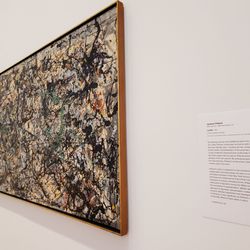
    Disclaimer: I give any free museum five stars. Well, it will cost you your zip code. I just gave…read morethem 58008, hoping they'd realize later what it spells upside down. This is one of the world's most outstanding private assemblies of postwar American art, gifted by Bay Area collectors Harry W. "Hunk" and Mary Margaret "Moo" Anderson and their daughter Mary Patricia Anderson Pence, who looks more like Moo but acts like Hunk. The museum, which opened in 2014, houses 121 paintings and sculptures and is known for its focus on movements like Abstract Expressionism, Color Field Painting, and Pop Art. The collection is celebrated for featuring canonical works by some of the 20th century's most significant American artists. Key figures and their works include: Jackson Pollock: The monumental drip painting "Lucifer," considered by many to be the outstanding drip painting still in private hands before it was gifted to Stanford. Mark Rothko: The signature color-field work, "Pink and White over Red." Clyfford Still: A large, imposing piece called "1957-J No. 1 (PH-142)." Richard Diebenkorn: Works like "Ocean Park #60," which displays his progression into abstract forms using geometric shapes and a subdued color palette. Other Masters: The collection also includes works by Willem de Kooning, Franz Kline, Philip Guston, Robert Motherwell, and Helen Frankenthaler. The museum building itself is spacious, which means it feels mostly like space. The coolest thing was the meticulous library that felt too nice to even touch. Be sure to see the Cantor Arts Museum next door. Random Notes: One exhibit had a music video by Nick Cave on repeat, which was annoying and a little out of place, echoing throughout the museum. Oddly, it was not the Nick Cave you are thinking off (i.e. Bad Seeds). It was a different Nick Cave. Which is weird. It's like saying "Oh, yeah, no, that painting of the flower over there is actually Georgia O'Queef." 1. One of the collection's anchor pieces, a major painting by Clyfford Still, was acquired a jockey who had won the famous 1950s television quiz show, "The $64,000 Question," and then retired to open an art gallery in San Francisco. 2. Mark Tansey's painting "Yosemite Falls (Homage to Watkins)" (1993), depicts the famous waterfall, but instead of falling water, the cascade is made up of cameras and tripods. I looked into an art textbook to try to interpret it and apparently it means I am gay.

    Photos
    Anderson Collection At Stanford University
    Lucifer
    Lucifer
    Anderson Collection At Stanford University

    See all

    Gallery 9 - galleries - Updated June 2026

    Loading...
    Loading...
    Loading...