Fort Augustus Locks Photos


Recommended Reviews - Fort Augustus Locks
Start your review...


Reviews With Photos
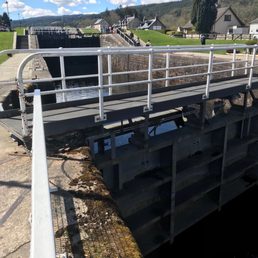

Scenery and History abound this quaint village once important waterway connection. These Locks (five at Fort Augustus) are a small part of the grand Caledonian Canal connecting the eastern coast (North Sea) of Scotland with it's west coast (Irish Sea). Some 60 miles of interconnected Lochs and manmade canals build in the early 1800's. The Village of Fort Augustus simply charming with shops and a few eateries along the canal locks and roadway. Across the road, Cruise Loch Ness with a choice of two tours on Ness. Who knows, you might be the one to put the mystery to rest. My Bucket List has one more To-Do. I hope to return and attempt a full journey by kayak on the Caledonian Canal; East to West. Let me know if you're game for the journey, too!


The pretty village of Fort Augustus lies at the southern end of Loch Ness and is one of the most popular visitor destinations on the Loch. The village straddles the Caledonian Canal, the 19th-century engineering project that connects Inverness on the east coast to Fort William on the west coast. Fort Augustus is famous for being the other end of the Caledonian Canal, after the five locks that complete the journey, allowing boats to enter Loch Ness, and travel to Inverness and the sea Stretching for 60 miles, the Caledonian Canal connects Scotland's east and west coasts, running between Inverness and Fort William using a combination of lochs and man-made canals. It was built in by Scottish engineer Thomas Telford and opened in 1822. The canal was first mooted in 1773 but was not completed until 1822. It was 22 miles long and had 29 locks. The canal took 12 years to build and cost a staggering £910,000. It was never a commercial success, though it proved useful during WWI when the German navy threatened shipping off Scotland's north coast. It is now mainly used by leisure visitors. Watching boats pass through the canal on their way to and from Loch Ness is always a popular pastime and you can often find the canal locks lined with visitors. I was lucky enough to see another group of boats go through, both the locks and the swing bridge into Loch Ness read more


10 days ago
Cute little town which seems to be famous mostly for the locks and the Loch Ness cruise. We came for the cruise and spent a bit of time exploiting the canal locks. An interesting engineering marvel built in the 19th century where boats are lowered or raised between Loch Ness and the canal. It's still being done manually even today. Unfortunately it rained and we had to be indoors and couldn't explore as much as we wanted nor see boats actually being lifted. read more


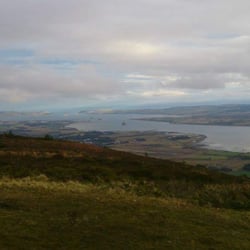
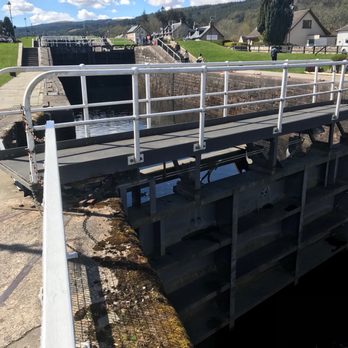
Most people come here to see the flight of 5 locks along the Caledonian Canal. It's a staircase lock system that lifts the vessel up and out of the canal to a higher elevation of a nearby tributary. It works the same way by lowering them into the canal on the way back. We did catch a view of the locks as we passed over on the A82. It wasn't part of our tour due to the season. It's not operational in parts of autumn and all through December. Keep that in mind if you have your heart set on seeing how it all works. We were in Fort Augustus strictly to see the view of Loch Ness that is up the road from this attraction. The viewing point is just off of Oich Road, and it's a beauty. It sits at the mouth of the lake and directly in between the River Oich and the Caledonian Canal. It's where Nessie has been spotted, although she's obviously been all over the lake. Our guide even encountered a huge splash of water in this area during one of his tours that made him a true believer. It's quite possible given how deep the lochs are here. We didn't see her, but we enjoyed a fantastic view from this vantage point. It's so peaceful, yet I can see how it would be a little eerie at night. The sun was just starting to set. It brought a nice illumination on the lake. We hit it at a great time. There weren't as many tourists around. Only a few (including us). The town is quite small with a population under 1000. It's very walkable. There is a woollen mill and a few war memorials. There's also a place called the Clansman Centre that may be a seasonal attraction. Honestly, I think the scenery alone was worth the trip. The view of Loch Ness coupled with the Commando Memorial along the way back to Edinburgh was the perfect ending to an amazing day in the Highlands. Highly recommended! read more
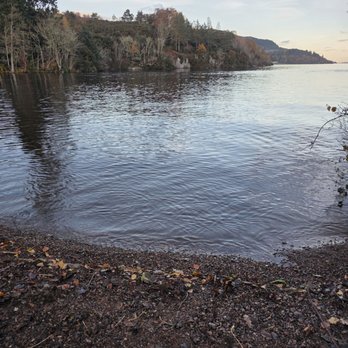


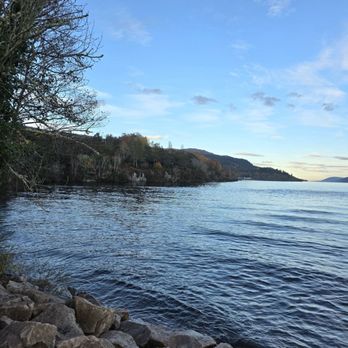


Scenery and History abound this quaint village once important waterway connection. These Locks (five at Fort Augustus) are a small part of the grand Caledonian Canal connecting the eastern coast (North Sea) of Scotland with it's west coast (Irish Sea). Some 60 miles of interconnected Lochs and manmade canals build in the early 1800's. The Village of Fort Augustus simply charming with shops and a few eateries along the canal locks and roadway. Across the road, Cruise Loch Ness with a choice of two tours on Ness. Who knows, you might be the one to put the mystery to rest. My Bucket List has one more To-Do. I hope to return and attempt a full journey by kayak on the Caledonian Canal; East to West. Let me know if you're game for the journey, too! read more




6 years ago
This was fun to say we went to the Loch Ness. Unfortunately, we didn't see the Nessy but we did try our hardest. There is a tour of the Loch if you want to try to explore all avenues to finding the 'monster' but we decided to stay ashore. There was some restaurant closures due to the time of year, still a must see in the Highlands! read more