Flughafen Tempelhof Photos


Recommended Reviews - Flughafen Tempelhof
Start your review...



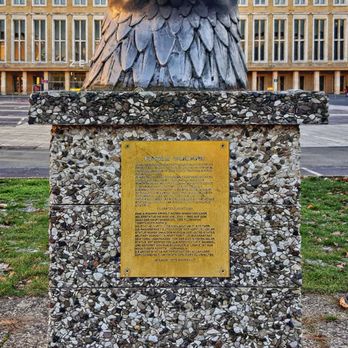
Tempelhofer Feld is probably known throughout the world for its airport. The latter, although quite monumental, is not a work of the Nazis, but was already opened in 1923 on the former training area of the Berlin garrison. From this point of view, the area also has a long military tradition. Already in 1722 the then Prussian King, Friedrich Willhelm I, ordered that the former potato fields be used as a parade ground. After 1880, several football clubs were founded on the grounds of the Berlin field. The Tempelhofer Feld became one of the most important German sports cities. On the site of today's airport building there was once a stadium with 40000 seats. For a short time the field was also used for airship traffic and various experiments. On 31 July 1901, the highest horizontal barrage in balloon ascent to date was also erected here. 10800 meters are the rights of the basket occupied by two scientists. Only after more than 30 years this record was broken. Already from 1909 the first motorised flights took place. From 1923 onwards, flight operations started and the airport, which was constantly being expanded, was on the same level as Paris, Amsterdam and London in the 1930s. Berlin Tempelhof also became the first home airport of Lufthansa, which was formed in 1926 by the merger of Junkers Luftfahrtgesellschaft and Aero Lloyd. As early as 1935, however, the first military squadron was installed here, and from 1940 onwards there was no longer any civil air traffic. At the end of the war the area fell into Soviet hands, but was taken over by the USA on 2 July 1945 as Tempelhof Central Airport (TCA) or militarily as Airfiled R.95. The airport played an important role during the Berlin Blockade, when the entire city (West) of Berlin was supplied by the Airlift. In 1950/51, the airport began to be used for civilian purposes again, with the U.S. Army releasing some of the capacity in the airport building for this purpose. Air France, BEA and Pan Am flew to the airport. The airport was closed in 1975. In 1981, however, it was reopened six years later, mainly for smaller airlines. After a flight accident shortly after the turn of the millennium, the final cessation of flight operations was decided by a citizens' petition. Since then, Berlin has been building a new airport - its completion is uncertain and is the cause of malice internationally. The area is accessible for the inhabitants of Berlin since about 2008 - leisure sports recreation as well as tours in the building are possible. The Berliners rose up against the planned development of the area by investment companies, so that the politics are still keeping their distance. read more



7 years ago
More info about Flughafen Tempelhof
Columbiadamm 10
12101 Berlin
Germany
Tempelhof
Directions
04930 200037400
Call Now
Visit Website
http://www.thf-berlin.de
Hours
Food & Alcohol
Indoor Amenities
Outdoor Amenities
Other Amenities
Flughafen Tempelhof Reviews in Other Languages























Why does Yelp recommend reviews?
1 review that is not currently recommended
The reviews below are not factored into the business's overall star rating.
6 years ago


